

There is a familiar moment after moving into a rental. The boxes finally disappear, but the room still feels borrowed. The walls look bare. The overhead light feels harsh. The kitchen cabinets reveal every sign of their age. You may not own the space, yet you still want it to feel calm, warm, and unmistakably yours.
The good news is that rental-friendly home upgrades do not need a renovation budget or a risky weekend project. A few thoughtful changes can soften builder-grade finishes, create better focal points, and bring visual harmony to even a small apartment. The secret is not buying more decor. It is choosing removable updates with the right scale, texture, and placement. Before starting, read your lease and test any adhesive product on a hidden area.
Why Rental-Friendly Upgrades Matter
A rental can feel temporary without feeling impersonal. Thoughtful styling affects how a room works and how it feels at the end of a long day. Warm lighting can make a cold living room feel restful. A well-sized rug can give mismatched furniture a clear visual anchor. Closed storage can calm a cluttered entryway.
The best rental-friendly home upgrades also move with you. Instead of spending heavily on permanent finishes, invest in pieces you can reuse: curtains, lamps, mirrors, framed art, woven baskets, and flexible furniture. House Beautiful’s small-space design guide also stresses thoughtful layouts, layered lighting, and multifunctional furniture when every inch needs to work harder.
Even removable materials deserve careful planning. Surface condition, humidity, heat, and lease rules matter. The goal is a polished home that still protects your deposit.
1. Create a Focal Wall With Removable Wallpaper
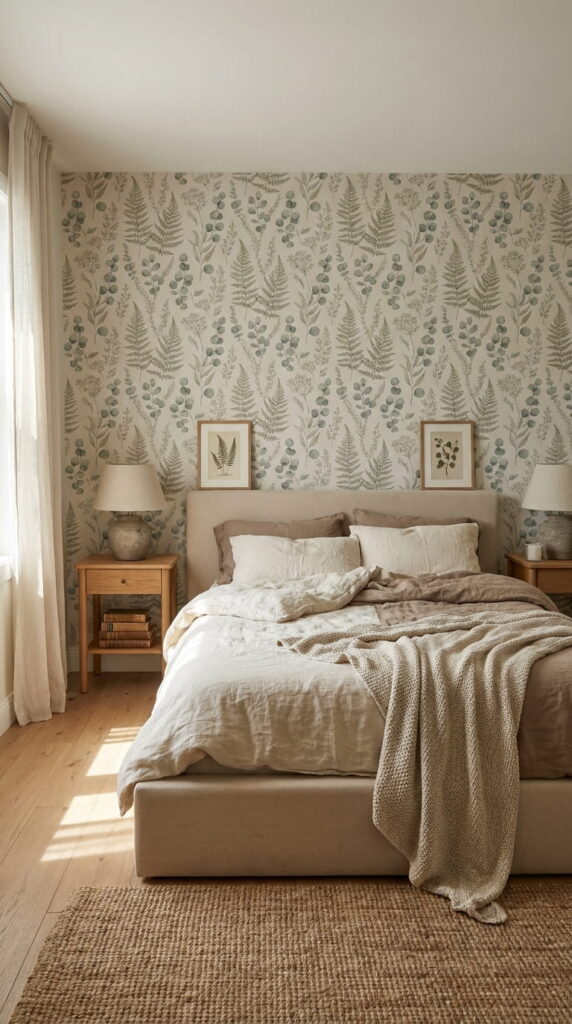
Removable wallpaper gives a plain rental room a clear focal point without requiring you to cover every wall. A muted botanical print, linen-look texture, soft stripe, or warm neutral pattern can add depth behind a bed, sofa, or dining nook. For the cleanest look, choose one intentional area instead of applying a bold design across the entire room.
Order a sample before committing to a full roll. Check how the pattern looks in morning light, evening light, and under your room’s lamps. Apply it only to a clean, smooth, fully cured surface, and test a small hidden area first. Avoid placing a busy pattern behind shelves filled with decor, because too many competing details can make the room feel restless.
2. Add a Peel-and-Stick Kitchen Backsplash
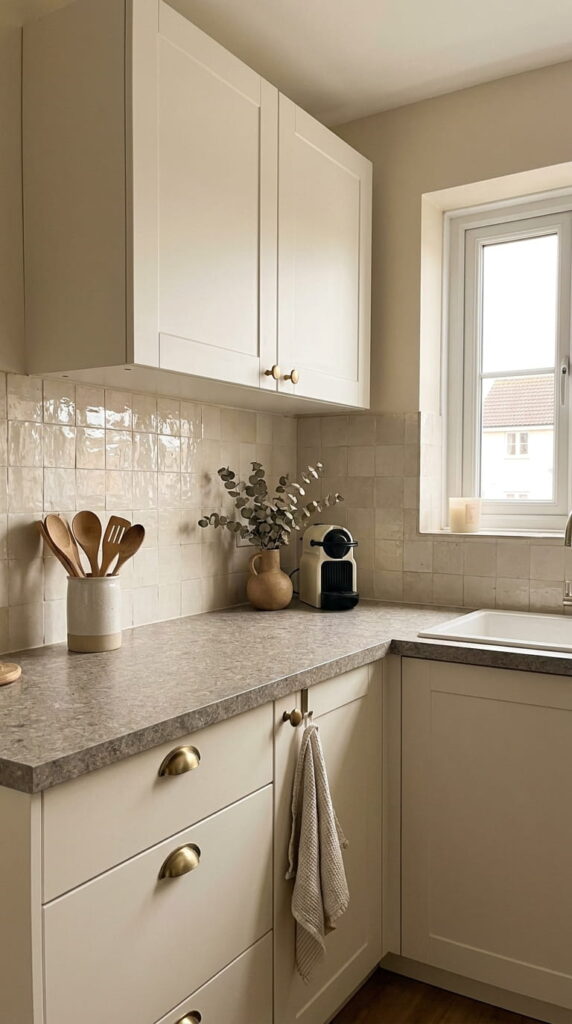
A tired backsplash can make an otherwise tidy kitchen look dated. Peel-and-stick tiles offer a removable way to add a cleaner finish, especially in a compact apartment kitchen. Choose a simple zellige-inspired tile, slim subway pattern, or soft stone effect. These options work best when the design supports the existing cabinets rather than fighting them.
Architectural Digest highlights peel-and-stick backsplash treatments for apartment kitchens, while Better Homes & Gardens includes removable backsplash tiles among practical renter updates. Clean the wall carefully, use a level, and start from the most visible edge. Avoid applying adhesive tiles over damaged paint or near excessive heat without checking the product instructions.
3. Replace Basic Cabinet Hardware With Refined Finishes
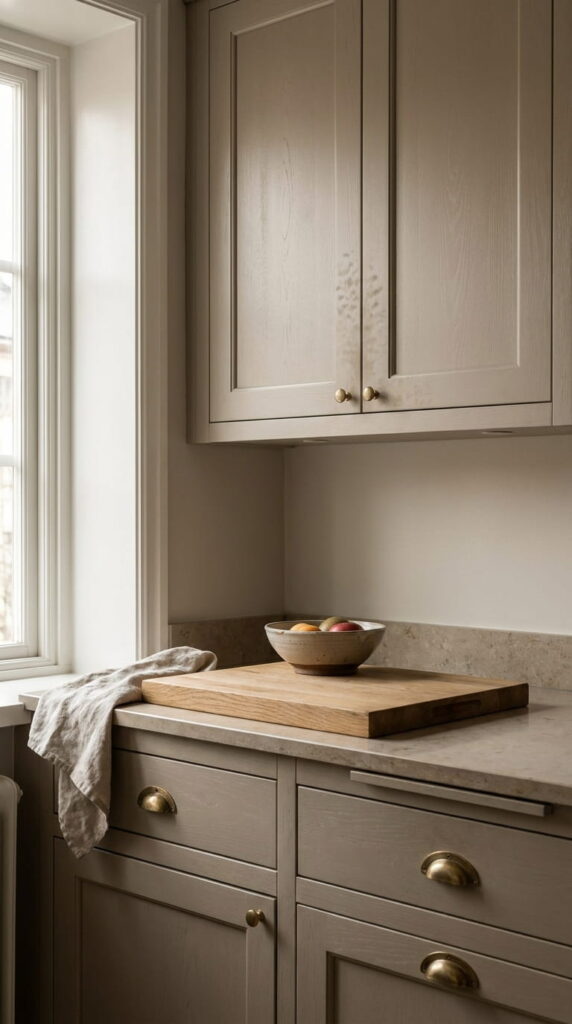
Cabinet handles act like jewelry for a kitchen or bathroom. Swapping plain knobs for brushed brass, matte black, antique bronze, or warm nickel hardware can make standard cabinets look more considered. The update works especially well in kitchens, vanities, media consoles, and freestanding storage units.
Measure the distance between existing screw holes before shopping. Keep every original handle in a labeled bag so you can reinstall it before moving. For a quiet, high-end look, use one finish consistently instead of mixing several metals in a small room. The common mistake is choosing oversized pulls that overpower narrow cabinet doors. When scale feels balanced, even inexpensive cabinets appear more polished.
4. Hang Curtains Higher and Wider Than the Window
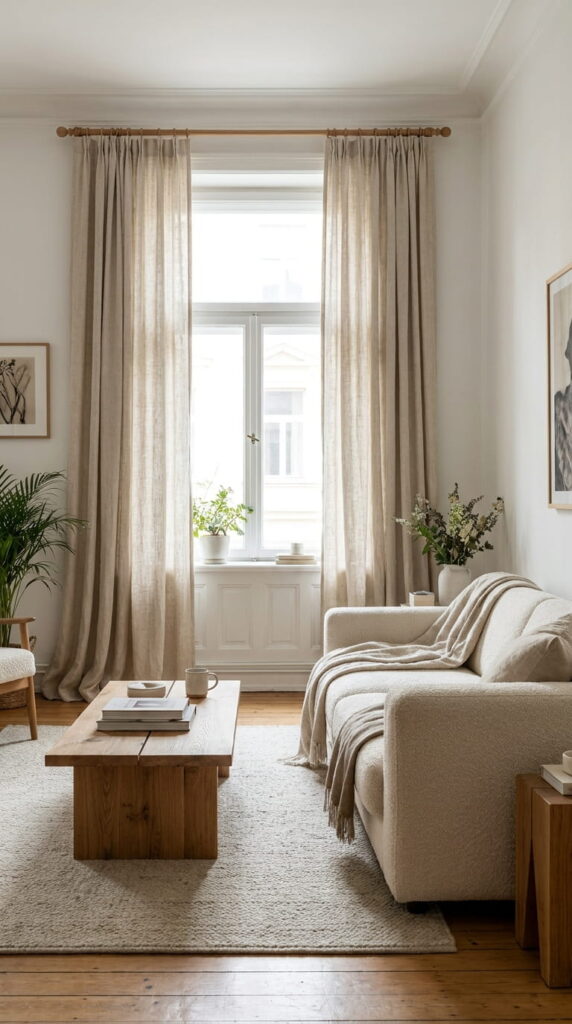
Rental windows often come with short blinds that make the entire room feel unfinished. Curtains add softness, filter harsh daylight, and make ceilings appear taller when installed with care. Mount the rod several inches above the frame and extend it past both sides of the window. This allows the fabric to sit beside the glass instead of blocking natural light.
Choose linen-look panels, cotton blends, or soft woven textures in warm neutrals and muted tones. Use removable rod solutions only when the weight allows it, or request permission for small holes. Architectural Digest notes that higher, longer curtains can create the illusion of a taller room. Avoid panels that stop awkwardly above the floor.
5. Cover Unattractive Floors With an Oversized Area Rug
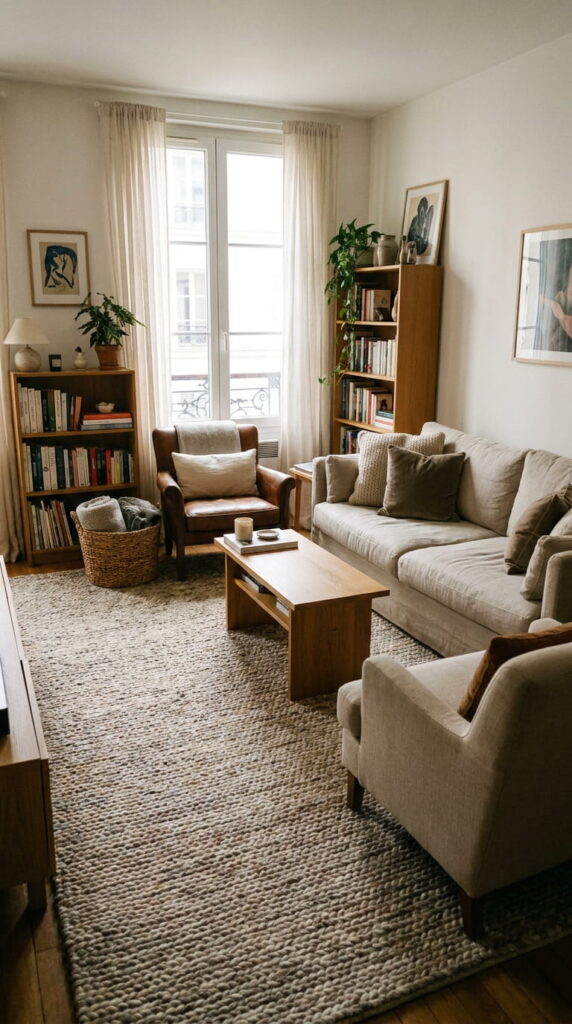
A generous rug can hide scuffed flooring, soften echo, and connect furniture that otherwise looks scattered. In a living room, choose a rug large enough for at least the front legs of the sofa and chairs to rest on it. In a bedroom, let the rug extend beyond the sides of the bed so your feet land on a soft surface in the morning.
Flatweaves, low-pile wool blends, and washable rugs work well in rentals. Earthy palettes and subtle patterns disguise daily wear while adding tactile texture. Better Homes & Gardens recommends oversized rugs as a renter-friendly way to conceal damaged floors. A small floating rug often makes the room feel smaller, so measure before buying.
6. Use Plug-In or Rechargeable Wall Sconces
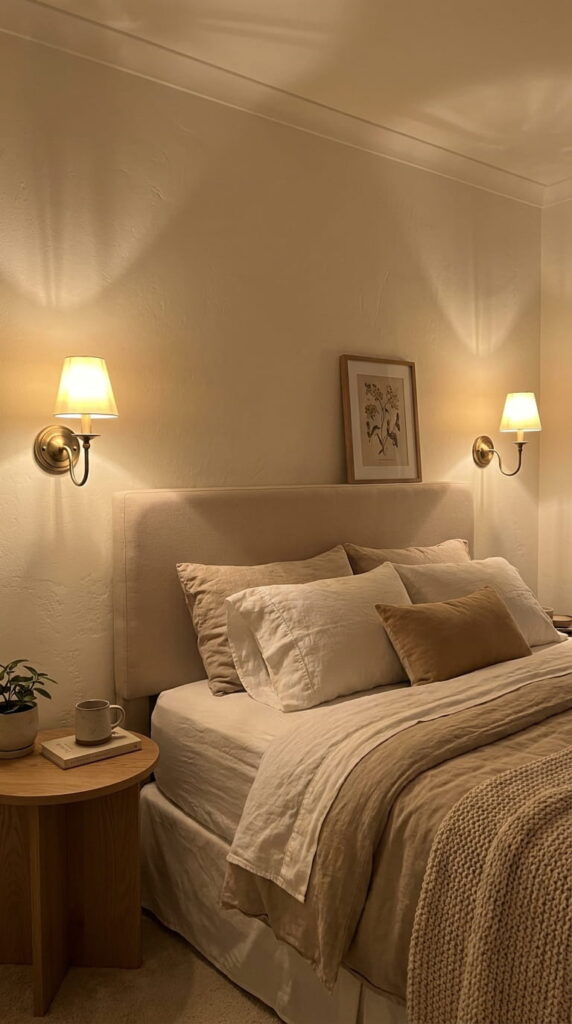
Good lighting changes a room faster than almost any decorative purchase. Plug-in or rechargeable sconces bring a tailored look to bedrooms, reading corners, entryways, and dark hallways without hardwiring. Place a matching pair beside a bed or use one above a small console to create a calm focal point.
Choose fixtures with warm bulbs and simple finishes that match the room. Hide visible cords with paintable cord covers when allowed. Better Homes & Gardens outlines renter-friendly sconce options that use rechargeable bulbs or puck lights. Avoid placing sconces too high. The light should support the activity below it, not wash the ceiling.
7. Layer Table Lamps and Floor Lamps for Softer Evenings
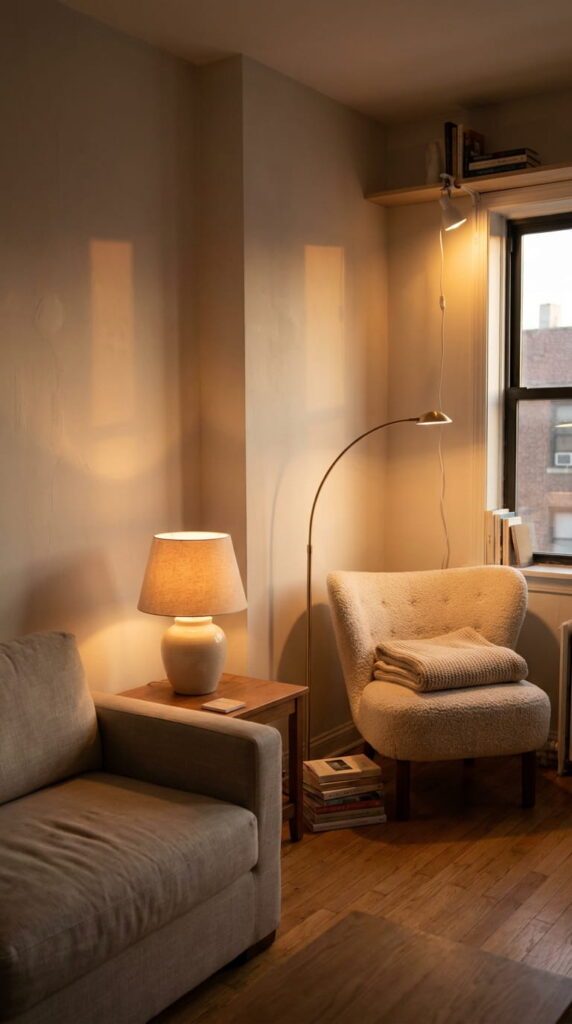
One ceiling fixture rarely creates a welcoming room. Layered lighting gives you control over mood and function. Add a floor lamp beside the sofa, a small lamp on a side table, and a reading light near a chair. The result feels intentional because the light sits at different heights.
This approach works beautifully in cozy living spaces, bedrooms, and open-plan rentals where one room serves several purposes. Use warm bulbs with a similar color temperature so the room feels connected. Lamps with ceramic, linen, wood, or woven details introduce natural materials without adding clutter. Avoid buying many tiny lamps. A few well-scaled pieces usually look calmer and more expensive.
8. Lean an Oversized Mirror Against a Wall
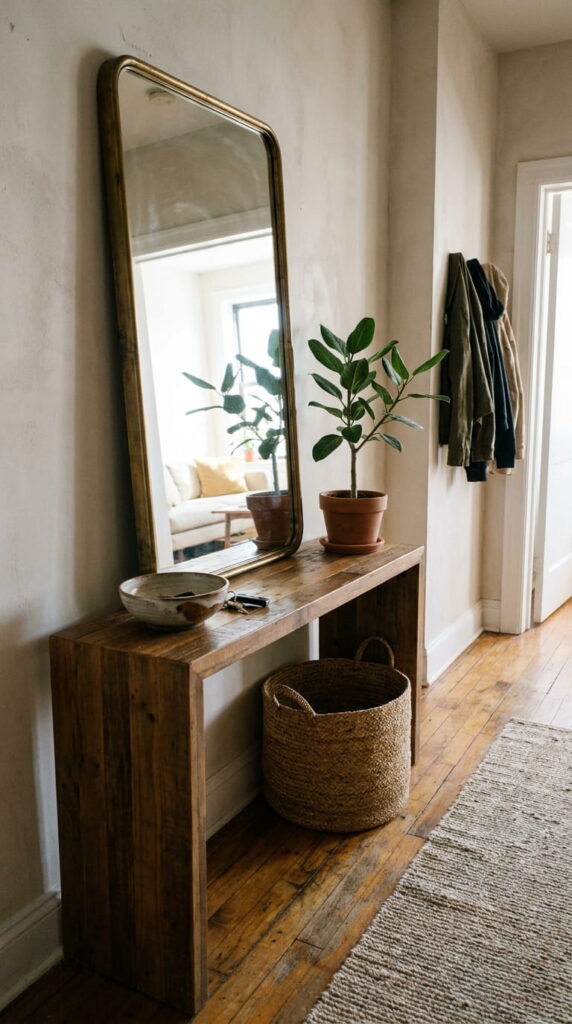
A large mirror can brighten a dim apartment and give a narrow room more visual breathing space. Lean one against a wall in a bedroom, living room, or entryway, or secure it with renter-safe anti-tip hardware. Place it where it can reflect daylight, a plant, or a clean furniture arrangement rather than a cluttered corner.
Choose a frame with warm wood grain, aged brass, or a slim black edge. The mirror should feel proportionate to nearby furniture. Architectural Digest includes mirrors among its smart strategies for making rentals feel more spacious. Avoid placing a large mirror where it creates glare or reflects an untidy work zone.
9. Build a Gallery Wall With Renter-Safe Hanging Methods
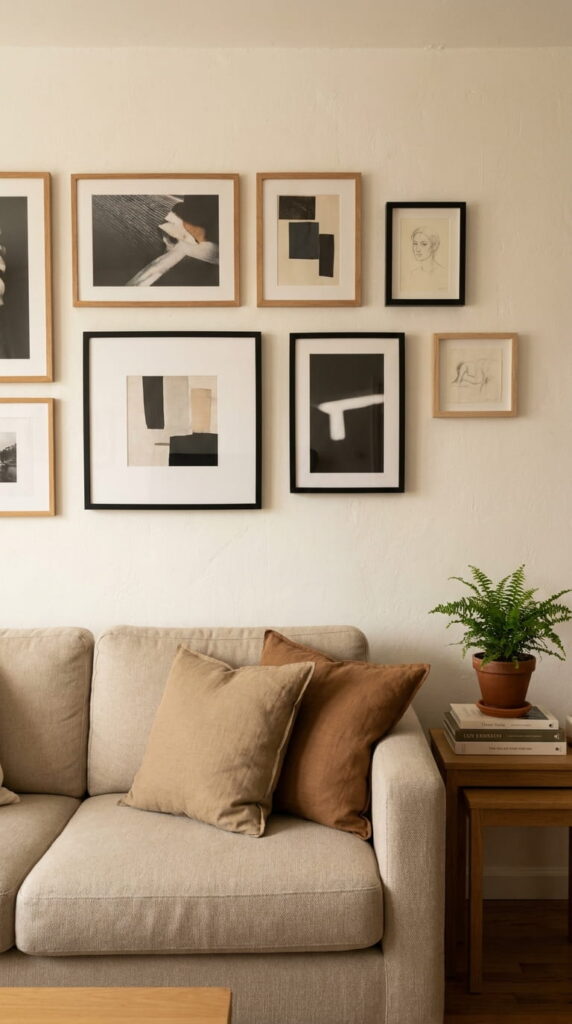
Framed art makes a rental feel personal, but random placement can make a wall look chaotic. Start with a simple arrangement on the floor. Mix two or three frame finishes at most, and repeat colors from the room so the display feels connected. Use removable picture-hanging strips when the frame weight and wall surface allow them.
Gallery walls work best above a sofa, console, staircase landing, or dining bench. Leave breathing room around the arrangement. Include photographs, prints, small sketches, or textile art for a collected look. Avoid spreading small pieces across a very large wall. A tighter grouping creates a stronger focal point and feels more curated.
10. Refresh Surfaces With Removable Contact Paper
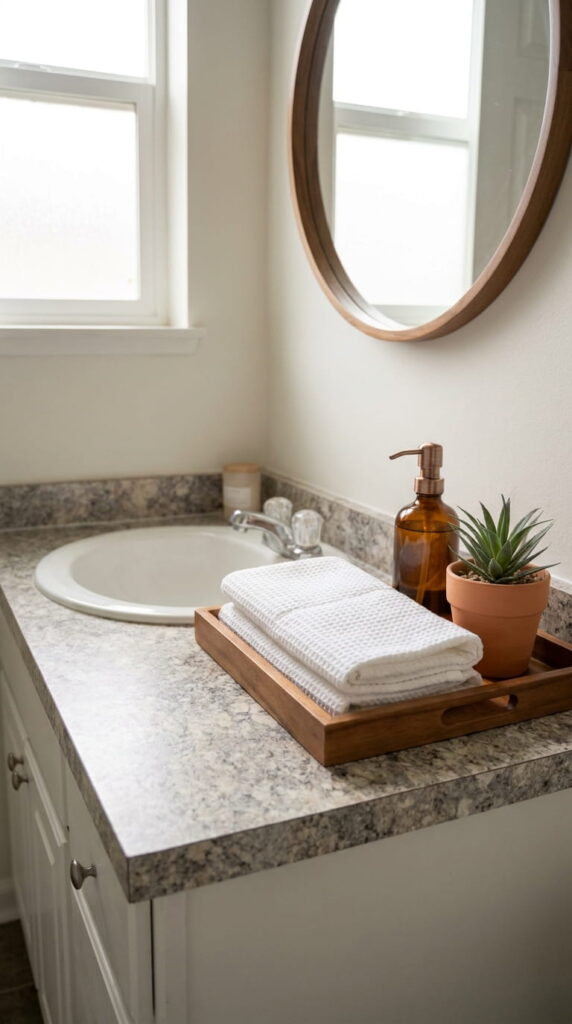
Removable contact paper can improve a worn vanity, shelf back, drawer interior, or small countertop section when you apply it carefully. Look for subtle stone, wood grain, or solid matte finishes. A quiet surface pattern usually looks more convincing than a dramatic faux marble print.
Architectural Digest shares several uses for removable contact paper in apartments, from simple surface refreshes to temporary decorative details. Always patch test first. Heat, moisture, chipped paint, and porous surfaces can affect removal. Use a smoothing tool and work slowly to reduce bubbles. Avoid covering every surface in the same print. One controlled update feels intentional; too much can look artificial.
11. Bring in Freestanding Shelving Instead of Built-Ins
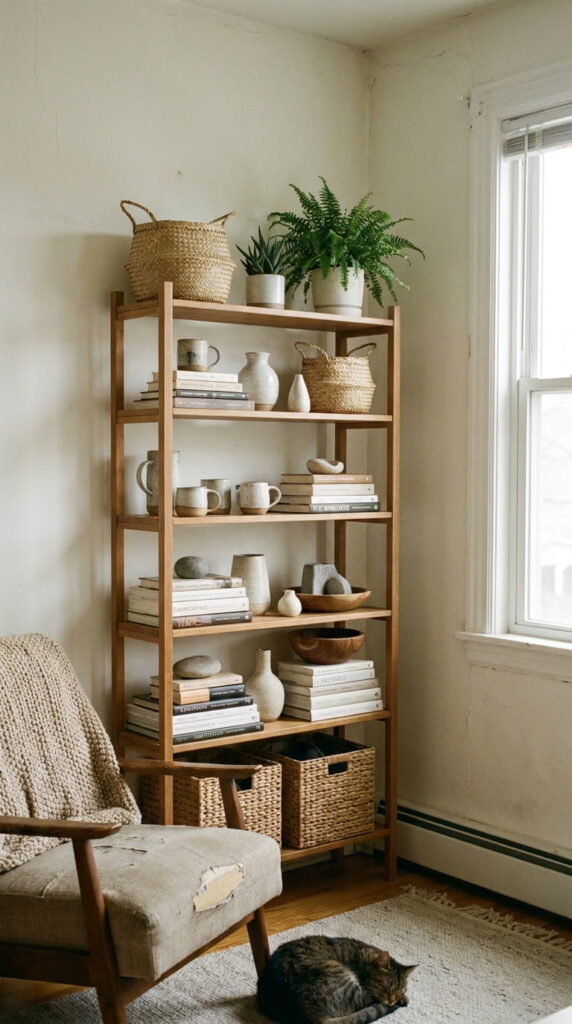
Freestanding shelves give renters vertical storage without committing to permanent cabinetry. A slim bookcase, open metal unit, or warm wood ladder shelf can hold books, ceramics, baskets, and plants while drawing the eye upward. This works especially well beside a desk, in a living room corner, or along an empty dining wall.
Style the shelves with a mix of open and closed storage. Keep practical items in woven baskets and leave some negative space between decorative pieces. For more room-by-room storage planning, see these small-space home storage and organization ideas. Avoid filling every shelf edge to edge. Empty space helps the display feel calm and deliberate.
12. Give the Bathroom a Hotel-Like Reset
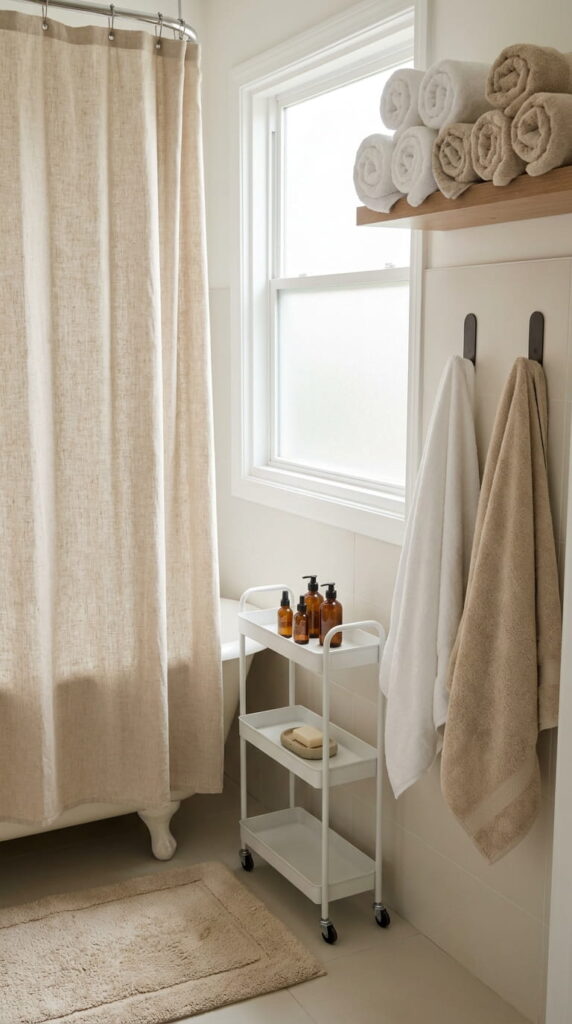
A rental bathroom often needs editing more than decorating. Replace mismatched towels with a coordinated set, add a washable bath mat, decant daily products into simple containers, and bring in a small tray for soap and skincare. A fabric shower curtain with a subtle texture can soften hard tile and builder-grade finishes.
Use adhesive hooks, a rust-resistant shower caddy, or a slim rolling cart when storage feels limited. These small bathroom organization ideas for renters can help you free up counters without drilling. For a warmer styling direction, browse these boho bathroom ideas. Avoid displaying every toiletry. A few visible essentials and closed storage create a cleaner, more restful room.
13. Style a Small Entryway Drop Zone
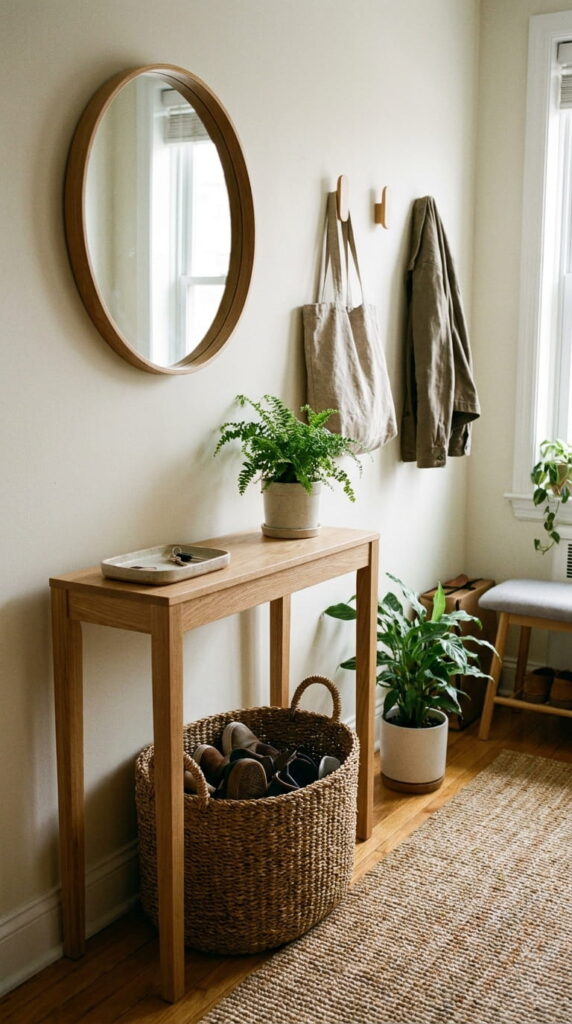
Even a narrow rental deserves a proper landing spot. A slim console, small bench, or wall-friendly shelf can collect keys, mail, and bags before clutter reaches the living room. Add a tray, a woven basket, and a mirror to create a functional entryway that still feels welcoming.
This idea works in apartments with tiny foyers or no formal entrance at all. Keep the palette simple and repeat materials used elsewhere, such as warm wood, black metal, or woven fibers. Use removable hooks for lightweight items after checking the surface. Avoid adding a deep cabinet that blocks the walkway. In a small entry, every inch should support an easy daily routine.
14. Add a Movable Kitchen Island or Utility Cart
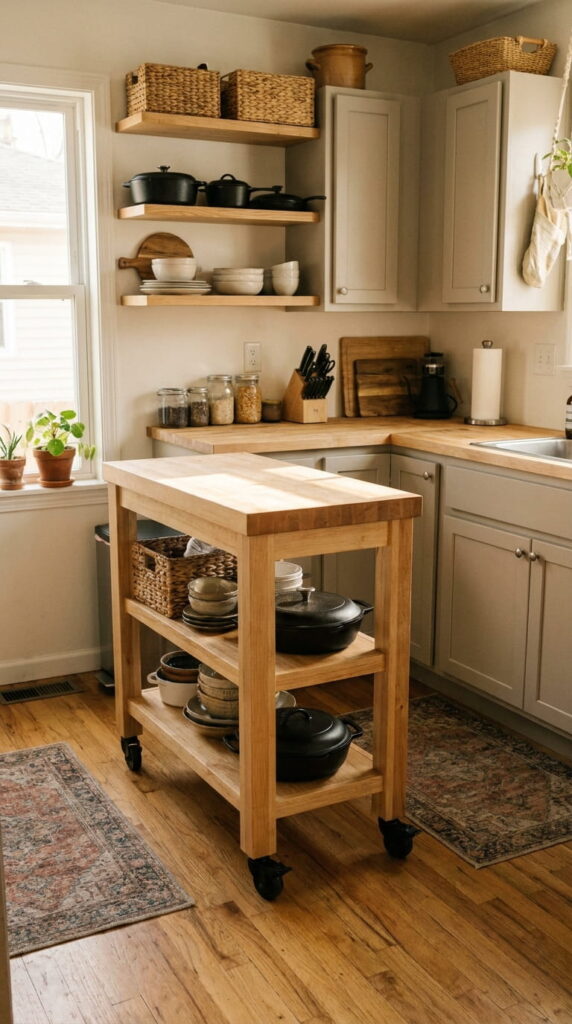
A freestanding cart can add prep space, storage, and character to a rental kitchen without altering the cabinets. Choose a narrow island with locking wheels, a butcher-block top, or open shelving for baskets and cookware. In a studio, it can also act as a soft divider between the kitchen and living area.
Measure your walking path before buying. Leave enough clearance to open doors, move around the cart, and cook comfortably. Browse these kitchen island ideas for different budgets and layouts for more planning inspiration. Avoid choosing a cart simply because it looks attractive online. The right piece should solve a real storage or surface problem.
15. Add Architectural Character With Removable Molding Details
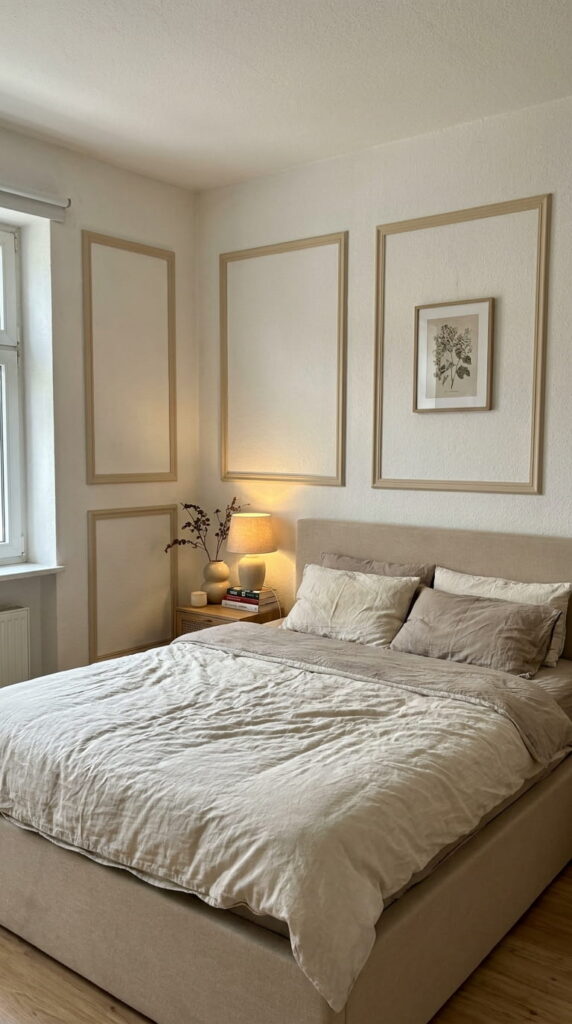
Flat walls can make a rental feel plain, but you do not need permanent carpentry to create more character. Lightweight removable molding, peel-and-stick trim, or carefully planned picture-frame details can bring gentle structure to a bedroom, dining nook, or hallway. Keep the finish close to the wall color for a subtle look.
Start with one small area and use a level. Test removal on a hidden spot before applying a full arrangement. Simple rectangles often feel more timeless than an elaborate pattern. Avoid placing temporary molding on textured, peeling, or recently painted walls. The best result looks quiet and proportionate, not overly decorative.
16. Choose Storage That Looks Like Decor
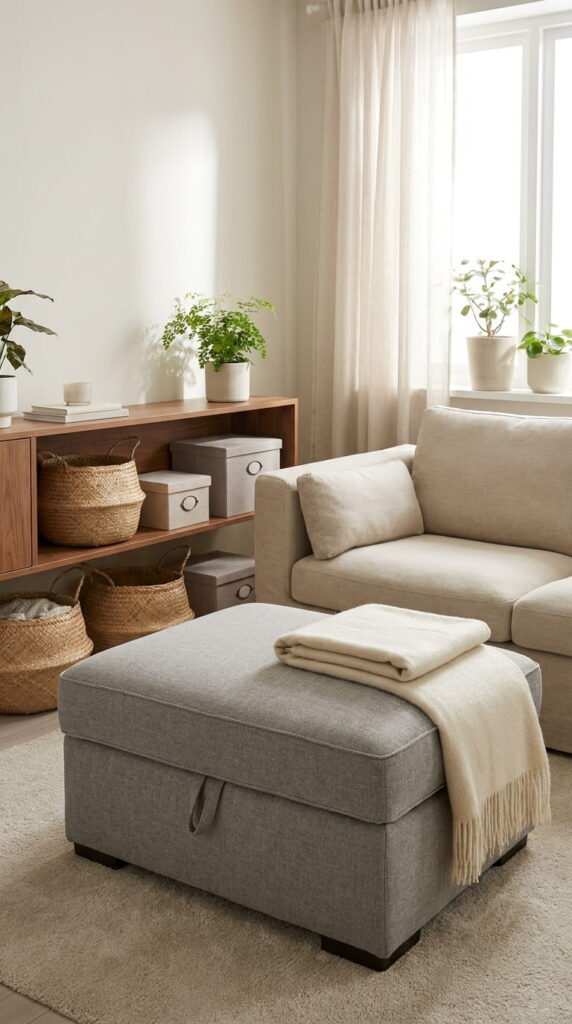
When storage remains visible, it should contribute to the room. Woven baskets, lidded boxes, upholstered ottomans, and storage benches keep daily items close while reducing visual noise. Use them for blankets, shoes, toys, cables, and paperwork. This approach works well in family rentals, studios, and small bedrooms.
Pick a limited range of materials so the room maintains visual harmony. For example, repeat seagrass baskets across two shelves rather than buying unrelated bins in several colors. Explore more storage and organization ideas when planning a clutter-prone room. Avoid using decorative storage as an excuse to keep items you no longer need.
17. Finish With Layered Textiles and Realistic Greenery
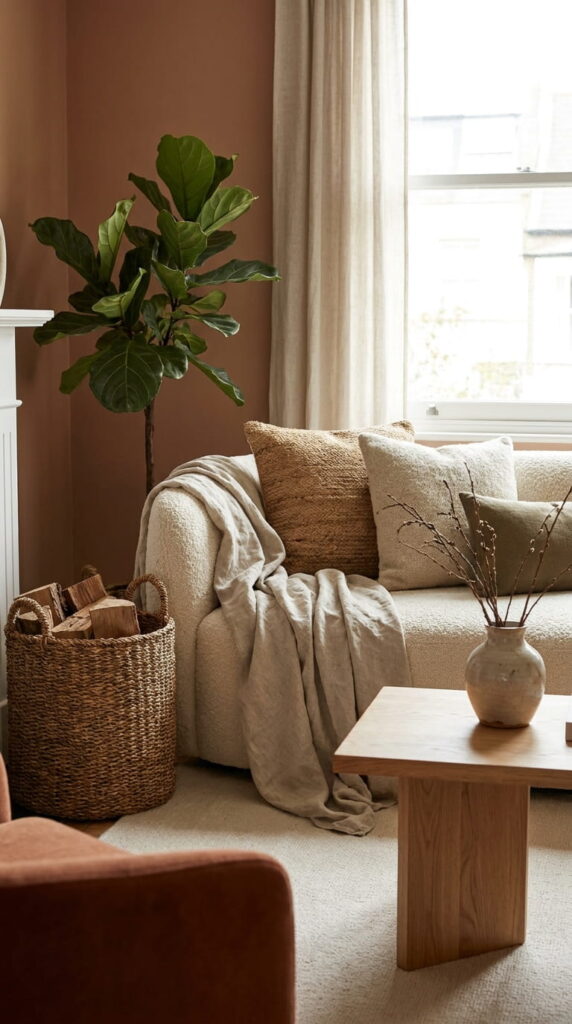
The final layer gives a rental its sense of warmth. Add a linen-look throw, textured cushions, a woven basket, and one or two plants with sculptural leaves. These details support organic modern styling because they bring soft edges, tactile textures, and natural forms into a room filled with hard surfaces.
Use restraint. Three cushions with varied textures often look better than ten competing patterns. Choose plants that suit the available light, or use one high-quality faux stem in a ceramic vase where care feels impractical. In a small apartment, biophilic design works best when it feels calm and believable. Avoid crowding every empty corner with decor.
Frequently Asked Questions
What are the best rental-friendly home upgrades to start with?
Start with changes that create a visible impact and move easily: curtains, a properly sized area rug, layered lamps, framed art, and coordinated bathroom textiles. Add removable wallpaper or a peel-and-stick backsplash after checking your lease, patch-testing the surface, and reading the product instructions.
Can peel-and-stick wallpaper damage rental walls?
It can damage some surfaces, especially peeling paint, textured walls, freshly painted walls, or areas exposed to moisture. Order a sample and test it in a hidden spot before covering a larger area. Follow the manufacturer’s removal instructions and avoid assuming every removable product works on every wall.
How can I make a rental kitchen look expensive on a budget?
Focus on a few controlled details: replace cabinet hardware, add a removable backsplash, clear crowded counters, and use a freestanding cart if you need prep space. Keep finishes consistent. A small number of coordinated changes usually looks more polished than many decorative accessories.
How do I decorate a rental without drilling holes?
Use freestanding shelves, leaning mirrors with safety restraints, tension rods, lamps, woven baskets, removable hooks, and picture-hanging strips rated for the item’s weight. Check your lease before using adhesive products. Some walls and painted surfaces react differently, so patch testing remains important.
Which rental upgrades are worth taking to the next home?
Invest in reusable pieces that can adapt to different rooms: curtains, area rugs, mirrors, lamps, framed art, storage ottomans, freestanding shelves, benches, and baskets. Choose timeless styling and warm neutrals so your pieces still work when your floor plan or wall color changes.
A Home Can Feel Like Yours Before You Own It
A rental does not need to stay in its original, impersonal state. The rooms you live in shape ordinary moments: the first cup of coffee, the quiet hour after work, the place where friends sit when they visit. Start with the part of your home that bothers you most. It may be the harsh light in the living room or the blank wall behind the bed.
Choose rental-friendly home upgrades that solve a real problem, then pause. Let the room tell you what it needs next. A home with character does not come from copying every trend. It grows through useful choices, honest textures, and details that reflect the way you actually live.