
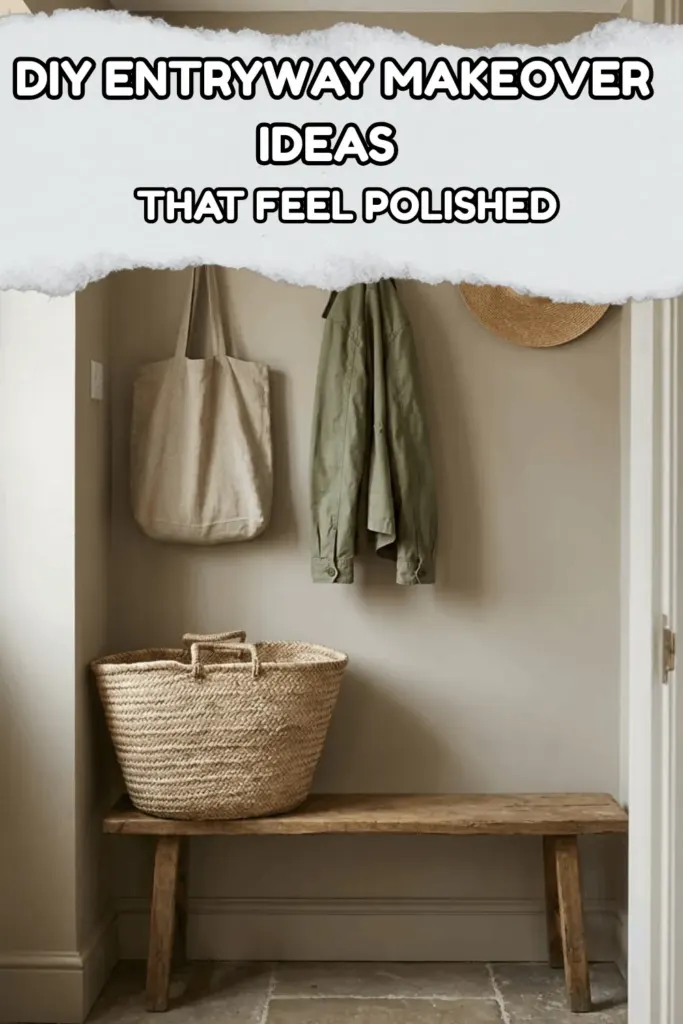
You open the front door with grocery bags in one hand and your keys slipping through the other. Shoes gather near the wall. Mail lands wherever there is room. The entrance feels more like a passing zone than the beginning of a home.
That small daily moment explains why thoughtful DIY entryway makeover ideas can make such a difference. An entryway does not need a grand staircase or a wide foyer. Even one blank wall beside the door can become a calm, useful landing place. A slim shelf can hold your keys. A woven basket can gather shoes. A mirror can catch the afternoon light and make a narrow hallway feel more open.
Start with the way you actually use the space. Then add beauty in quiet, practical layers.
Why a DIY Entryway Makeover Matters
An entryway carries two jobs at once. It welcomes people into the home, and it catches the objects that follow you through the door. When storage falls short, clutter quickly spreads into nearby rooms. When the area feels cold or unfinished, the rest of the home can lose some of its warmth.
The best DIY entryway makeover ideas solve both problems without filling the space with unnecessary decor. A few practical changes can make the entrance feel more organized, comfortable, and intentional. Hooks keep bags and coats off chairs. A rug defines the space. A mirror reflects light. A slim shelf or console gives keys and mail a proper place to land.
A good entryway feels simple. Everything has a place, and the room still has space to breathe.
Before You Begin: Watch How the Space Works
Before buying baskets or painting a wall, notice what happens near the door for a few days. Where do shoes collect? Do you drop your keys on the nearest surface? Does mail pile up? Do coats land on a chair in another room? Your answers will shape a better layout.
Measure the wall width, walkway, door swing, and nearby corners. Mark possible furniture dimensions on the floor with painter’s tape. Leave a comfortable path through the space. If you rent, review the lease before drilling, painting, or adding adhesive products. Save these rental-friendly home upgrades that look expensive for more removable ideas across the home..
17 DIY Entryway Makeover Ideas That Feel Polished
1. Paint the Inside of the Front Door
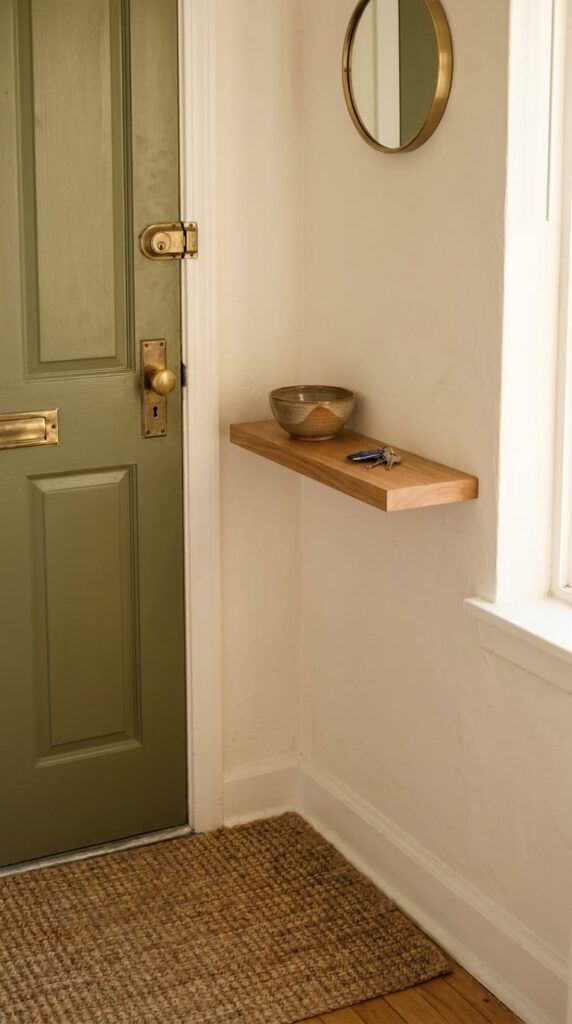
A painted door creates a strong focal point without asking you to cover every wall. Try muted olive, earthy terracotta, warm charcoal, dusty blue, or a deep mushroom tone. This small color block brings personality to an entryway and can connect the entrance with the palette used in nearby cozy living spaces.
The idea works best when the walls remain quiet and the door receives some natural or overhead light. Clean the surface, prepare it correctly, and choose paint suitable for the door material. Ask your landlord first if you rent. Avoid choosing a shade from a phone screen alone. Test a sample beside the flooring, trim, and hardware before committing.
2. Define the Entryway With a Durable Rug
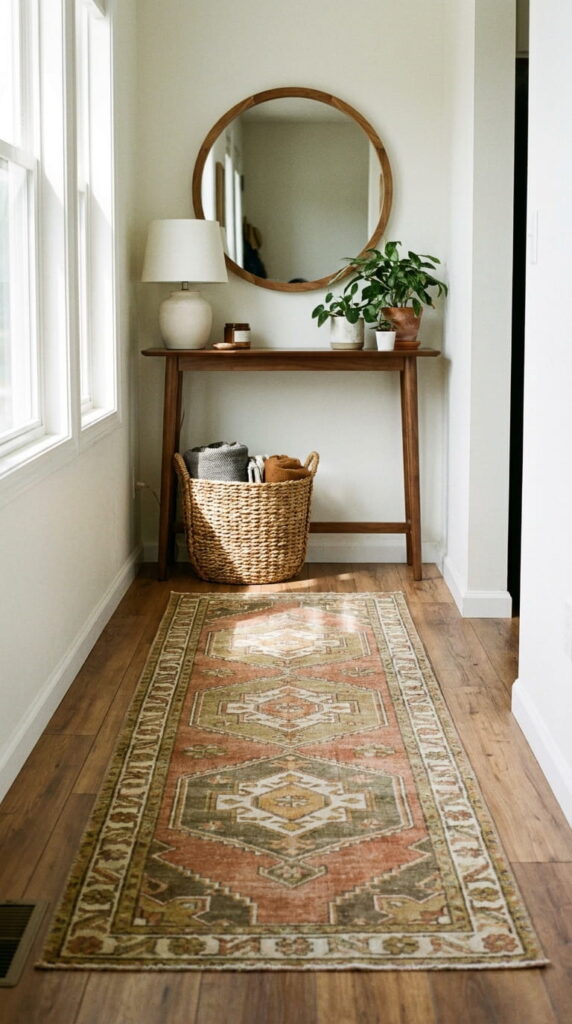
A rug can make an entryway feel like a distinct zone, especially when the front door opens directly into a living room or apartment hallway. Architectural Digest recommends using a rug to unify a small entrance and visually separate it from the surrounding room.
Choose a washable, low-pile runner or small area rug with a non-slip pad. Muted stripes, vintage-style patterns, and earthy palettes hide everyday wear while adding tactile texture. Measure the door clearance before shopping so the rug does not catch when the door opens. Avoid a tiny mat that floats awkwardly in the middle of the floor. The rug should anchor the entry without blocking movement.
3. Add a Slim Console Table for Everyday Essentials
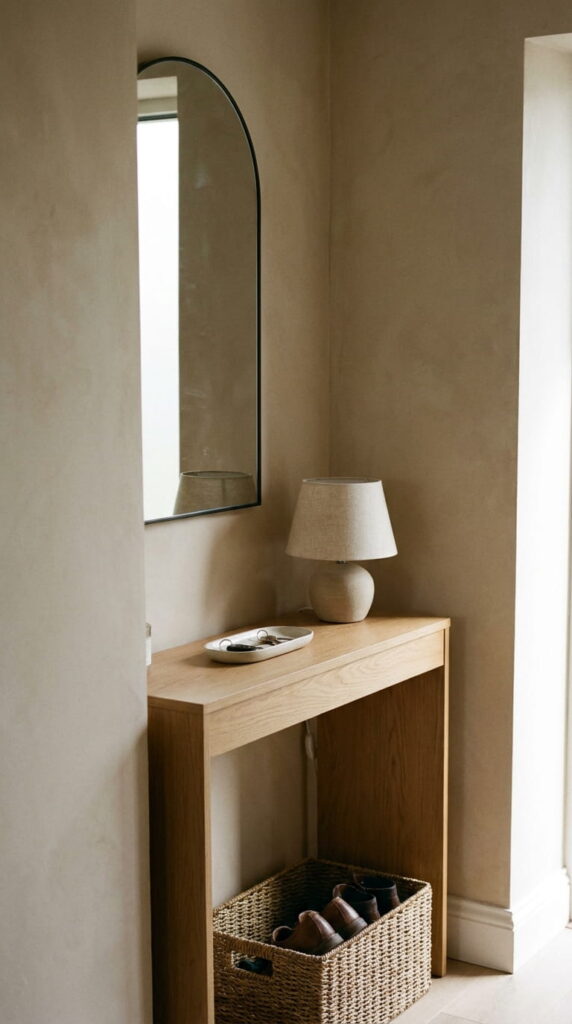
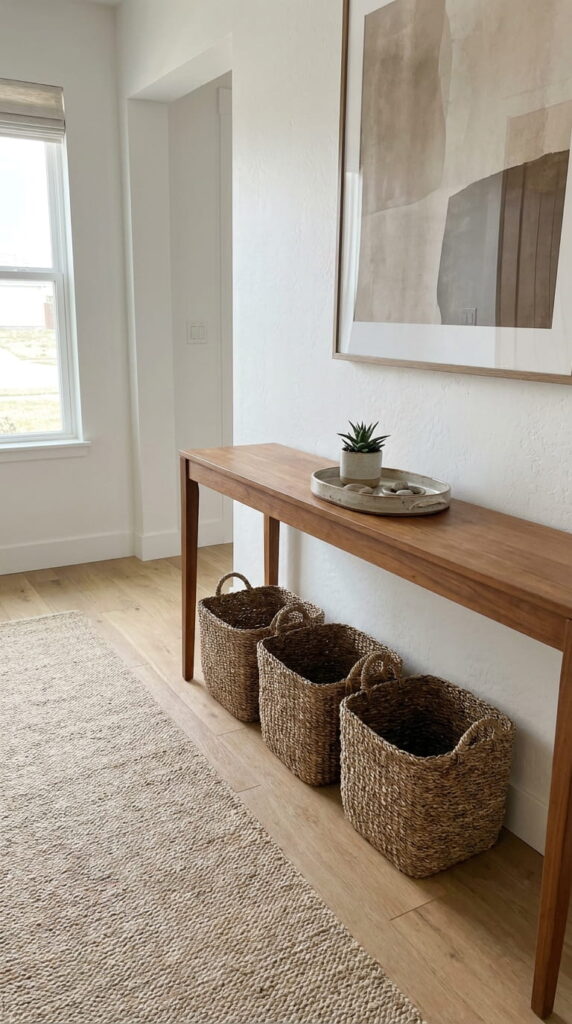
A narrow console gives keys, mail, sunglasses, and small bags a proper landing place. It also adds a horizontal surface that makes an empty wall feel more intentional. Architectural Digest’s entryway ideas highlight the classic pairing of a sleek console table and a statement mirror.
Choose a shallow design with drawers or a lower shelf when space allows. Place a tray on top for keys and a basket below for shoes or reusable bags. Keep the styling light: one lamp, one bowl, and a small branch in a ceramic vase can be enough. Avoid a deep cabinet that narrows the walkway or a cluttered tabletop that becomes another drop zone.
4. Mount a Floating Shelf When Floor Space Feels Tight
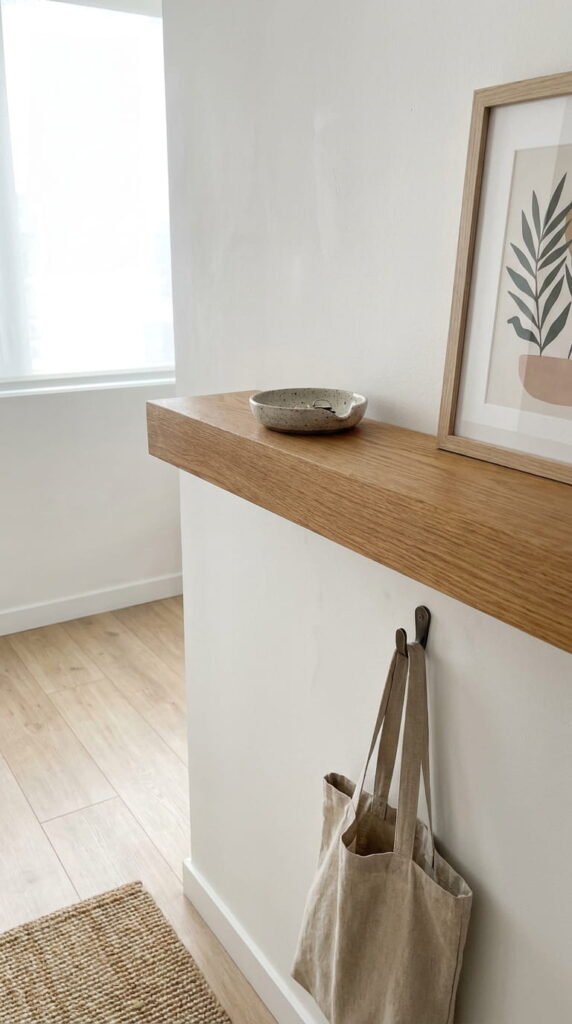
A floating shelf can replace a console table in an apartment entryway where every inch matters. It creates a surface for keys, mail, and a small decorative object while leaving the floor open. The result feels lighter and makes cleaning easier.
Install the shelf at a comfortable height and secure it correctly for the intended weight. Add a small tray or lidded box for loose items. A warm wood shelf brings rich grains into a neutral space, while a painted shelf can blend quietly into the wall. For a renter-friendly version, choose a freestanding narrow ledge instead of drilling. Avoid overloading the shelf with heavy objects or too many decorative pieces.
5. Install Wall Hooks at the Right Height
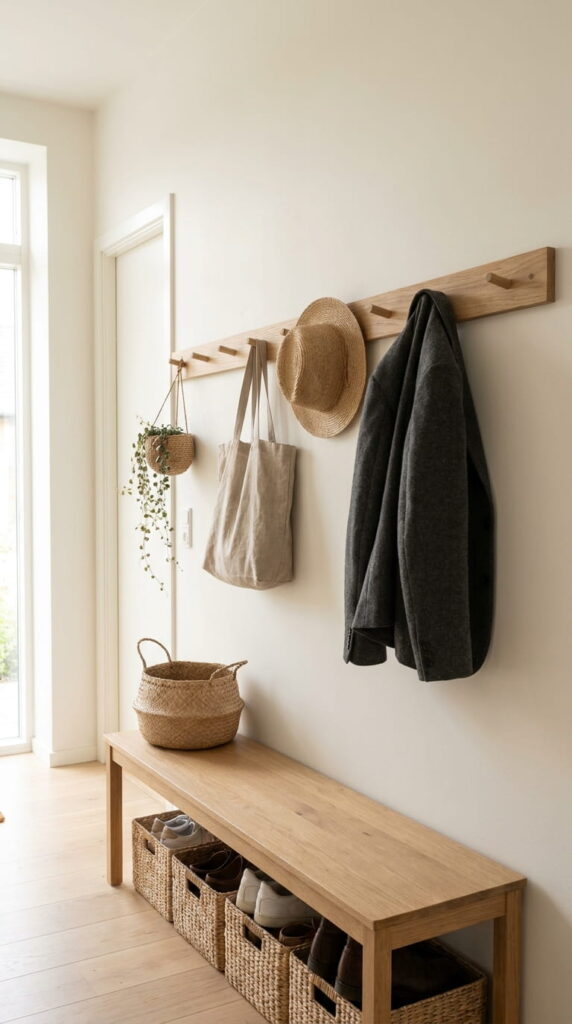
Hooks make an entryway work harder without taking up floor space. Architectural Digest calls them especially useful in small entrances because they add both storage and visual interest. Use them for coats, bags, hats, pet leashes, and umbrellas.
Mount a short row of hooks at adult height, then add one or two lower hooks when children use the space. Choose a finish that relates to nearby hardware, such as aged brass, matte black, or warm wood. Find the wall studs or use suitable anchors before hanging heavier items. Avoid placing too many hooks in one row. When every hook stays full, the wall can look crowded rather than organized.
6. Build a Simple Entryway Bench With Shoe Storage
A bench creates a natural pause between arriving home and moving into the rest of the house. It gives you a place to sit while removing shoes, setting down bags, or helping a child get ready. Better Homes & Gardens recommends pairing a bench with a shallow basket underneath for practical shoe storage.
A basic DIY version can use a sturdy wood top and simple legs, or you can refresh a thrifted bench with paint and a washable cushion. Choose a narrow depth so the walkway remains open. Slide matching woven baskets underneath for shoes, scarves, or seasonal items. Avoid turning the bench into a permanent pile of bags. Leave enough clear surface for its original purpose.
7. Use Baskets to Hide Visual Clutter
Woven baskets introduce natural materials while keeping daily objects out of sight. Use one under a console for shoes, one on a shelf for winter accessories, or a lidded basket for items you need less often. Their warm fibers add softness to hard surfaces such as tile, painted walls, and metal hooks.
Choose two or three baskets in similar tones to create visual harmony. Label hidden storage when several people share the home. Keep frequently used items easy to reach and move seasonal pieces elsewhere. Avoid buying baskets before sorting the clutter. Storage works best when each container has a clear job. Too many baskets can fill the floor and make a small entrance harder to navigate.
8. Hang a Mirror to Reflect More Light
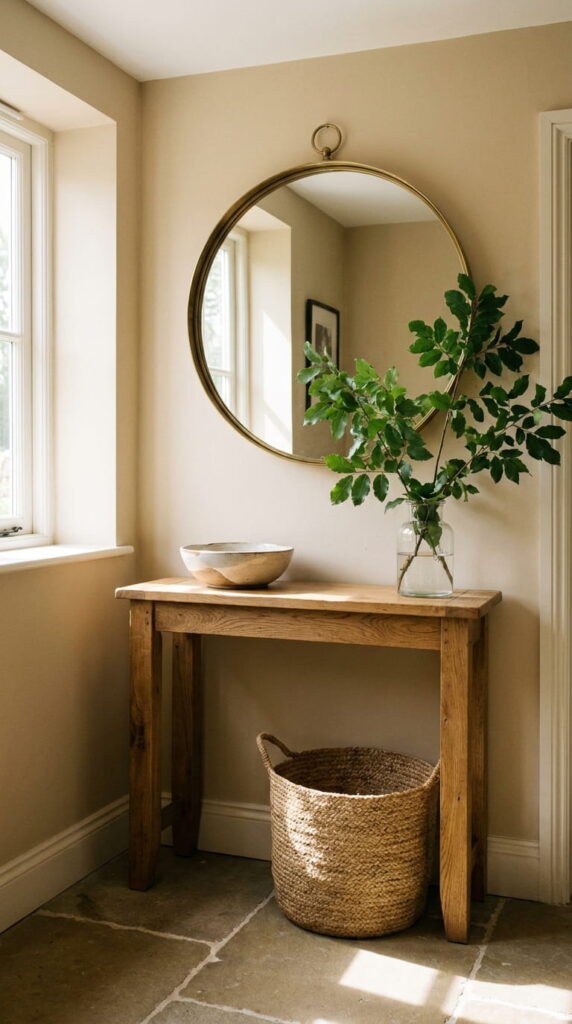
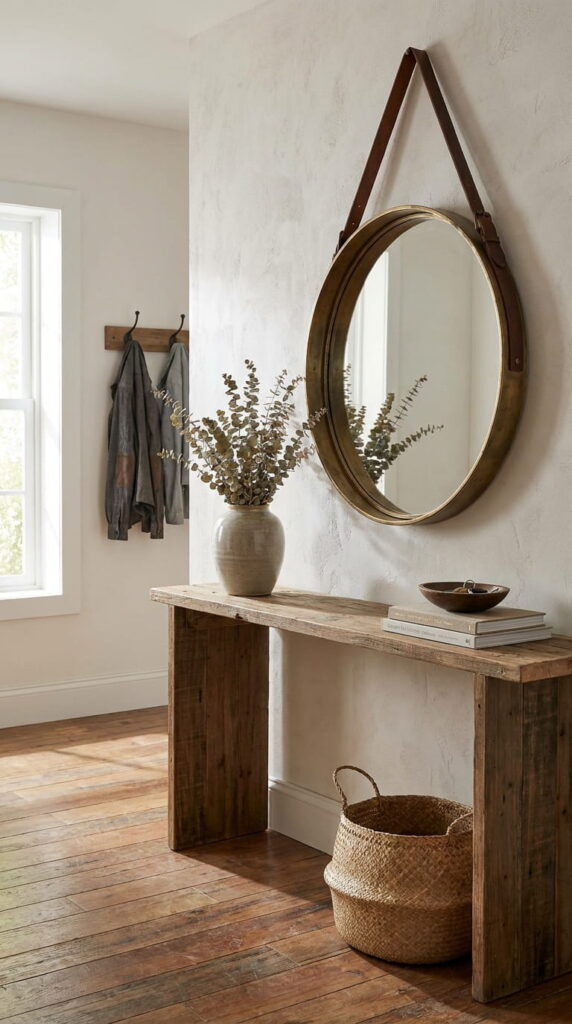
A mirror helps a compact entryway feel brighter and more open because it reflects nearby light. It also serves a practical purpose when you check your appearance before leaving. Better Homes & Gardens includes an accent mirror among the essential elements of a functional entryway.
Choose a shape that balances the furniture below it. A round mirror softens a narrow console, while a tall arch draws the eye upward. Hang it at a comfortable viewing height and make sure it reflects a pleasant angle, such as a window, plant, or clean wall. Avoid placing a very small mirror above a wide console. The scale should feel connected.
9. Create an Entryway Accent Wall With Removable Wallpaper
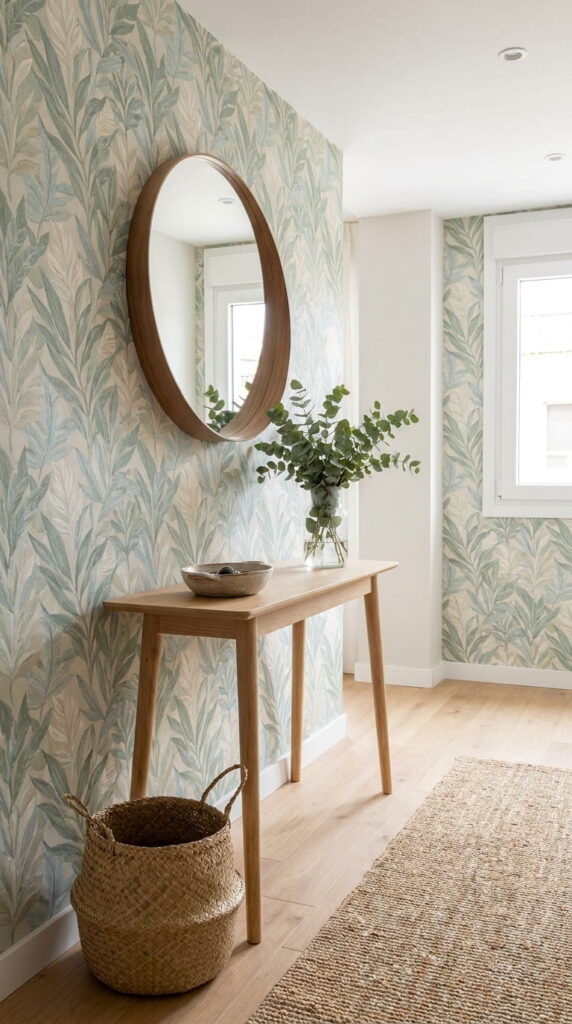
Wallpaper can give a plain entrance a sense of character without taking away floor space. A branch-inspired botanical, soft stripe, small-scale check, or linen-look print works well in narrow areas. Keep the pattern connected to the surrounding rooms through color rather than trying to match every detail.
Apply removable wallpaper to one focal wall behind a console, bench, or mirror. Order a sample first and check it in morning and evening light. Patch-test the adhesive on a hidden area, especially in a rental. For more focused inspiration, browse these removable wallpaper ideas for small rooms. Avoid adding crowded artwork over a detailed print. Give the pattern room to speak.
10. Add Vertical Paneling or Simple Wall Molding
DIY wall paneling can bring architectural character to a basic entryway. Try vertical battens, beadboard-style panels, or simple picture-frame molding on one section of the wall. Vertical lines can make a low ceiling feel taller, while molding adds quiet structure to an otherwise flat surface.
This idea works best behind a bench, along a short hallway, or around a row of hooks. Paint the paneling the same color as the wall for a subtle result, or use a muted contrasting tone for more depth. Plan the spacing with painter’s tape before cutting anything. In a rental, use removable lightweight trim only after testing the adhesive. Avoid elaborate patterns in a very narrow space. Simpler lines usually feel calmer.
11. Style a Practical Drop Zone for Keys and Mail
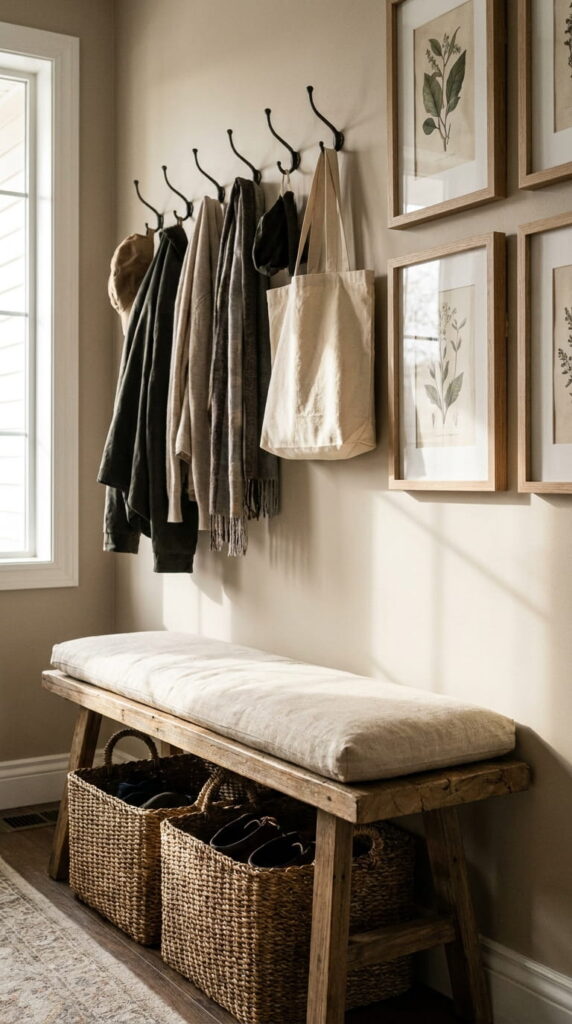
Small objects create outsized clutter near the front door. A dedicated drop zone prevents keys, receipts, and unopened mail from spreading across the home. Place a small tray, divided box, or shallow basket on a console or floating shelf. Add one wall-mounted sorter when paper mail regularly piles up.
Keep the routine easy. Put the tray exactly where your hand naturally reaches when you walk through the door. Sort mail often and recycle unwanted paper before it becomes a stack. Better Homes & Gardens recommends gathering grab-and-go items in a tray or basket so they remain easy to find. Avoid using several containers for the same purpose. A simple system usually lasts longer.
12. Refresh the Ceiling Light or Add a Warm Lamp
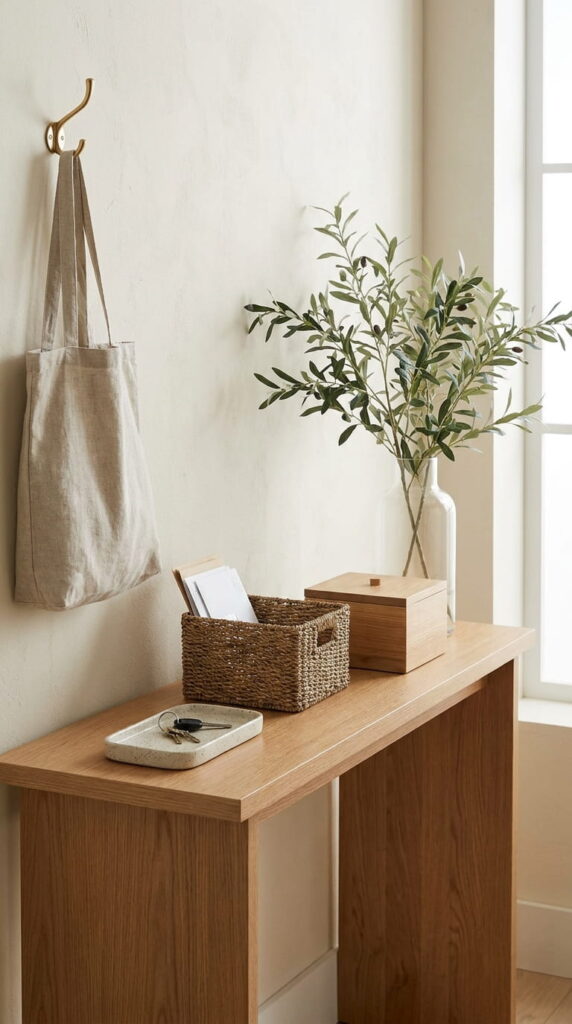
Lighting shapes the way an entryway feels after dark. A dated ceiling fixture can make the whole area look flat, while a better flush mount, pendant, or wall sconce can bring warmth and personality. Architectural Digest notes that a statement fixture can help a small area feel larger and taller.
Choose a scale that suits the ceiling height and doorway clearance. Use a warm bulb that relates to the lighting in nearby rooms. When electrical work exceeds your experience, hire a qualified professional. In a rental, place a small table lamp on the console instead. Avoid harsh, cold lighting that makes the entrance feel clinical.
13. Create an Entryway When the Door Opens Into the Living Room
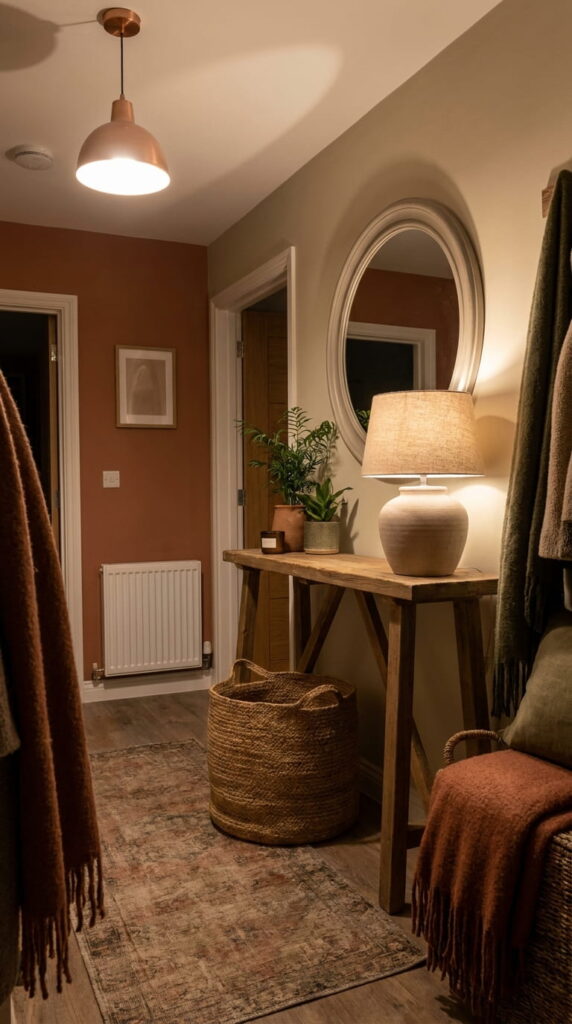
Some homes do not have a formal foyer. The front door opens straight into the living area, leaving no obvious place for shoes, bags, or keys. You can still create a clear entrance with a rug, wall hooks, and a slim shelf or bench.
Place the rug perpendicular to the door to define the zone. Add one vertical feature, such as a mirror or artwork, and keep the furniture footprint small. Repeat colors from the living room so the entrance feels connected rather than added as an afterthought. Use closed storage when possible to protect the calm of the shared room. Avoid bulky dividers unless the layout has enough space. A visual boundary often works better than a physical one.
14. Add a Large Artwork or Framed Print
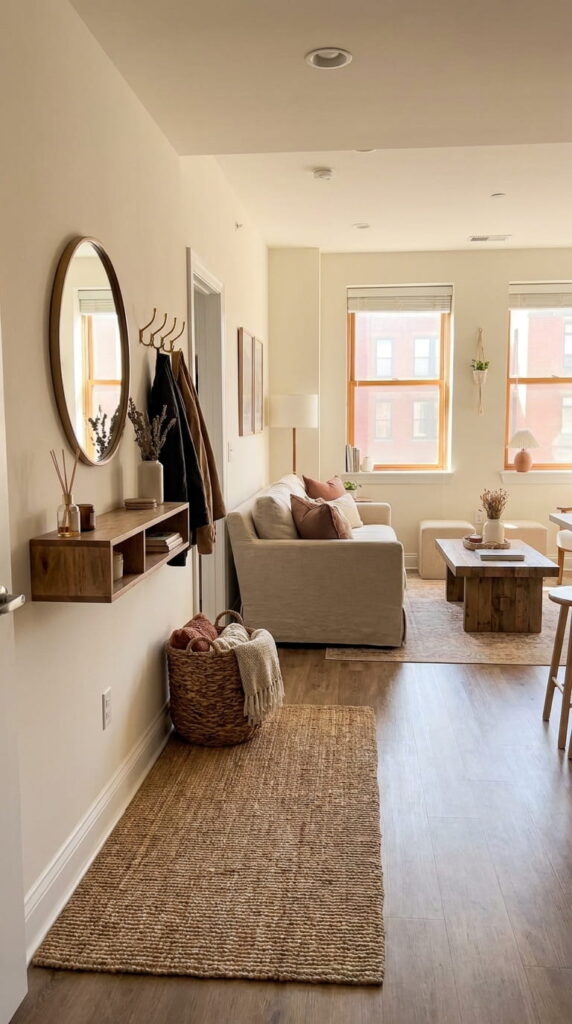
One strong artwork can give a small entryway more presence than a gallery wall filled with tiny frames. Choose a botanical print, muted landscape, textured abstract piece, or vintage-style illustration that reflects the mood of the home. A vertical frame can help draw the eye upward in a narrow hall.
Hang the artwork above a bench or console, leaving enough space around it to feel intentional. Pull one color from the image into a cushion, rug, or ceramic bowl. Better Homes & Gardens’ small-entryway guide recommends using large statement artwork to create a focal point and make the area feel more spacious. Avoid crowding the wall with several competing pieces.
15. Add One Plant or a Simple Branch Arrangement
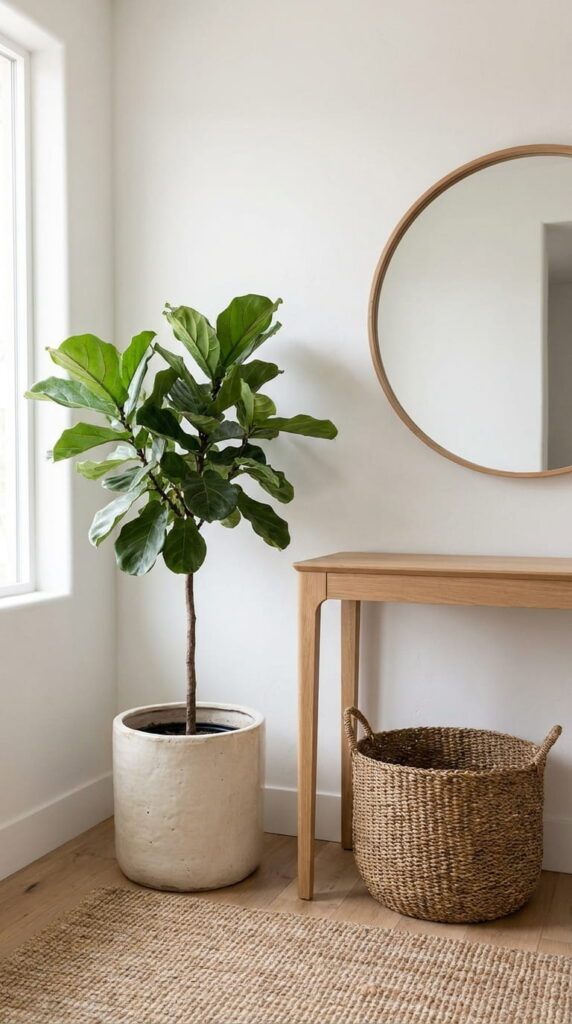
A small amount of greenery can make an entryway feel softer and more welcoming. One sculptural plant beside a console or a leafy branch in a ceramic vase brings a natural shape into a space filled with straight lines. This supports biophilic design without asking for a complicated display.
Choose a plant that suits the available light. Snake plants, pothos, and other adaptable options may work in lower-light entrances, while a brighter doorway can support a fuller leafy plant. A realistic faux branch can offer an easier option when natural light stays limited. Avoid filling a narrow walkway with oversized planters. One well-placed natural detail creates more impact than several small pots scattered across the area.
16. Use a Peg Rail for Flexible Storage
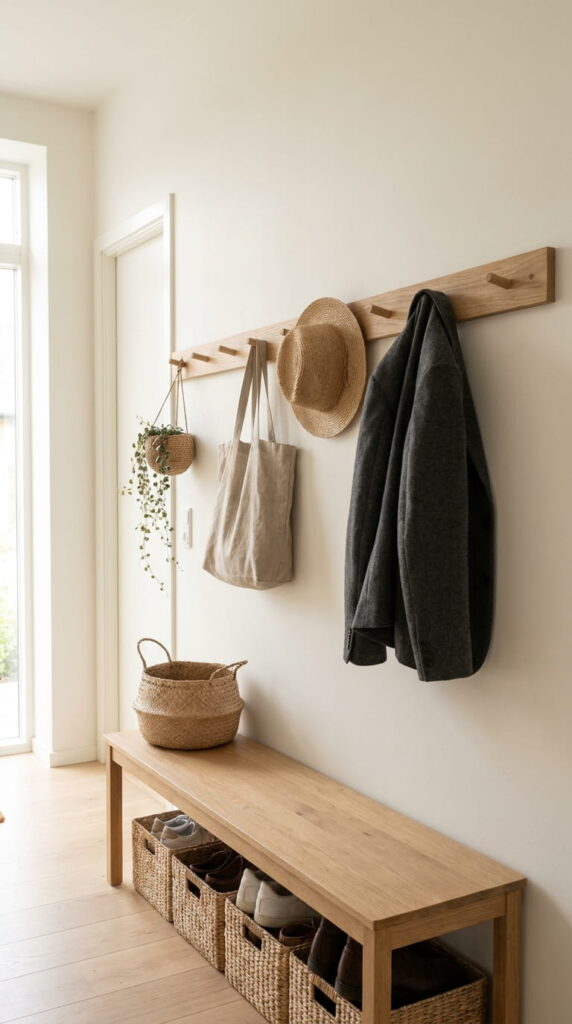
A peg rail offers a softer, more handcrafted alternative to a basic row of hooks. It works well in organic modern, cottage-inspired, Scandinavian, and warm minimalist interiors. Use it for hats, canvas bags, lightweight jackets, and small hanging baskets.
Install the rail above a bench or along an empty hallway wall. Choose warm wood for visible grain, or paint it to match the wall for a quieter look. Keep the arrangement edited so some pegs remain empty. This breathing room prevents the display from becoming visually heavy. Pair the rail with a low basket or shoe tray to keep the floor organized. Avoid hanging wet coats against finishes that may react poorly to moisture.
17. Finish With a Layered but Restrained Styling Moment
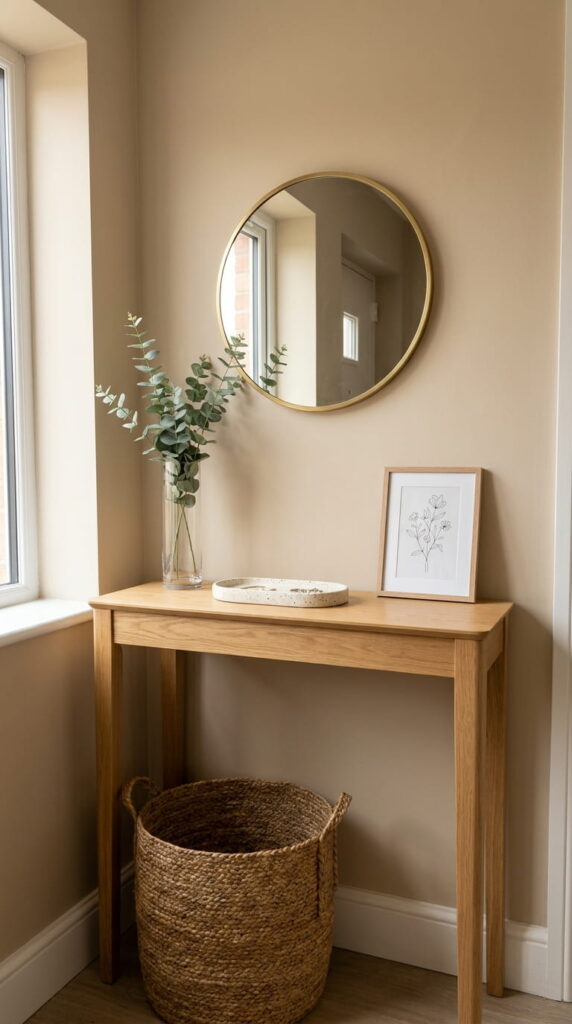
The final layer should make the entryway feel personal, not crowded. Add a small ceramic tray, one framed print, a woven basket, and a simple branch arrangement. Repeat two or three materials already present in the home, such as oak, aged brass, linen, or seagrass. This creates a curated look without making the entrance feel staged.
A console table offers the easiest surface for styling, but a shelf or bench can work just as well. Keep useful items within reach and let decorative objects support the room rather than interrupt it. If you plan to refresh more compact areas, these small bathroom makeover ideas on a budget and apartment kitchen upgrades without renovation can help continue the same practical approach.
Frequently Asked Questions
What are the easiest DIY entryway makeover ideas for beginners?
Start with a durable rug, a mirror, a key tray, woven baskets, and a short row of hooks. These updates improve the space without requiring advanced tools. Add a slim console or bench after measuring the walkway and door swing.
How can I make a small entryway look more expensive?
Use fewer items with better scale. Choose a well-sized mirror, a narrow console, warm lighting, and one focal point such as wallpaper or artwork. Repeat two or three finishes across the space and keep daily clutter inside baskets or drawers.
How do I create an entryway when my front door opens into the living room?
Define the entrance with a rug, wall hooks, and a slim shelf or bench. Add a mirror or vertical artwork to create a visual anchor. Repeat colors from the living room so the new zone feels connected to the rest of the home.
What should every functional entryway include?
A practical entryway needs a place for keys, a solution for shoes, hooks or storage for bags and coats, good lighting, and a clear walking path. A mirror, rug, and bench can add comfort when the available space allows them.
How can I update a rental entryway without damaging the walls?
Use freestanding furniture, baskets, a leaning mirror secured safely, a washable rug, and renter-safe hooks rated for the intended weight. Patch-test adhesive products before applying them widely, and review the lease before painting or drilling.
Let the Entrance Tell the First Part of Your Story
The entryway may be one of the smallest spaces in the home, but it shapes the feeling of every arrival. It catches the things you carry. It greets your guests. It gives you a quiet moment to exhale after a long day.
The most useful DIY entryway makeover ideas do not chase perfection. They bring order to ordinary routines and add warmth through small details: a sturdy hook, a basket with rich woven texture, a mirror that reflects the light, or a door painted in a color that makes you smile.
Start with one problem. Solve it simply. Then let the space grow into a welcome that feels personal, practical, and unmistakably yours.