
A coffee maker squeezed between the toaster and a stack of mail technically gets the job done, but it does not make your morning routine feel especially inviting.
A dedicated coffee station can change that without requiring a kitchen remodel or a huge amount of space. Even a narrow cabinet, unused corner, small cart, or organized section of countertop can become a cozy spot for brewing your first cup of the day.
The best rustic coffee bar ideas combine warm wood, practical storage, natural textures, and comfortable colors with cleaner modern details. Think oak shelves instead of heavily distressed signs, handmade-looking ceramics instead of themed accessories, and matte black hardware paired with warm neutral finishes.
Below are 12 ideas you can adapt to large kitchens, small apartments, dining rooms, breakfast nooks, and awkward corners.
12 Modern Rustic Coffee Bar Ideas
1. Create a Warm Wood Coffee Bar With Black Accents
Natural wood and matte black are an easy starting point when you want rustic warmth without making the kitchen look overly farmhouse.
Use an oak, walnut, or medium-toned wood cabinet as the base. A black coffee maker, slim black handles, and simple dark metal shelf brackets can add enough contrast to give the station a modern edge.
Keep the surrounding accessories quieter. Cream stoneware mugs, a clear jar filled with coffee beans, and one small leafy plant are usually enough.
This combination works especially well against warm white, soft beige, or greige walls. The lighter background allows the grain of the wood to become the main decorative feature.
I like this approach because you do not need many decorative objects to make it feel finished. Good materials do most of the work.
If your existing kitchen cabinets are still functional but need more character, Decor Fixer’s guide to 15 Cabinet Makeover Ideas Without Replacing Cabinets offers several ways to update them without starting from scratch.
2. Turn an Empty Kitchen Corner Into a Coffee Nook
Look around your kitchen for space that is technically available but rarely useful.
An empty corner beside a refrigerator, a blank wall near the dining area, or the end of a cabinet run can often hold a compact coffee nook.
Start with a narrow console, small cabinet, or sturdy freestanding unit. Place the coffee maker toward one side rather than directly in the center. That leaves a little working room for setting down a mug, measuring coffee, or adding milk.
Use the wall above it for one or two shelves if the layout allows. Keep frequently used mugs and canisters within comfortable reach.
The trick is to design the corner around your actual routine rather than simply decorating an empty wall.
In a small kitchen, every new piece of furniture needs to earn its footprint. You can find more compact furniture and workspace inspiration in 12 Easy DIY Kitchen Island Ideas for Small Kitchens.
3. Add Reclaimed Wood Floating Shelves
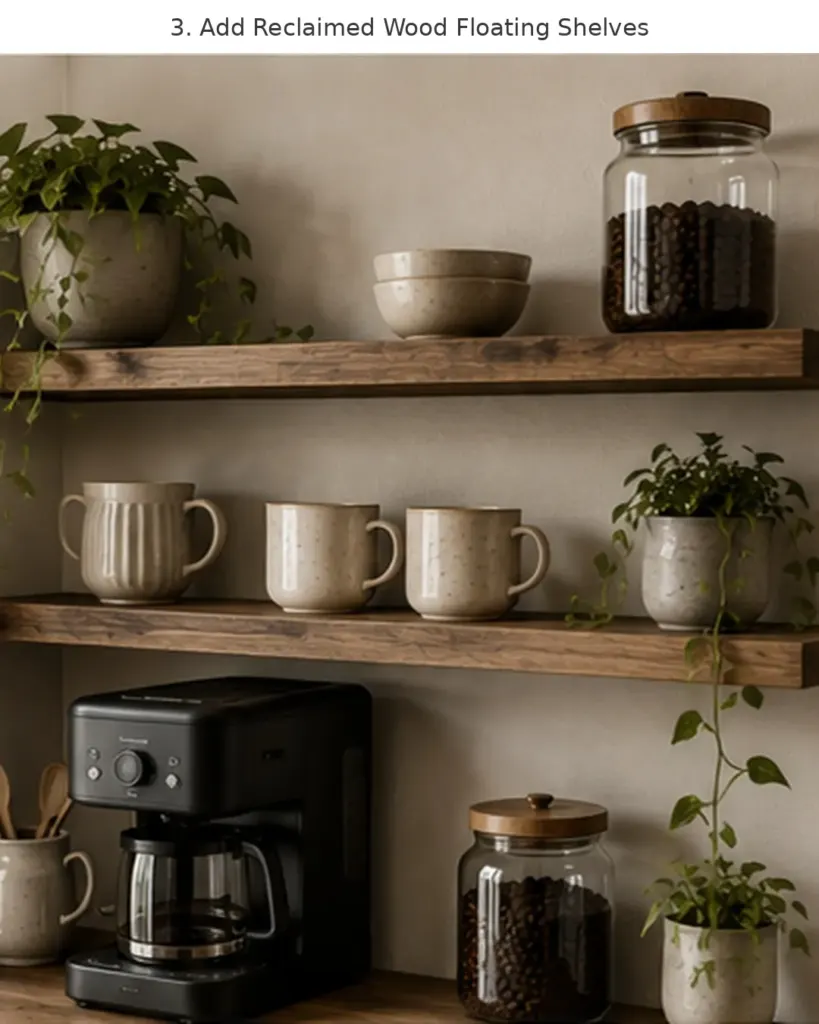
Few materials create rustic character as quickly as wood with visible grain, knots, and natural variation.
Install one or two chunky wood shelves above the coffee maker and use them for the supplies that are attractive enough to leave visible.
A row of neutral mugs, a glass container of beans, a small ceramic bowl, and perhaps one trailing plant can fill the shelves without overwhelming them.
Try not to treat every inch as storage. Open shelving looks best when there is some empty space between groups of objects.
For a more modern interpretation, pair the rougher wood with clean-lined cabinetry and a simple coffee machine rather than adding distressed signs or several vintage accessories.
That contrast between weathered texture and cleaner contemporary pieces is what makes the look feel current.
Quick Styling Formula
Use one main coffee machine, one natural tray, two useful containers, three or four mugs, and one small organic element such as a plant or branch.
Then stop.
A coffee bar usually looks more polished when you can still see part of the countertop and shelving.
4. Use a Vintage-Inspired Sideboard as Your Coffee Station
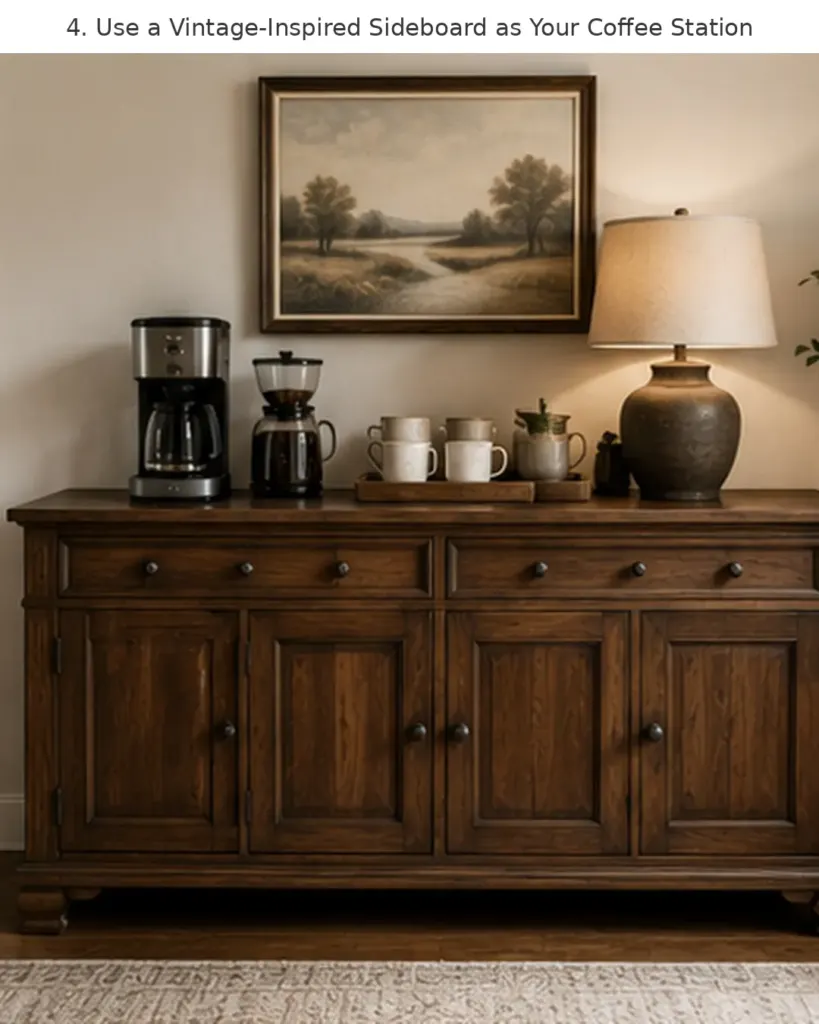
A sideboard or buffet can create a substantial coffee bar without adding permanent cabinetry.
This works particularly well along a dining room wall or in an open-plan kitchen where you have more wall space than countertop space.
Choose a piece with warm wood, simple paneling, or gently aged hardware. You want character, but the furniture does not need to look heavily distressed.
The drawers are perfect for spoons, filters, napkins, tea bags, and small tools. Use the larger cabinet sections for extra coffee, serving pieces, reusable travel cups, or appliances you do not need every morning.
Keep the top more restrained.
A coffee machine, grinder, tray, and a small lamp can make the sideboard feel like a real destination rather than another storage unit.
This is also a smart place to use a secondhand furniture find. Older solid-wood pieces often add the kind of natural variation that makes rustic rooms feel collected rather than overly coordinated.
5. Build a Small Farmhouse Coffee Bar With Cream Cabinets
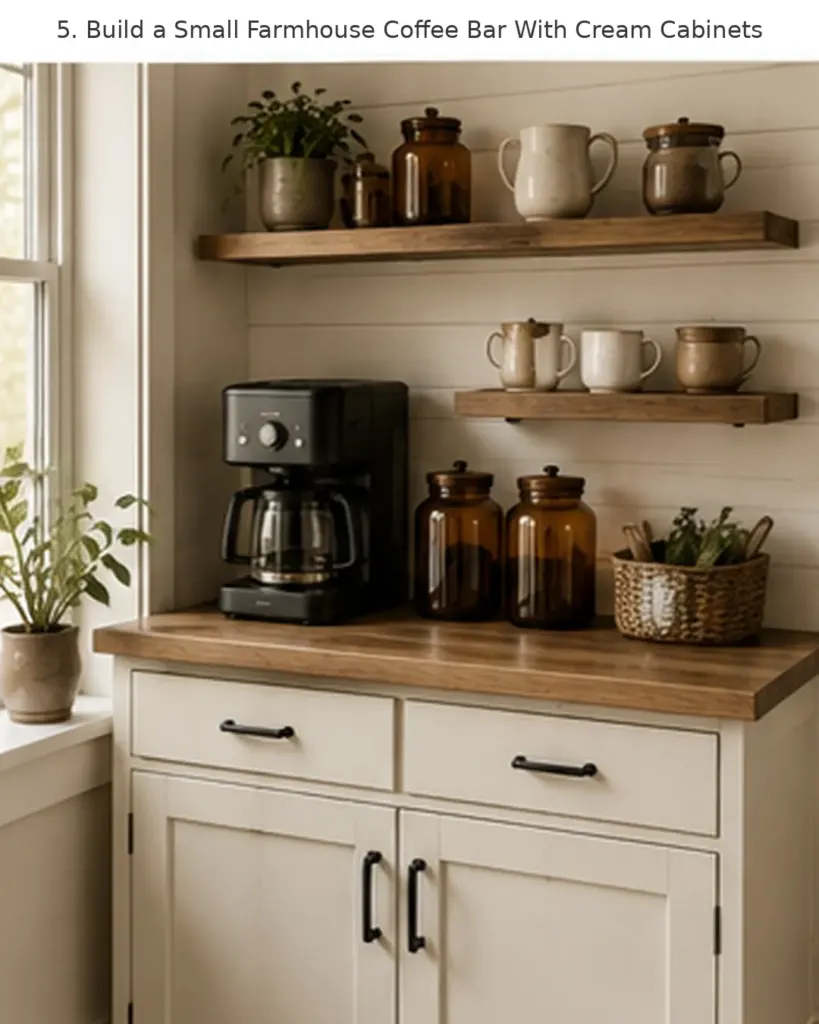
A rustic coffee station does not have to be dominated by brown wood.
Cream, ivory, soft mushroom, or warm white cabinetry can give the space a lighter farmhouse feel while still allowing plenty of natural texture.
Pair pale cabinetry with a butcher-block counter or warm wood shelves. Matte black knobs provide crisp contrast, while antique brass hardware creates a softer, slightly more traditional finish.
For accessories, try speckled pottery, woven baskets, linen napkins, and amber or clear glass jars.
This style works beautifully in kitchens that already have lighter walls because the coffee station can blend into the room instead of appearing like a separate piece of furniture.
Painting an existing cabinet can also be more practical than replacing it. Decor Fixer’s beginner guide, How to Paint Kitchen Cabinets for Beginners Without a Messy Finish, walks through the preparation and painting process.
6. Create a Compact Coffee Bar on a Rolling Kitchen Cart
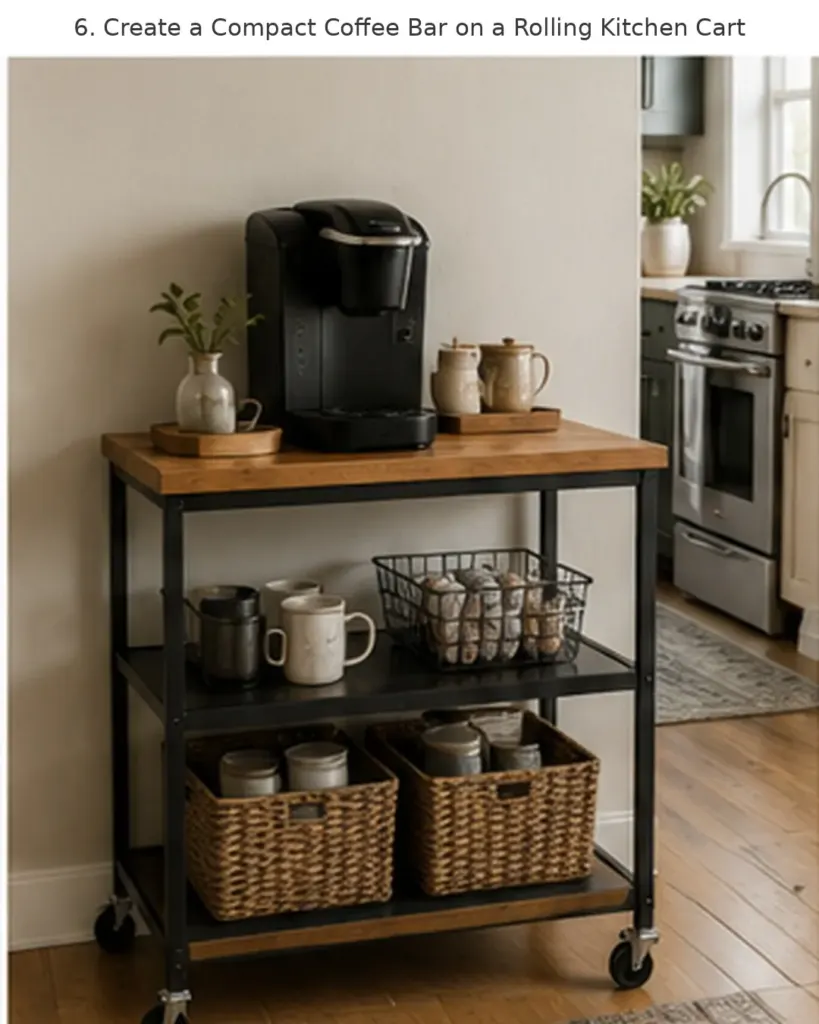
A rolling cart is one of my favorite solutions for apartments and small kitchens because it gives you a coffee station without demanding a permanent location.
Choose a cart with a strong top and useful storage below. A natural wood surface instantly adds warmth, while a black or dark metal frame can bring in a modern industrial note.
Keep the coffee machine and one small tray on top.
Use the lower shelves for mugs, coffee bags, syrups, napkins, or baskets containing less attractive supplies.
The biggest benefit is flexibility. You can keep the cart against a wall during the week and move it closer to the dining area when you have guests.
Just check that the cart is stable and that the wheels can lock securely before placing appliances on it.
Best for Small Spaces
Think upward before thinking outward.
A narrow cart combined with a wall shelf or carefully placed mug storage can hold most daily coffee supplies without taking over the floor.
Leave enough open space around the cart to move comfortably.
7. Hide a Rustic Coffee Bar Inside a Cabinet
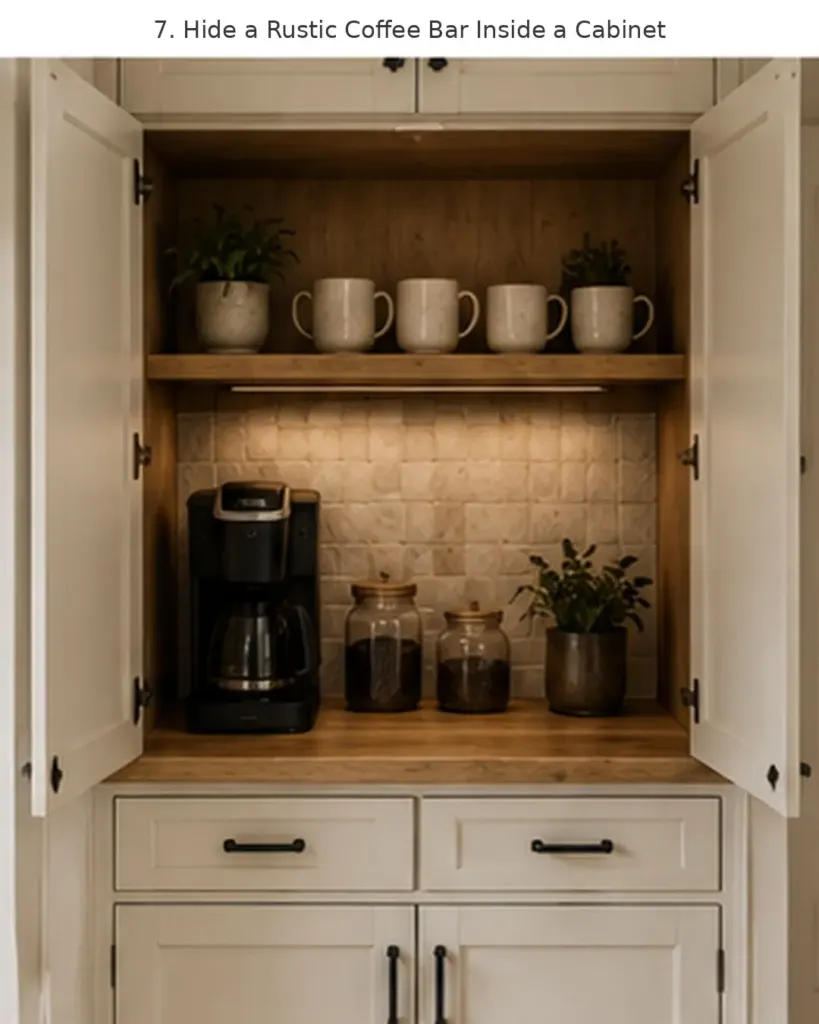
Not everyone wants to see the coffee maker all day.
A cabinet coffee station gives you the warmth and function of a coffee bar while allowing the kitchen to look quieter when everything is closed.
Inside the cabinet, use a warm wood surface or wood-look finish to contrast with the exterior doors. Add one shelf for mugs and coffee supplies, then keep the main work area relatively clear.
A cream handmade-look tile or beadboard-style backsplash can add subtle texture behind the machine.
This setup works especially well in modern kitchens because the rustic elements become a little surprise inside otherwise simple cabinetry.
Before creating a built-in station, think carefully about appliance clearance, ventilation, access to electricity, and the cabinet manufacturer’s requirements. Coffee appliances should be used according to their instructions rather than enclosed in an unsuitable space.
If you already have cabinetry near your breakfast area, refreshing it may be easier than building something completely new. The cabinet makeover ideas from Decor Fixer are useful for deciding which existing features are worth keeping.
8. Mix Rustic Wood With a Modern Tile Backsplash
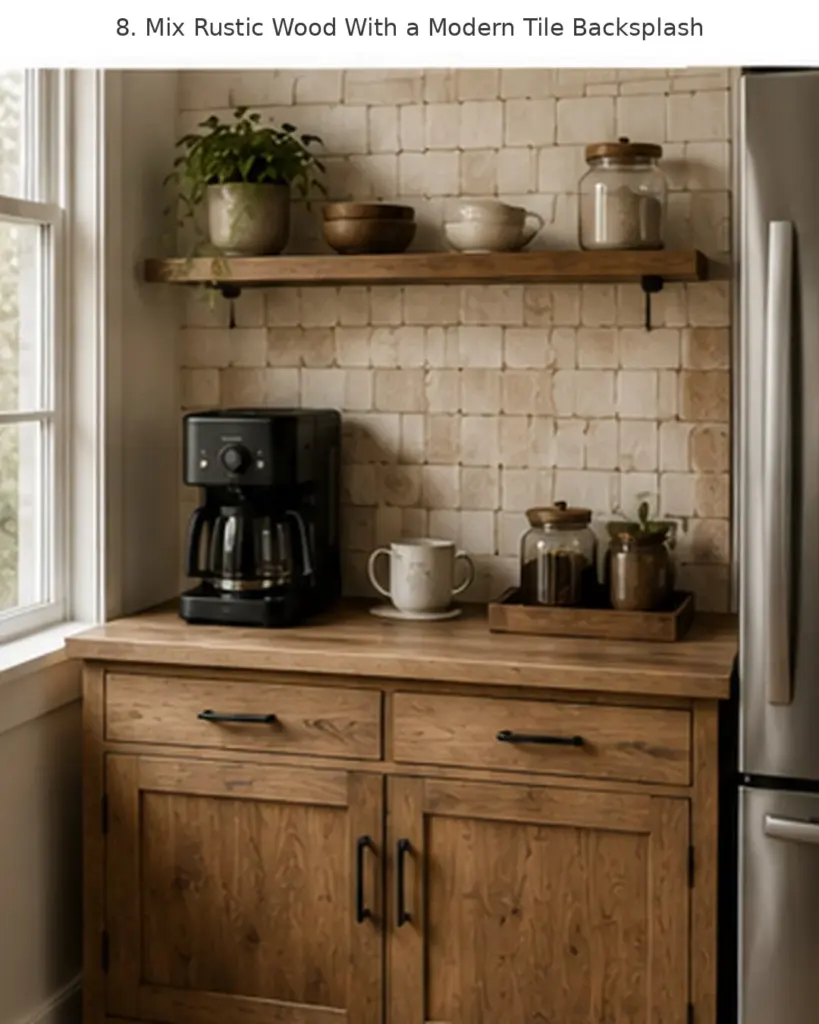
A backsplash can turn a basic countertop into a clearly defined coffee zone.
Warm wood looks especially good with tile that has subtle surface variation. Cream zellige-inspired shapes, handmade-look subway tile, warm stone effects, and soft off-white squares all pair naturally with rustic finishes.
You do not need a bold pattern.
The texture itself can provide enough visual interest, particularly when the rest of the coffee bar includes wood grain, ceramic mugs, and black or aged-metal accents.
If your coffee station is part of the main kitchen, consider repeating the same backsplash already used elsewhere. That will help the station look integrated into the room.
For a smaller standalone nook, you can treat the backsplash almost like a framed feature behind the coffee machine.
Renters should be more cautious about adhesive or removable wall finishes. Test products first and check your lease before changing a surface.
For more nonpermanent decorating approaches, see 17 Rental-Friendly Home Upgrades That Look Expensive.
9. Style a Moody Rustic Coffee Bar
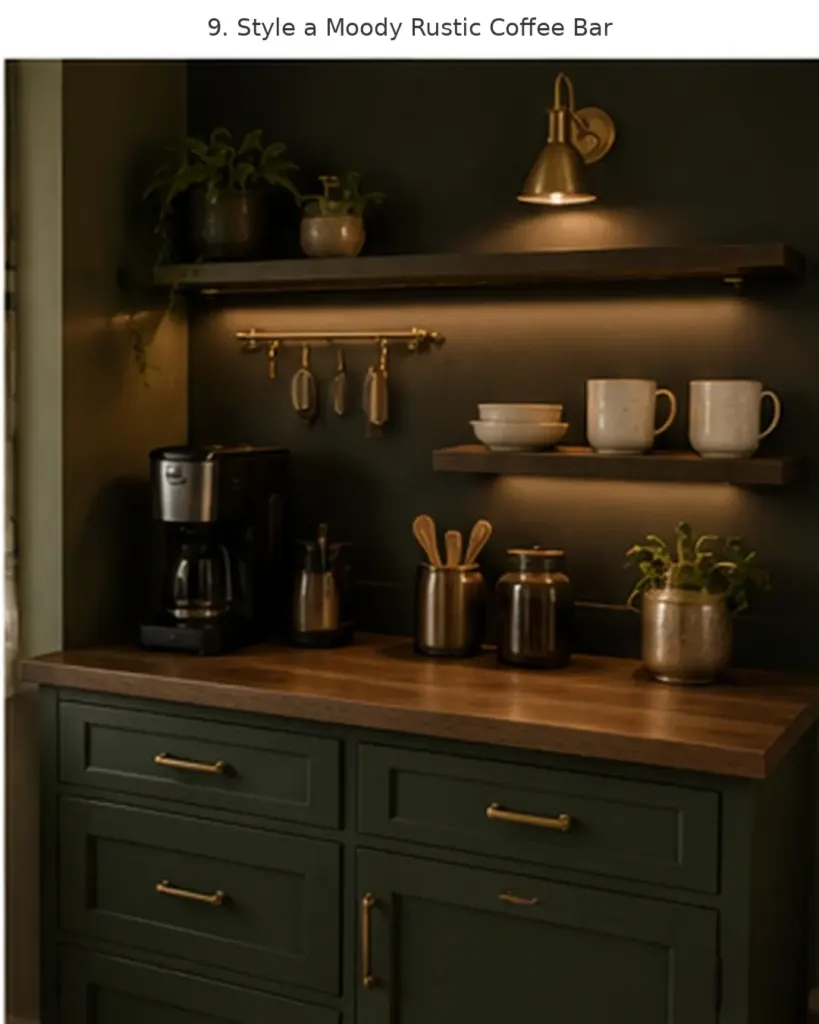
Light oak and cream are not your only options.
A darker coffee station can create a cozy café atmosphere using charcoal, deep olive, muted forest green, walnut, and small amounts of aged brass or black.
Dark cabinetry works particularly well in a dining room nook where the coffee station can become a focal point instead of disappearing into the kitchen.
Balance the darker finishes with lighter accessories. Cream mugs, pale stoneware, a linen towel, and a warm wood tray can prevent the space from feeling heavy.
Lighting matters here too.
A small wall light or under-shelf light can highlight the wood grain and create a softer evening atmosphere.
I would keep the styling particularly restrained in this kind of space. Deep colors already create plenty of visual character.
Common Mistake to Avoid
Do not cover every dark surface with decor.
One of the reasons moody interiors feel sophisticated is the contrast between rich finishes and quieter empty space.
Leave part of the shelf and countertop visible.
10. Create a Coffee Bar With Open Mug Storage
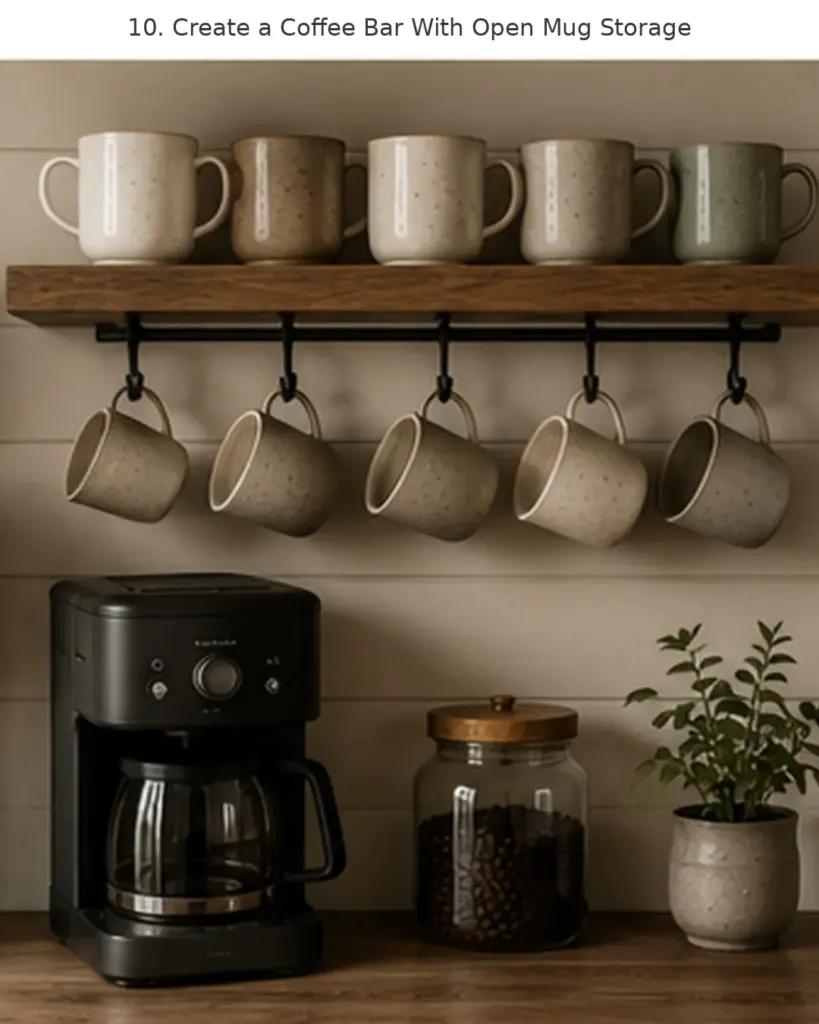
If you use the same mugs every morning, it makes sense to keep a few within easy reach.
Install hooks beneath a sturdy shelf, use an open mug rack, or arrange a small collection across one shelf.
For a rustic look, ceramic and stoneware mugs work especially well because their slightly varied surfaces bring texture into the display.
They do not all need to match.
Try staying within one palette instead: cream, oatmeal, muted sage, speckled gray, and warm brown can look coordinated without feeling like a matching set.
The important part is editing.
Displaying 20 mismatched mugs may create clutter. Showing four or six favorites usually feels intentional.
Open mug storage is particularly useful when your coffee station has very little counter space because frequently used items move onto the wall instead.
11. Add a Butcher-Block Countertop
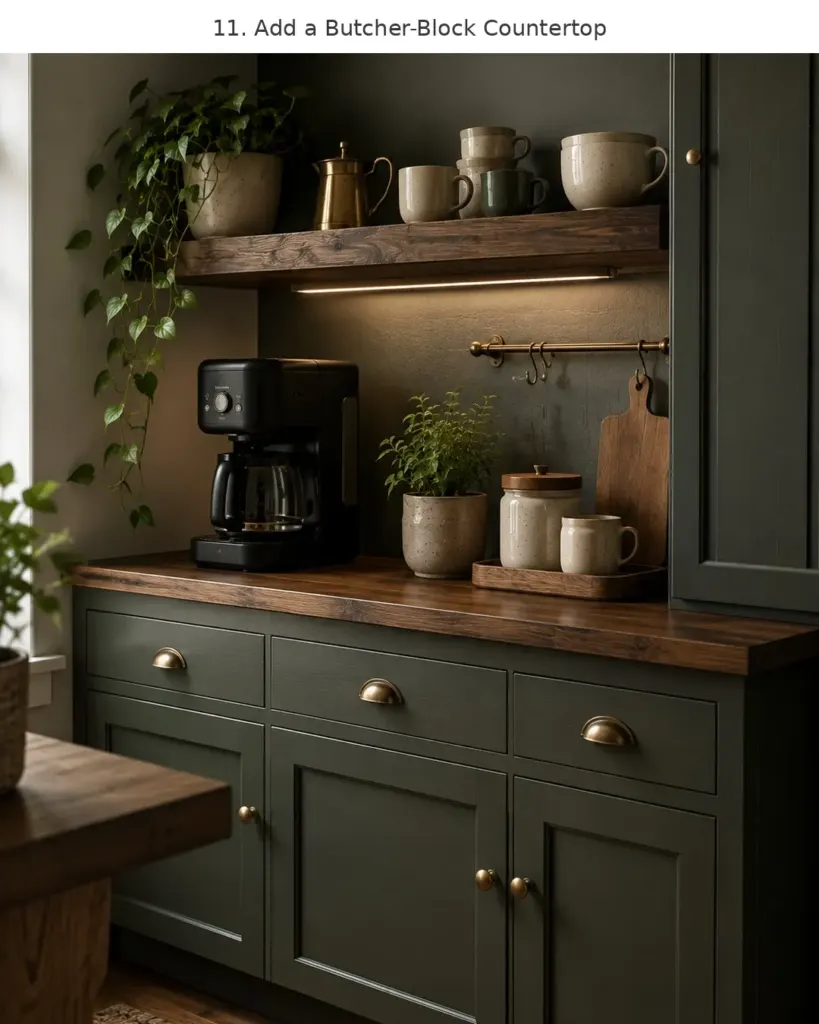
A butcher-block surface is an easy way to add warmth to a plain coffee cabinet.
The grain creates natural movement, so you can keep the rest of the space simple. Cream cabinets, a black coffee maker, and a few stoneware mugs are often enough.
You can also combine wood and stone.
For example, use a light stone-look countertop with warm oak floating shelves above it. This gives you rustic character without making every surface wood.
When updating an existing piece of furniture, make sure any new top is properly supported and suitable for the intended use.
A coffee station gets exposed to moisture, spills, and heat, so the surface needs appropriate protection and regular care.
This is another area where small-kitchen furniture can provide inspiration. Decor Fixer’s DIY kitchen island guide includes several ideas based around butcher block, carts, and repurposed furniture.
12. Keep the Coffee Bar Minimal With One Styled Tray
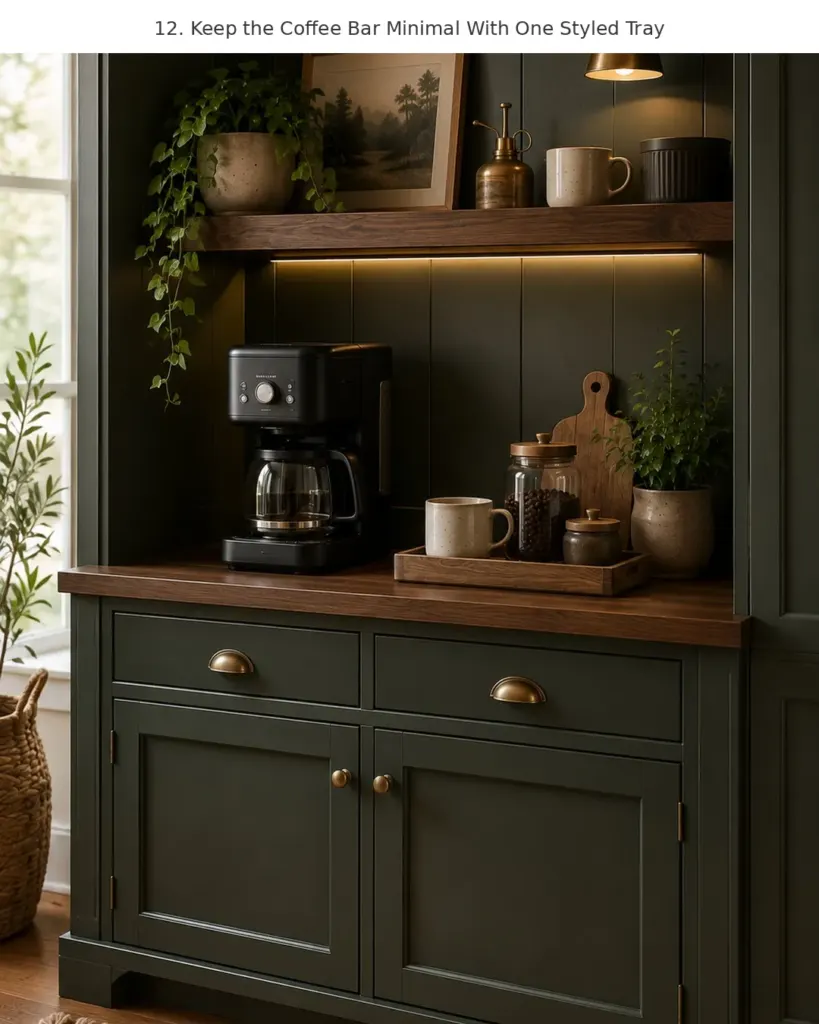
You do not actually need separate furniture to have a coffee bar.
If the only available space is two or three feet of your existing countertop, use a tray to visually define the area.
Place the coffee machine beside a wood, stone, or woven tray. On the tray, keep only what you reach for daily: perhaps a sugar jar, coffee container, two mugs, and spoons.
The tray prevents small objects from spreading across the counter and makes everything easier to move when you need to clean.
Add one simple natural accent if the counter still feels unfinished. A tiny herb, branch in a ceramic vessel, or linen napkin is plenty.
This approach is especially useful for renters and anyone decorating on a smaller budget.
For more inexpensive ways to make a rental feel intentional without filling it with unnecessary purchases, read 15 Apartment Decorating on a Budget Ideas.
Easy Weekend Update
Clear your current coffee area completely.
Clean the countertop, return only the items you use most often, group the smaller pieces on one tray, and store backup supplies inside a cabinet.
You may find that your coffee station needs organization more than it needs new decor.
Conclusion
A home coffee bar should make your morning easier first and prettier second. Fortunately, the two goals work very well together.
The most successful rustic coffee bar ideas use a few warm materials and repeat them thoughtfully. Natural wood, cream pottery, matte black metal, woven texture, subtle greenery, and practical storage can create plenty of atmosphere without filling the kitchen with themed accessories.
You also do not need to begin with a major renovation.
Start by clearing one corner, organizing your supplies on a tray, adding a shelf, or repurposing a cabinet you already own. Once that small area works well for your routine, you can decide whether it needs another layer.
For more practical ways to create useful workspace in a compact kitchen, explore 12 Easy DIY Kitchen Island Ideas for Small Kitchens.
FAQ
What should I put in a rustic coffee bar?
Start with your coffee maker, everyday mugs, coffee beans or pods, sweetener, and spoons. Add practical pieces such as a wood tray or ceramic canister before introducing decorative items.
How do I make my coffee bar look rustic?
Use natural wood, warm neutrals, ceramic mugs, woven textures, and simple metal accents. Avoid overdecorating; visible wood grain and tactile materials can create rustic character on their own.
Where can I put a coffee bar in a small kitchen?
Try an unused corner, the end of a counter, a narrow wall beside the refrigerator, or a rolling cart. Vertical storage can help when floor and counter space are limited.
Can I make a coffee bar in an apartment?
Yes. A freestanding cabinet, console, rolling kitchen cart, or organized countertop station requires far fewer permanent changes than a built-in coffee bar. Always check your lease before drilling or applying adhesive products.
What colors work well for a modern rustic coffee bar?
Warm white, cream, oak, walnut, mushroom, muted sage, olive, charcoal, and matte black work particularly well. Start with one dominant neutral, one wood tone, and one darker accent.
How can I make a coffee station look less cluttered?
Keep backup supplies behind closed doors and display only what you use frequently. Group small objects on a single tray and leave part of the counter and shelves empty.
Do I need a large space for a home coffee bar?
No. Even a small section of existing countertop can work. You mainly need enough room for the coffee maker, safe appliance use, and a small preparation area for your mug and ingredients.