
A tired floor has a way of making the whole room feel unfinished. You may paint the walls, clear the countertops, and add a beautiful rug, yet your eye still lands on faded vinyl or a tile pattern you would never have chosen. In a rental or a home with a limited renovation budget, replacing the entire floor may not make sense.
That is where peel-and-stick floor tile ideas become useful. A soft checkerboard can give a small kitchen more character. A warm stone-look tile can make a bathroom feel calmer. A playful pattern can turn an overlooked laundry room into a space that feels considered.
The right design does more than cover an unattractive surface. It helps the room feel connected. Start with the existing floor condition, choose a product rated for the space, and let the pattern support the rest of the room.
Why Peel-and-Stick Floor Tile Ideas Matter
Flooring covers a large visual area, so even a modest update can change the mood of a room. The right pattern can define an entryway, brighten a compact bathroom, or give a plain kitchen a stronger sense of style. Peel-and-stick tiles also allow renters and budget-conscious homeowners to experiment before committing to permanent flooring.
Architectural Digest’s peel-and-stick tile guide recommends choosing floor-specific tiles rather than using wall products underfoot. Better Homes & Gardens also advises checking moisture resistance, traction, and thickness based on the room.
The best results begin with realistic expectations. These tiles work well as a practical refresh when the floor underneath remains smooth, sound, clean, and suitable for adhesive products.
Before You Start: Inspect the Floor and Order Samples
A beautiful print cannot hide a damaged subfloor. Before ordering tiles, check for loose flooring, deep grout lines, peeling finishes, moisture problems, and uneven sections. Clean the floor carefully and let it dry fully. Adhesive tiles need a smooth surface to bond properly.
Architectural Digest recommends pressing floor tiles firmly into place and cutting from the back with a utility knife when needed. Better Homes & Gardens also suggests filling grout lines when installing over existing tile to create a flatter surface.
Order samples first. Look at them in daylight and evening light. Test removal in a discreet spot if you rent. For more temporary updates across the home, save these rental-friendly home upgrades that look expensive.
1. Classic Black-and-White Checkerboard Tiles
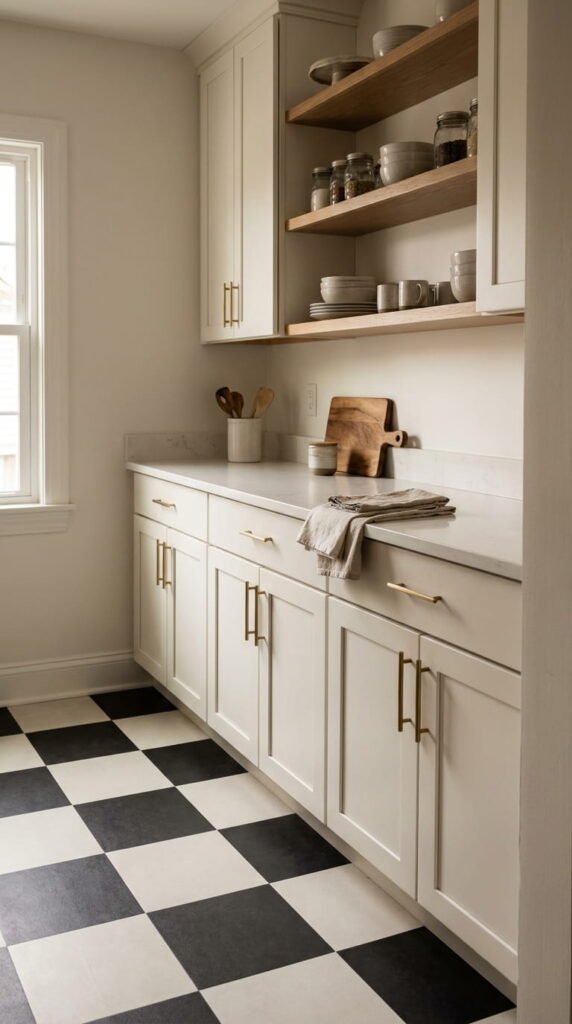
Black-and-white checkerboard flooring brings instant structure to a kitchen, bathroom, laundry room, or entryway. The repeating squares feel familiar without becoming dull, and the strong contrast can give basic cabinets or plain walls a more intentional backdrop.
Better Homes & Gardens’ checkerboard design guide notes that the pattern works across both traditional and modern interiors. For a softer look, use an off-white rather than a bright white. Lay the tiles diagonally when you want more movement or keep them straight for a cleaner result.
Avoid mixing a bold checkerboard floor with several competing prints. Let the flooring act as the main focal point and keep nearby decor simple.
2. Warm Beige and Cream Checkerboard Flooring
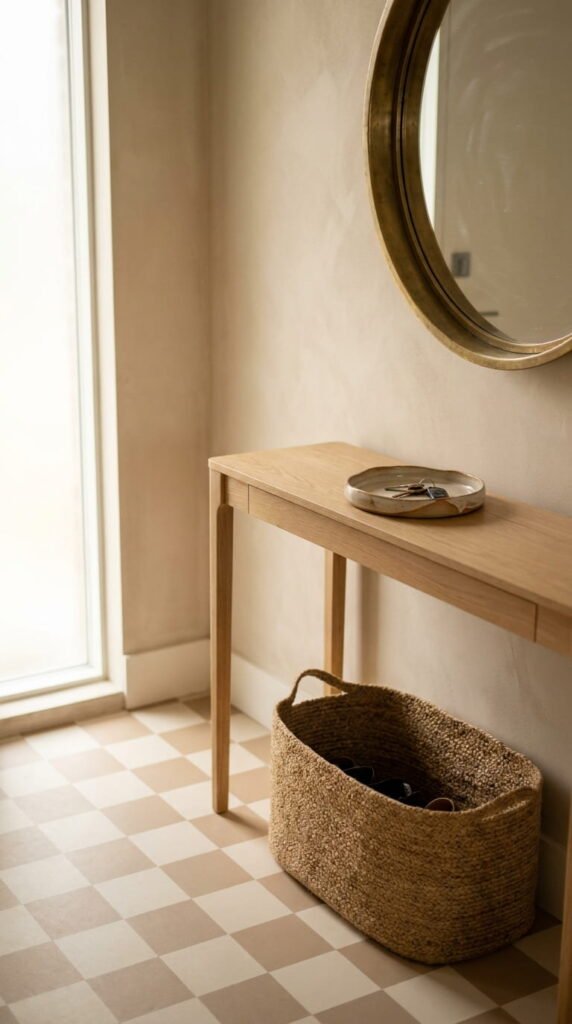
A beige-and-cream checkerboard gives you the rhythm of a classic tiled floor without the sharper contrast of black and white. This variation works beautifully in small kitchens, powder rooms, and entryways with warm wood furniture, linen textures, and organic modern styling.
Choose two tones with similar undertones, such as soft sand and ivory or mushroom and warm white. The subtle shift creates visual interest while keeping the room calm. Pair the floor with brushed brass, aged bronze, oak, or woven details for a natural finish.
Avoid colors that look too similar under your room’s lighting. Order samples and place them side by side before committing. The pattern should remain visible without feeling harsh or overly busy.
3. Vintage Encaustic-Inspired Tiles for a Small Bathroom
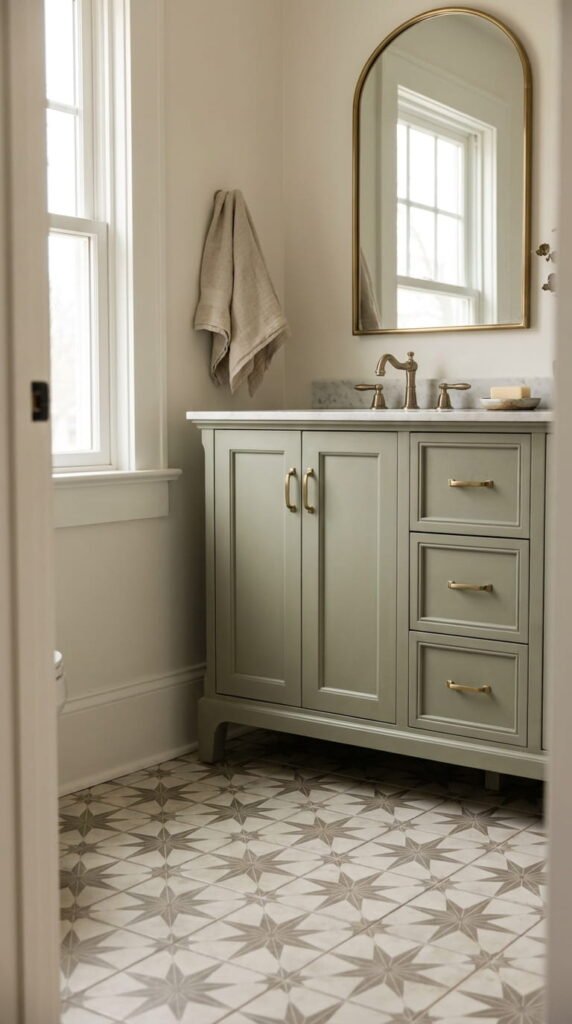
A vintage-style pattern can give a small bathroom more personality without requiring a full remodel. Look for muted florals, star motifs, or geometric designs inspired by encaustic cement tiles. These patterns work well with white walls, a painted vanity, and simple towels in warm neutrals.
Keep the rest of the bathroom restrained so the floor receives enough visual breathing room. A small room often handles a detailed pattern better than expected because the limited square footage keeps the design contained. For more affordable bathroom improvements, read these small bathroom makeover ideas on a budget.
Choose a waterproof or bathroom-suitable product with a matte or textured finish when appropriate. Avoid applying tiles over uneven grout lines without preparing the surface first.
4. Soft Terrazzo-Style Tiles for a Playful but Calm Look
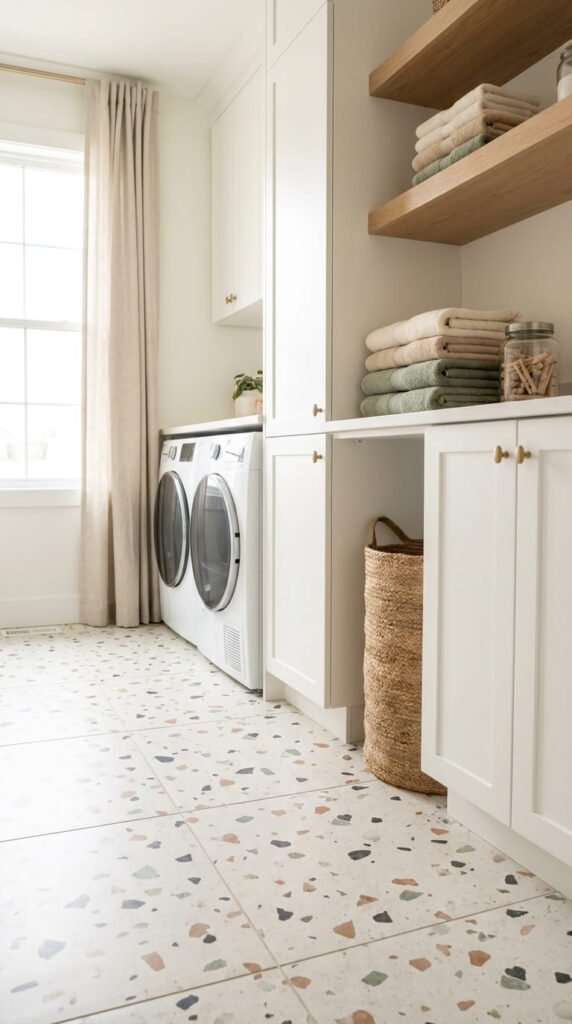
Terrazzo-style peel-and-stick tiles add speckled color without relying on a rigid geometric pattern. They suit bathrooms, laundry rooms, creative workspaces, and compact kitchens where you want a lighter, more playful feel. Choose a base color such as warm white, pale gray, or sand, then look for subtle chips in muted clay, charcoal, olive, or blush.
The scattered pattern can hide small marks better than a plain light floor while still feeling airy. Pair it with simple cabinetry and one or two repeated accent colors. A warm wood stool or woven basket can soften the finish.
Avoid terrazzo prints with too many bright colors when the room already contains patterned walls or busy surfaces. A quieter mix usually feels more timeless.
5. Small Hexagon Tiles for a Clean Bathroom Refresh
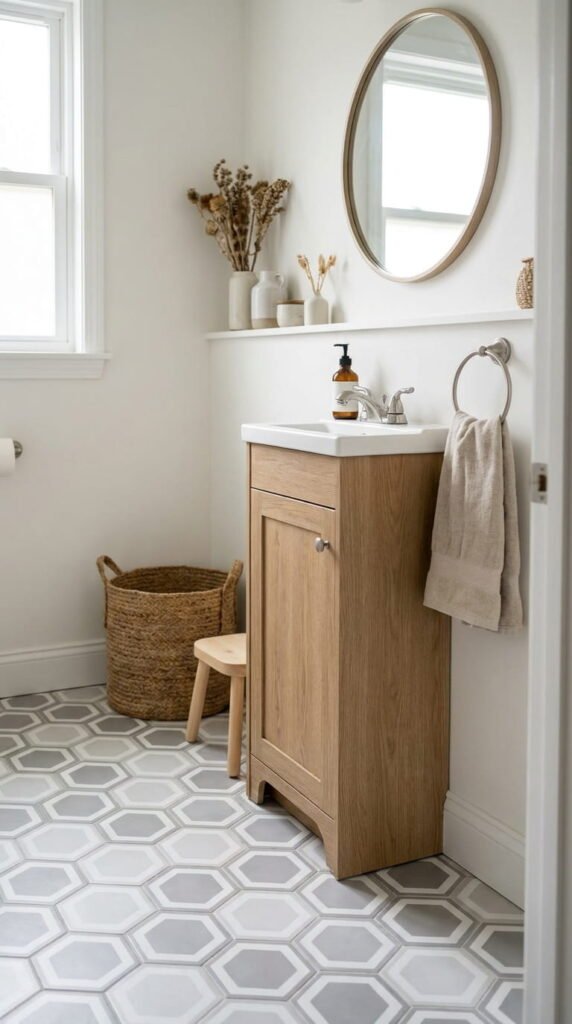
Small hexagon tiles bring a classic bathroom feel to a temporary flooring project. They work especially well in powder rooms, guest bathrooms, and compact laundry areas because the smaller pattern can suit awkward corners and tighter layouts.
Better Homes & Gardens notes that smaller tiles can work well in bathrooms with unusual curves, corners, and narrow spaces. Choose a soft white, muted gray, or warm stone finish for a calm look. A subtle dark outline can add definition without making the floor feel too graphic.
Plan the alignment carefully before removing any backing. Avoid starting from an uneven wall. Use a straight reference line so the pattern does not drift as you work across the room.
6. Limestone-Look Tiles for an Organic Modern Room
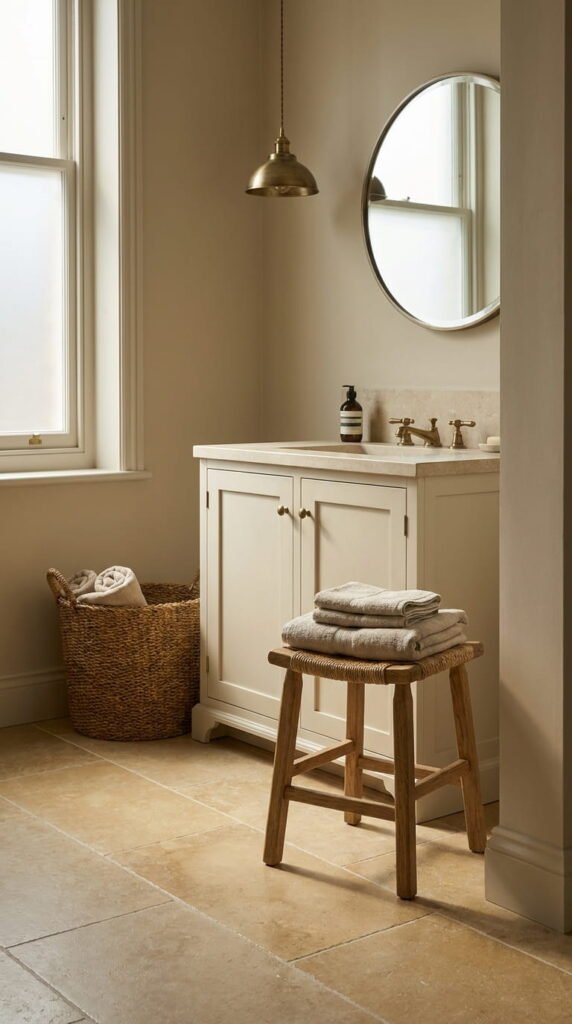
Limestone-look vinyl tiles can bring a quiet sense of warmth to bathrooms, entryways, and kitchens. Their soft beige and greige tones pair naturally with oak, linen, aged brass, woven baskets, and muted wall colors. The result feels calm because the floor supports the room instead of demanding attention.
Choose a matte or lightly textured finish that resembles natural stone rather than a glossy printed surface. Vary the tile orientation only when the design supports it. Keep the grout effect subtle and repeat the floor’s warm tones through a towel, rug, or ceramic object.
Avoid choosing a stone print with dramatic veins or strong contrast in a very small room. A gentle pattern usually looks more convincing and creates better visual harmony.
7. Marble-Look Tiles for a Small Powder Room
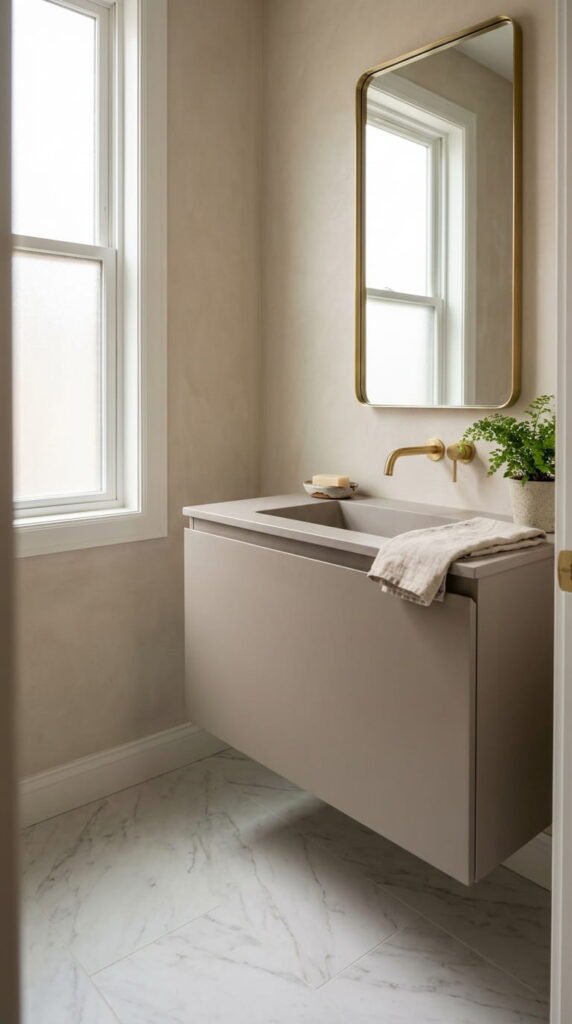
Marble-look peel-and-stick tiles can make a powder room, vanity area, or low-traffic bathroom feel more polished when you choose the pattern carefully. Look for soft veining, warm white backgrounds, and a matte finish rather than a glossy surface with exaggerated lines.
Pair the floor with a simple vanity, one metal finish, and clear countertops. The goal is restraint. A small room needs only a few visual layers. Better Homes & Gardens’ updated floor-tile guide includes marble-inspired peel-and-stick options among its bathroom selections.
Avoid using a dramatic marble print beside a heavily patterned shower curtain or wallpaper. When every surface tries to lead, the room can feel restless rather than refined.
8. Terracotta-Inspired Tiles for a Warm Kitchen
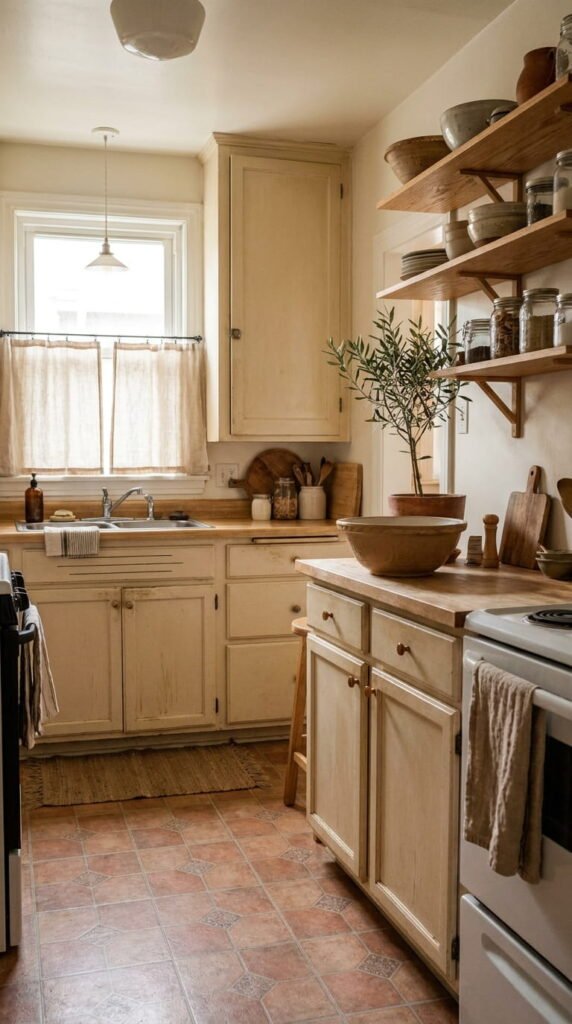
Terracotta-inspired tiles bring warmth into kitchens, breakfast nooks, mudrooms, and sunlit entryways. Their earthy clay tones work naturally with creamy cabinets, warm wood shelves, linen café curtains, and handmade ceramic accessories. The color can make a rental kitchen feel more welcoming without changing the cabinets.
Choose a muted rust, soft clay, or sun-washed brick tone rather than a bright orange. A slightly varied print can feel more realistic and forgiving than a flat color. If you are refreshing a rented kitchen, browse these apartment kitchen upgrades without renovation for related ideas.
Avoid adding too many rustic accents simply because the floor has a clay tone. A few natural materials will create a calmer result than a room filled with themed decor.
9. Muted Sage Geometric Tiles for a Gentle Color Moment
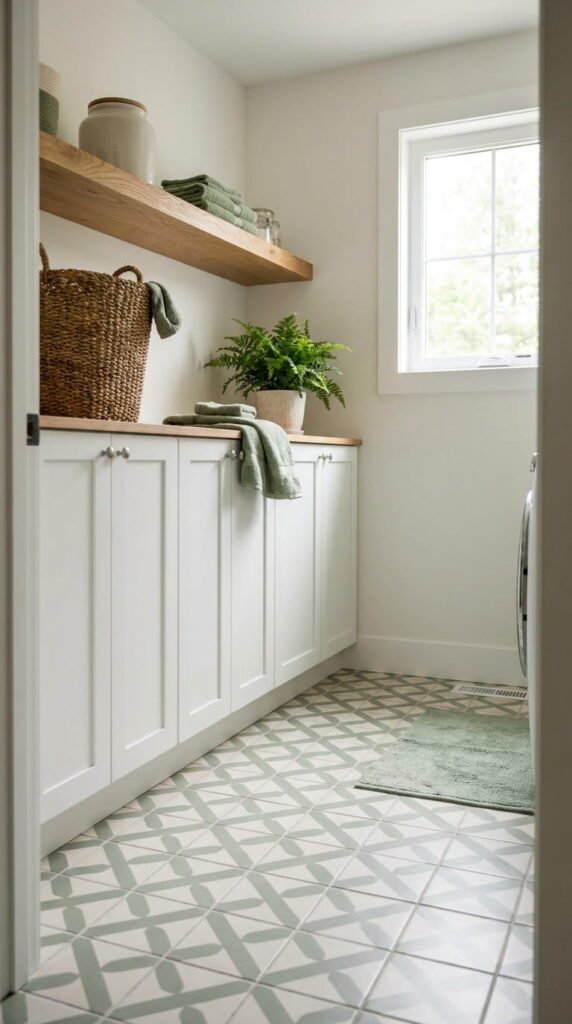
A muted sage floor can add personality without overpowering a small space. Look for a geometric print that mixes sage with warm white, soft beige, or pale gray. This style suits laundry rooms, powder rooms, and apartment kitchens with simple cabinetry.
Sage works well because it feels connected to natural materials and biophilic design. Repeat the color once or twice through a towel, planter, or small piece of artwork. Keep the walls quiet and let the floor bring the pattern.
Avoid using several different greens across the room without comparing their undertones. A blue-green floor beside a yellow-green wall may feel disconnected. Order samples and place them beside existing cabinets, tile, and paint before choosing the final pattern.
10. Charcoal Slate-Look Tiles for a Grounded Entryway
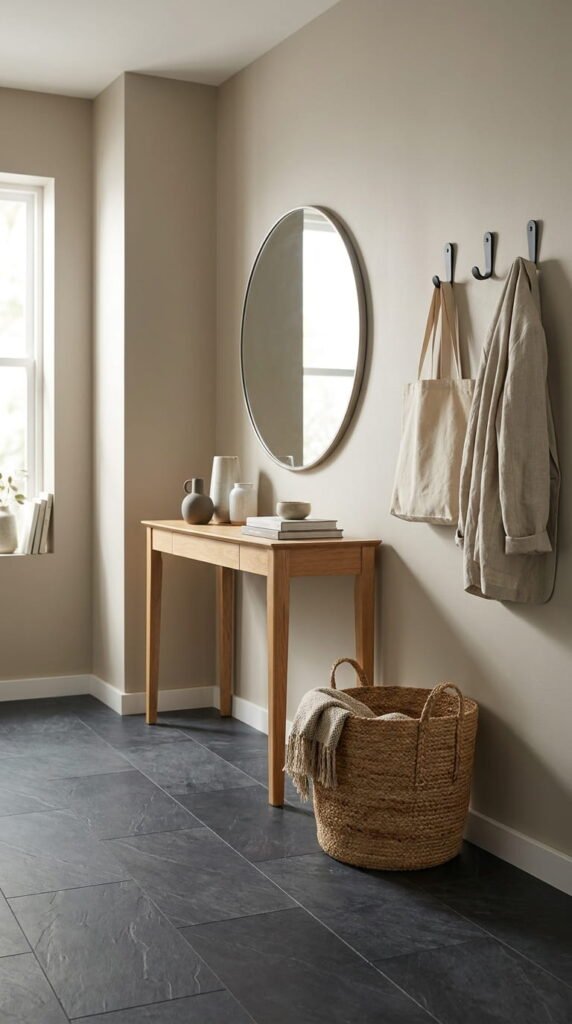
A darker slate-look floor can bring depth to an entryway, mudroom, or small utility space. Charcoal and deep gray tones hide everyday marks more easily than pale flooring and create a grounded base for warm wood furniture, woven baskets, and simple wall hooks.
Better Homes & Gardens notes that darker tiles can feel cozy and may conceal dirt more effectively, although they can also make a room feel smaller. Use this option where the area receives enough natural or artificial light. For a practical entrance refresh, save these DIY entryway makeover ideas.
Avoid a very dark floor in a windowless space with heavy furniture. Balance it with lighter walls and an open layout.
11. Wood-Look Parquet Tiles for a Rental-Friendly Update
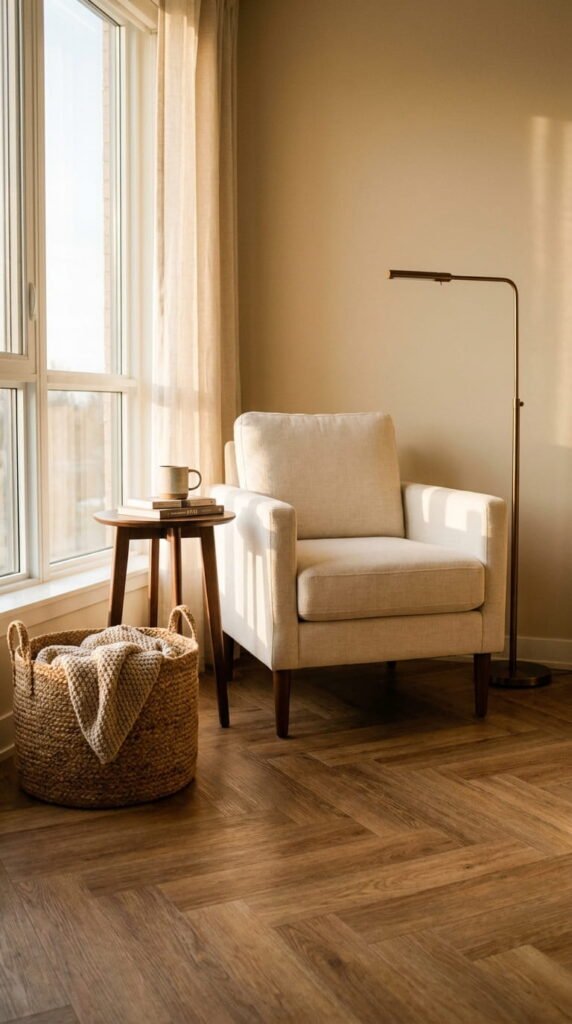
Wood-look peel-and-stick tiles can soften a plain floor while adding the appearance of rich grains and natural warmth. A parquet-inspired pattern works especially well in a small entryway, closet, reading nook, home office, or low-traffic apartment kitchen.
Choose a restrained oak, walnut, or weathered wood tone that relates to the furniture already in the room. A herringbone-inspired or parquet layout can create a decorative effect without adding extra decor. Keep nearby wood finishes reasonably connected rather than trying to match them perfectly.
Avoid using a highly printed wood design with repetitive grain that looks artificial from a distance. Order samples and view several tiles together. A convincing wood-look floor needs enough variation to avoid obvious repetition.
12. Blue-and-White Patterned Tiles for a Laundry Room
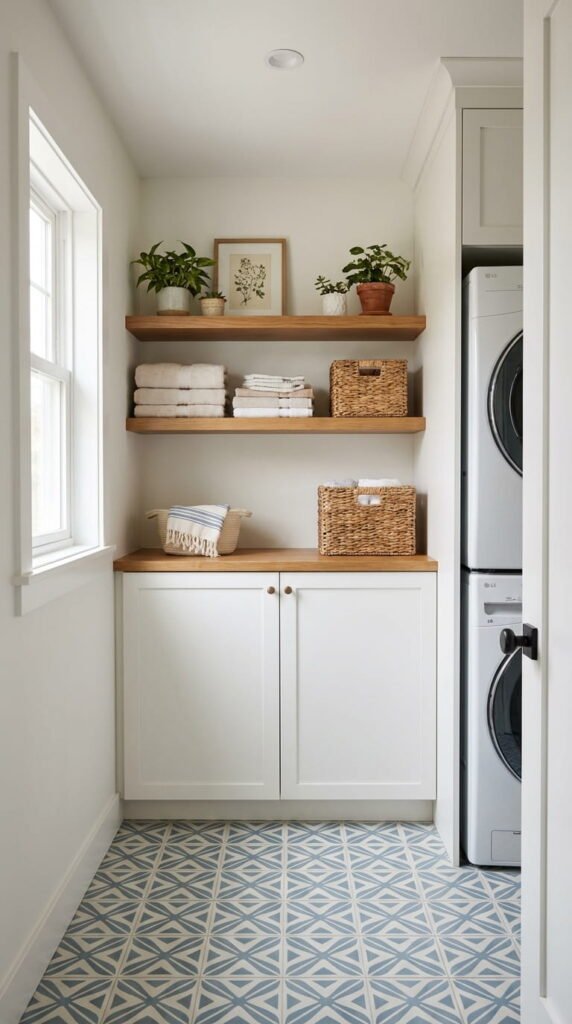
A laundry room offers a useful place to experiment with color because it usually has a smaller footprint and less decorative pressure than a living room or kitchen. Try a blue-and-white diamond, floral, or geometric peel-and-stick tile pattern to make the space feel brighter and more cheerful.
Better Homes & Gardens notes that laundry rooms can handle more playful flooring designs, while durability still matters because appliances add weight and the room may experience heat and moisture. Choose a product suitable for those conditions.
Keep shelves, baskets, and containers simple so the pattern feels intentional. Avoid using thin tiles that do not suit the room’s demands or covering an uneven floor beneath heavy machines.
13. Create a Patterned Entryway Zone in an Open-Plan Apartment
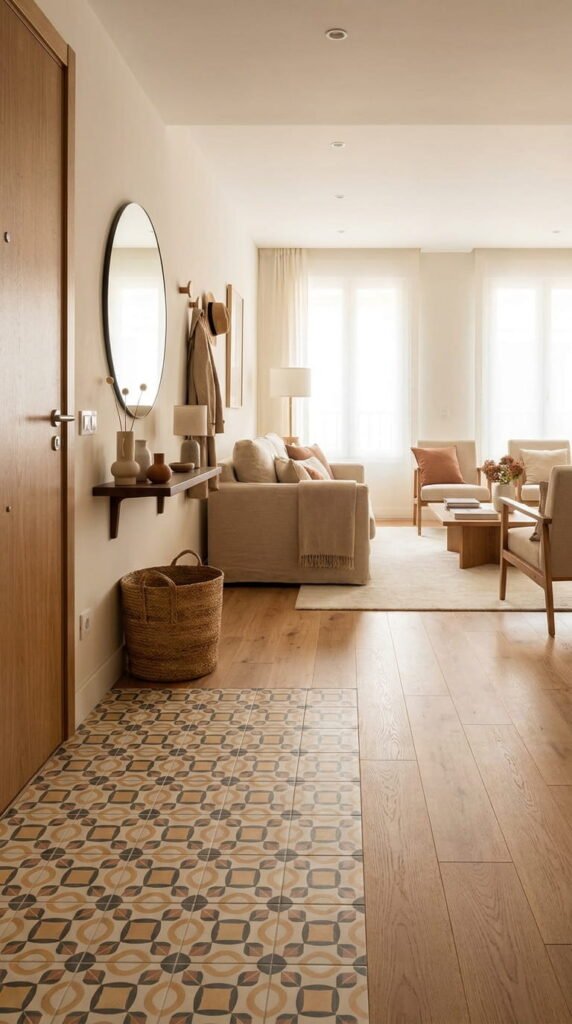
You do not always need to cover an entire floor. A defined section of peel-and-stick tiles can create the feeling of an entryway when the front door opens directly into the living room. Use a checkerboard, small geometric pattern, or muted stone-look design to mark the landing zone visually.
This works best when the transition aligns with a natural boundary, such as the edge of a console, coat rack, or hallway opening. Keep the surrounding flooring simple and choose colors that relate to the nearby room. Architectural Digest’s temporary-flooring guide includes stick-on vinyl floor decals as a practical rental option but advises testing removability first.
Avoid creating a random patch in the middle of the room. The tiled area should feel purposeful.
A Final Styling Rule: Let the Floor Lead Quietly
Once the tiles are in place, resist the urge to add more pattern everywhere else. A statement floor needs room to breathe. Repeat one or two colors from the tile through small details such as a towel, curtain, ceramic bowl, or basket. Then leave some surfaces plain.
Balance matters more than matching every item perfectly. A checkerboard floor can sit comfortably beside warm wood cabinets. Terracotta-inspired tiles can connect with a linen curtain and one leafy plant. A terrazzo print can work with a clear countertop and muted walls.
If the new flooring becomes part of a wider bathroom refresh, combine it with these no-drill bathroom storage ideas to keep the room functional as well as attractive.
Frequently Asked Questions
Are peel-and-stick floor tiles suitable for renters?
They can work well in rentals when the lease allows them and the existing surface suits adhesive products. Test a sample in a discreet spot before covering the full floor. Check removability, follow the product instructions, and keep the original surface condition in mind.
What are the best peel-and-stick floor tile ideas for a small bathroom?
Small hexagon patterns, soft checkerboards, marble-look tiles, limestone-inspired finishes, and restrained vintage motifs can work well. Choose bathroom-suitable products with appropriate moisture resistance and traction. Keep nearby decor simple so the floor does not compete with other patterns.
Can I install peel-and-stick tiles over existing tile?
Some products can go over existing tile when the surface remains clean, smooth, dry, and properly prepared. Deep grout lines may need filling to create a flatter base. Follow the manufacturer’s instructions and test a small section first.
How do I make peel-and-stick floor tiles look more polished?
Plan the layout before removing the backing. Start from a straight reference line, align the pattern carefully, trim edges neatly, and press each tile firmly into place. Order extra tiles for mistakes and future repairs. Keep surrounding decor restrained.
Are peel-and-stick tiles waterproof?
Product performance varies. Some tiles offer water resistance, while others provide stronger waterproof protection. Check the manufacturer’s specifications before using a product in a bathroom, kitchen, or laundry room. Moisture, standing water, and poor surface preparation can affect the result.
Choose a Floor That Supports the Room
A floor does not need to shout to make a room feel better. Sometimes a quiet limestone print gives a bathroom the softness it was missing. Sometimes a warm checkerboard makes an ordinary kitchen feel more personal. Sometimes a small patterned section beside the front door gives a studio apartment a sense of order.
The most useful peel-and-stick floor tile ideas combine style with honest planning. Look closely at the existing surface. Order samples. Choose a floor-rated product that suits the room’s real conditions. Then install it slowly enough to get the details right.
A thoughtful temporary update can still make daily life feel more comfortable, more organized, and more like home.