

A bedroom should feel like the easiest room in the house to relax in, but that is not always how it looks in real life. Maybe the walls feel too plain, the bedding looks mismatched, or the room feels busy even after you clean it. This is where serene blue bedroom designs can make a big difference.
Blue has a quiet, restful quality that works beautifully in bedrooms when it is used with the right balance of texture, warmth, and lighting. The goal is not to turn the whole room into one flat color. The best blue bedrooms feel layered, soft, and personal. They use blue as a calming foundation, then build around it with warm whites, natural wood, woven textures, cozy rugs, and gentle lighting.
Disclosure: This article may contain affiliate links. We may earn a commission at no extra cost to you.

Why Serene Blue Bedroom Designs Matter
A bedroom is more than a place to sleep. It is where you reset, get ready, read, fold laundry, scroll for too long, and try to feel calm at the end of the day. When the room has too many competing colors, harsh lighting, or random decor pieces, it can feel visually noisy.
Blue helps create a more settled mood because it pairs well with many calming materials: linen, cotton, oak, rattan, warm metals, ceramic lamps, and soft white curtains. It can look airy in a small room, polished in a primary bedroom, cozy in a guest room, and stylish in a rental.
The key is choosing the right shade of blue for your light, furniture, and lifestyle. A pale sky blue feels open and fresh. Blue-gray feels quiet and modern. Navy feels rich and grounded. Dusty blue feels soft and timeless. Once you understand the mood you want, the room becomes much easier to decorate.
Before You Start: Choose the Right Blue for Your Bedroom
Before painting a wall, buying bedding, or ordering curtains, spend a little time studying the room.
Look at the natural light first. North-facing rooms may make some blues feel cooler, while sunny rooms can handle deeper or more saturated shades. Test paint or fabric samples beside your flooring, headboard, trim, and nightstands. A blue that looks perfect online may feel too bright, too gray, or too cold once it is inside your room.
Measure before buying large pieces. For rugs, make sure the rug extends beyond the sides and foot of the bed. For curtains, check the window width and ceiling height so the panels feel generous instead of short. For wall decor, tape out the size on the wall before hanging anything.
If you rent, review your lease before painting, drilling, or using adhesive products. For more removable ideas across the home, these rental-friendly home upgrades can help you plan updates that feel polished without making permanent changes.
1. Soft Powder Blue Walls With Warm White Bedding
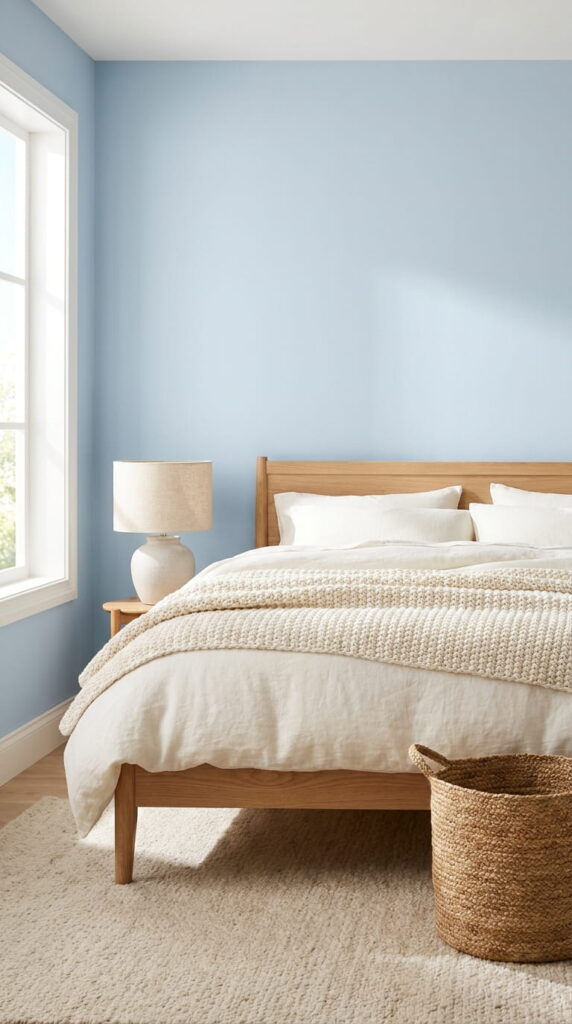
Powder blue walls are one of the easiest ways to create a calm bedroom without making the space feel heavy. This shade works especially well in small bedrooms, guest rooms, and rooms that need a softer background than plain white.
The reason this look works is balance. Powder blue brings color, while warm white bedding keeps the room bright and breathable. Add cream pillow shams, a quilted throw, a light wood nightstand, and a ceramic lamp to keep the design from feeling too cold.
This idea works best when the rest of the palette stays simple. Choose one or two natural textures, such as linen curtains and a woven basket, instead of filling the room with many different patterns.
A common mistake is pairing pale blue walls with stark white bedding and cool lighting. That combination can make the room feel flat. Choose warm white bulbs, soft ivory bedding, and natural materials so the blue feels restful rather than icy.
Designer Tip
Use powder blue as the background, not the only feature. A warm wood frame, textured throw, or soft beige rug will make the blue look more intentional.
2. A Blue-Gray Accent Wall Behind the Bed
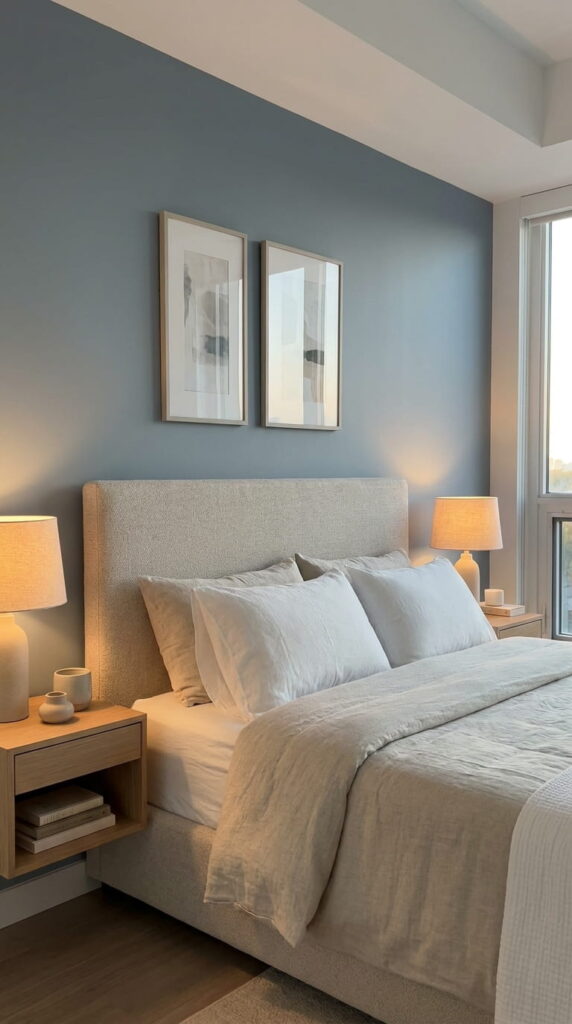
A blue-gray accent wall is perfect when you want color but do not want the entire bedroom to feel dark. Placing the color behind the bed creates a natural focal point and helps the bed feel anchored.
This works well in modern bedrooms, rental-friendly spaces with removable wallpaper, and rooms where the bed wall currently feels empty. Blue-gray has enough depth to look styled, but it still feels calm and easy to live with.
Keep the bedding relaxed. White, oatmeal, taupe, pale gray, or muted blue bedding can all work. Add two bedside lamps with warm shades so the wall glows softly in the evening.
The mistake to avoid is making the accent wall compete with a busy headboard, bold rug, and colorful bedding at the same time. Let one feature lead. If the wall is the main moment, keep the surrounding pieces quieter.
For beginner-friendly painting and small home update ideas, you may also like these easy DIY projects for first-time homeowners.
3. Navy Blue Headboard With Light Bedding
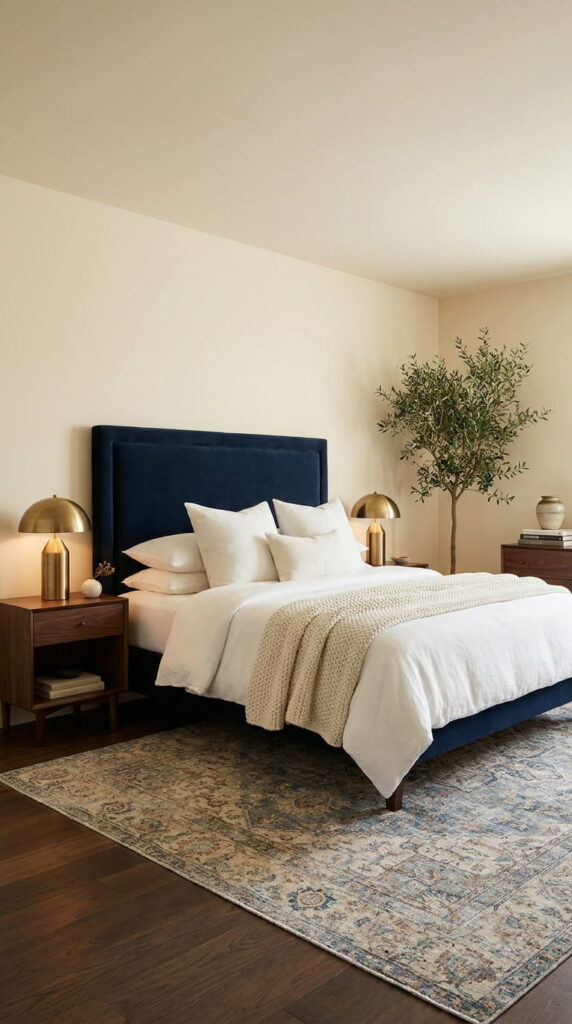
A navy headboard creates a grounded, elegant look without requiring you to paint the walls. It is a smart choice if you want a blue bedroom color scheme that feels mature, cozy, and easy to update later.
This idea works beautifully in primary bedrooms and larger guest rooms. The headboard becomes the main blue element, while the walls can stay warm white, greige, soft beige, or pale gray. Add light bedding so the room does not feel too heavy.
Choose a fabric headboard for softness, a wood-framed headboard for warmth, or a simple panel style for a clean modern look. Then repeat navy once or twice through a pillow, throw, or small piece of art.
Avoid using navy on every major surface. Navy walls, navy bedding, navy curtains, and dark furniture can make a bedroom feel smaller and more closed in. Let navy be the anchor, then give it space to breathe.
4. Layered Blue Bedding for a Cozy Look
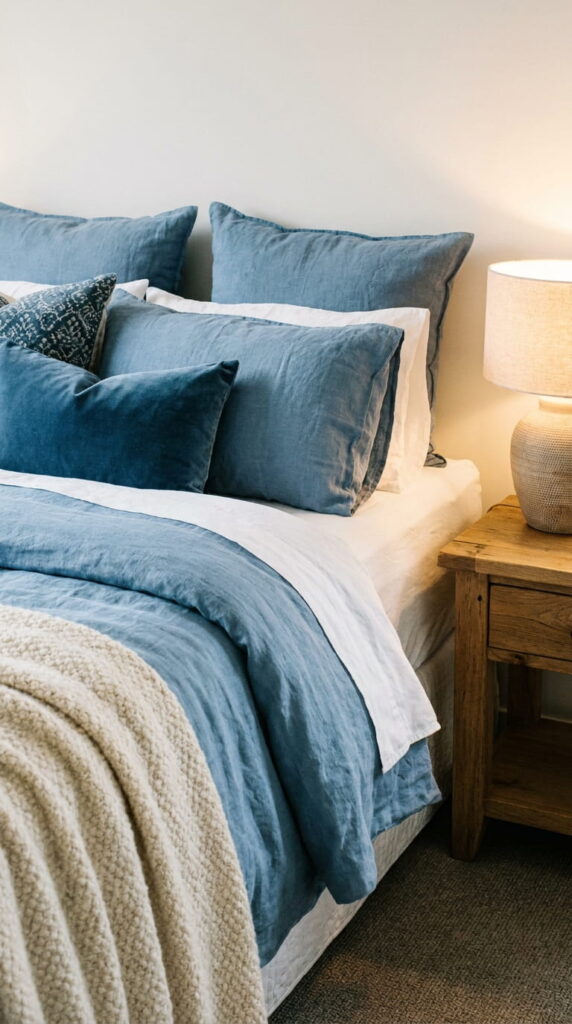
If you do not want to paint or buy new furniture, start with bedding. Layered blue bedding can completely change the mood of a bedroom with very little effort.
Use a soft blue duvet, white sheets, a textured quilt, and two or three accent pillows in nearby shades. The best result comes from mixing textures instead of mixing too many colors. Linen, cotton, waffle weave, and quilted fabrics make the bed look collected and comfortable.
This approach works well for renters, seasonal refreshes, and anyone who likes changing the room without committing to a permanent color. It also works in neutral bedrooms where the walls and furniture are already simple.
The mistake to avoid is buying a full matching bedding set where every piece is the exact same blue. A room usually feels more natural when the blues are slightly varied, such as sky blue, dusty blue, and soft blue-gray.
Quick Styling Formula
Try this simple combination: white sheets, blue duvet, textured cream throw, two blue pillows, one patterned pillow, and one natural wood or ceramic detail on the nightstand.
5. Blue Bedroom With Natural Wood Furniture
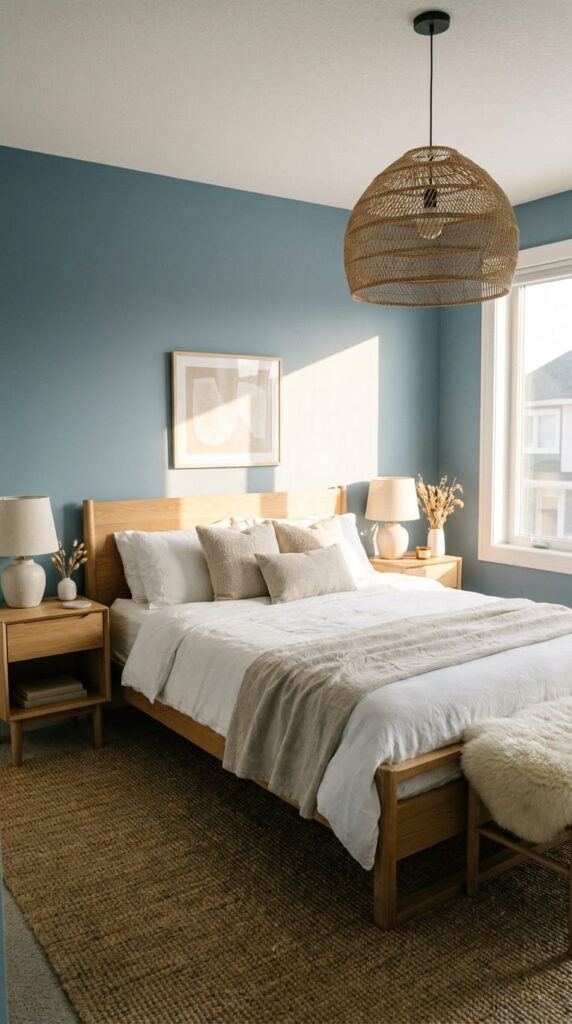
Blue and wood are one of the most reliable combinations for calm bedroom decor. The blue brings softness, while wood adds warmth and texture. Together, they prevent the room from feeling cold or overly polished.
This idea works with many shades of blue. Pale blue feels fresh with light oak. Dusty blue looks beautiful with medium wood tones. Navy feels rich beside walnut or darker wood furniture.
Use wood through nightstands, a bed frame, a dresser, picture frames, or a bench at the foot of the bed. If your existing furniture is dark, soften the look with pale blue bedding and warm white curtains. If your furniture is light, you can use a deeper blue on the wall or headboard.
Avoid mixing too many wood tones without a plan. Two wood finishes can look layered, but five different tones may feel accidental. Repeat one main wood tone at least twice so the room feels connected.
6. Coastal Blue Without the Obvious Beach Theme
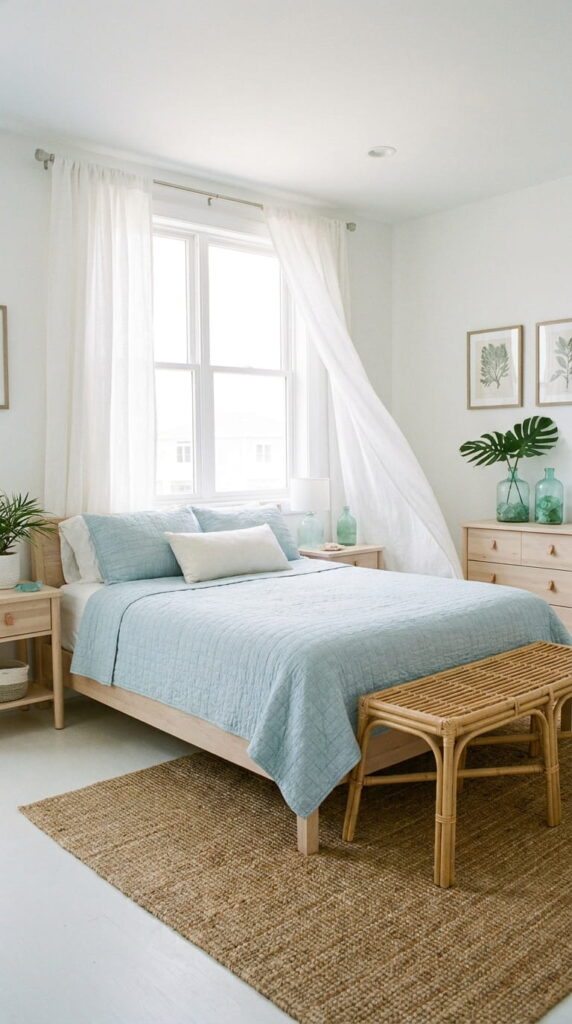
A blue bedroom can feel coastal without using seashells, anchors, or beach signs. The more modern version uses soft blue, white, sand, natural fibers, and relaxed textures.
This style works best in bedrooms that get good daylight. Choose airy curtains, a pale blue quilt, a woven rug, rattan or cane details, and warm white walls. The mood should feel breezy, not themed.
To make it feel grown-up, keep patterns subtle. A striped pillow, a linen throw, or a small blue-and-cream print is enough. Add one natural element, such as a woven pendant, seagrass basket, or light wood bench.
The mistake to avoid is overdecorating the theme. Too many ocean-inspired accessories can make the room feel less serene. Let the colors and textures suggest the mood instead of spelling it out.
7. Removable Blue Wallpaper Behind the Bed
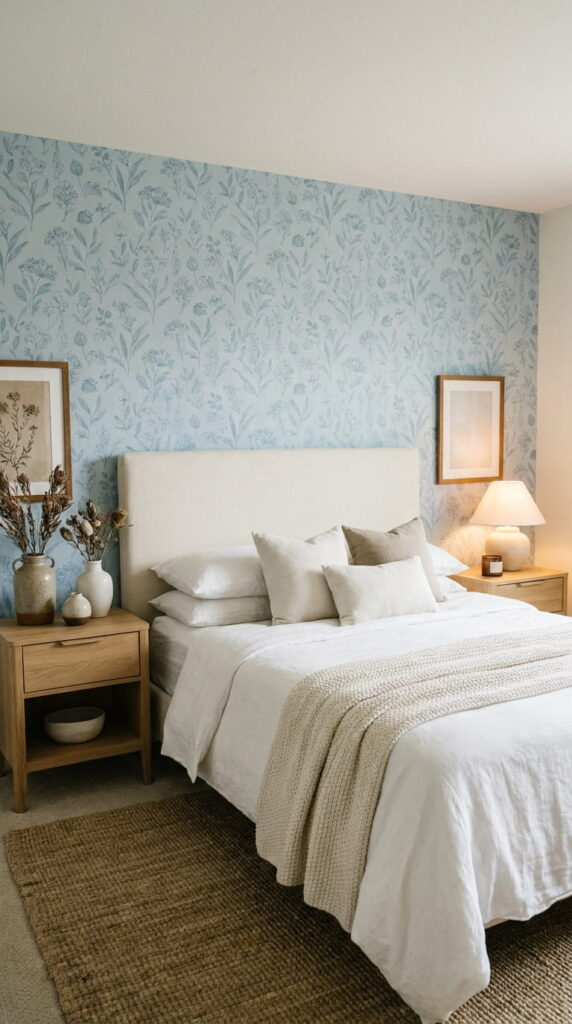
Removable wallpaper is a strong option for renters or anyone who wants pattern without a permanent change. A blue botanical print, soft stripe, watercolor texture, or linen-look wallpaper can turn a plain wall into a bedroom focal point.
Use it behind the bed, inside a recessed wall, or above simple board-and-batten style molding if the surface allows. Keep the rest of the room calm so the wallpaper does not compete with bedding, artwork, and curtains.
Order a sample first and check it in different lighting. Make sure the wall is clean, smooth, dry, and suitable for adhesive products. Patch-test a hidden area before applying it widely.
Avoid choosing a pattern that is too tiny or too busy for the size of the wall. Small repeated patterns can become visually crowded behind a bed. Larger, softer prints often feel more peaceful.
Renter-Friendly Note
If wallpaper feels risky, create a similar effect with a large framed textile, peel-and-stick wall panels made for temporary use, or a fabric wall hanging. Always check weight limits and surface instructions before installing.
8. Blue Curtains That Frame the Window
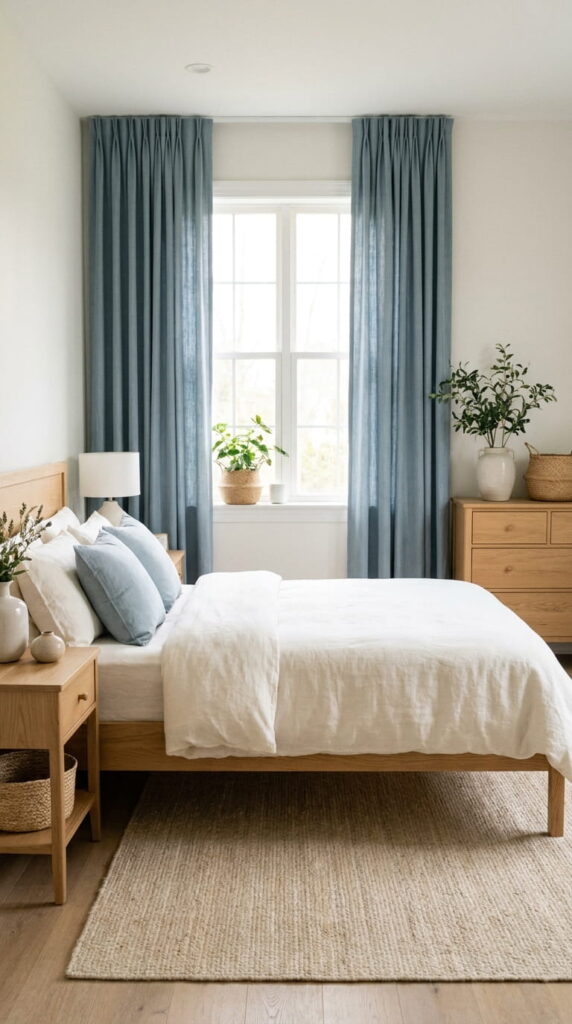
Curtains are often overlooked, but they can change the whole feeling of a bedroom. Blue curtains add softness, color, and height when they are hung with the right proportions.
This idea works best when the walls are neutral and you want the blue to feel intentional without repainting. Choose linen-look or cotton-blend panels in dusty blue, blue-gray, slate blue, or pale denim. Hang the rod higher than the window frame and extend it wider so the panels frame the glass instead of covering it.
For a serene look, let the curtains lightly touch the floor or hover just above it. Pair them with white bedding, a soft rug, and warm bedside lighting.
Avoid short curtains that stop awkwardly at the window sill unless the room truly needs that length. Short panels can make the wall feel chopped up and less polished.
9. A Blue Rug Under the Bed
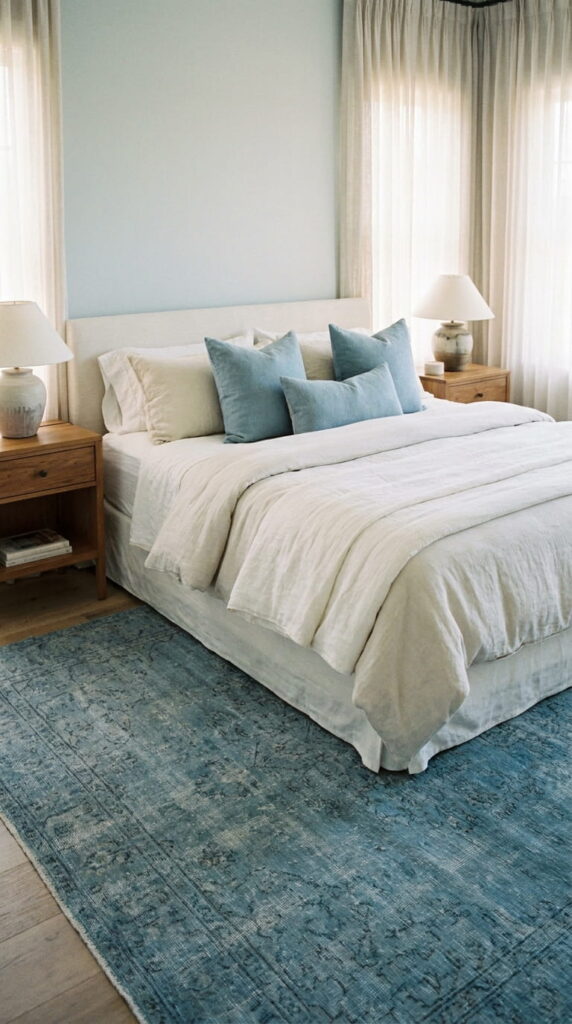
A blue rug can ground the entire bedroom, especially if the walls are white or the furniture feels disconnected. It gives the bed a visual base and adds softness underfoot.
This works well in bedrooms with hardwood, laminate, tile, or plain carpet that needs more personality. Choose a muted pattern if you want to hide everyday wear, or a solid textured rug if the bedding already has detail.
Measure carefully. In most bedrooms, the rug should extend beyond both sides of the bed and at least partly beyond the foot. If the rug is too small, it can look like a floating mat instead of a finished design choice.
The mistake to avoid is choosing a bright blue rug when the rest of the room is soft and muted. A washed blue, vintage-inspired pattern, or blue-gray tone usually feels more serene.
10. Painted Blue Furniture for a Small Refresh
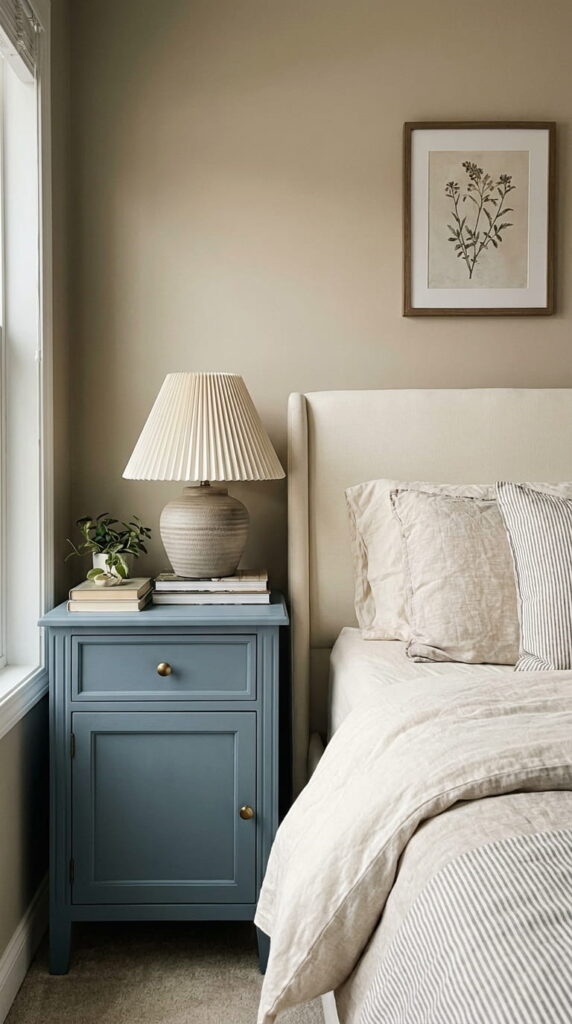
Painting a dresser, nightstand, or small storage cabinet blue can give the bedroom a custom look without changing the walls. This is a good option when your furniture is solid but the finish feels dated.
A dusty blue nightstand can soften a white room. A navy dresser can create a bold anchor. A pale blue desk can make a bedroom work corner feel more integrated. Use the same blue in one smaller detail, such as a pillow or artwork, so the furniture feels connected to the rest of the room.
Prepare the surface properly, choose paint suitable for the furniture material, and allow enough drying or curing time before using the piece heavily. Replace old knobs with simple hardware if the design needs a cleaner finish.
Avoid painting every piece of furniture blue. One painted item can feel charming and intentional. Too many matching painted pieces can make the room feel flat.
Budget Tip
Start with one small piece before buying a full bedroom set. A refreshed nightstand, new lamp, and coordinated bedding can make the room feel updated without a large purchase. For small decor and tool ideas, browse these home-improvement products under $50.
11. Blue With Brass, Cream, and Warm Lighting
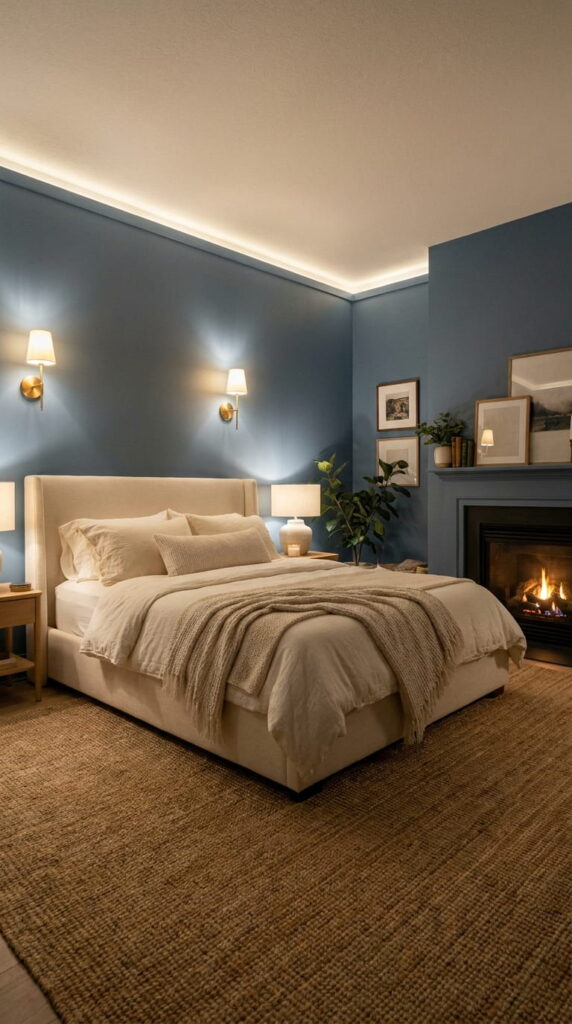
Blue looks most inviting when it has warmth around it. Brass, cream, warm wood, and soft lighting can turn a blue bedroom from cool to cozy.
This combination works especially well with navy, slate blue, and blue-gray. Try brass wall sconces, a cream upholstered bench, warm white bedding, a natural fiber rug, and a ceramic lamp. The contrast makes the blue feel richer and more layered.
Use warm bulbs in bedside lamps and avoid relying only on one overhead light. Bedrooms feel calmer when light comes from several softer sources instead of one harsh fixture.
The mistake to avoid is mixing too many shiny finishes. Brass can look beautiful, but too much metallic decor can make the room feel busy. Use it in small, repeated touches, such as lamp bases, picture frames, or drawer pulls.
Common Mistakes to Avoid With Blue Bedrooms
The biggest mistake is choosing a blue shade before checking the room’s light. Blue can shift throughout the day, so samples matter.
Another common issue is forgetting warmth. A blue bedroom still needs cream, beige, wood, woven textures, or warm lighting to feel comfortable. Without those details, the space may feel cold.
Avoid matching everything too perfectly. A bed, rug, curtains, pillows, and artwork in the exact same shade of blue can look forced. A more natural room uses a small family of blues with soft contrast.
Finally, do not overcrowd the room with decor. Blue already creates a mood. Let the furniture, bedding, and lighting support that mood instead of adding too many small accessories.
Frequently Asked Questions
What shade of blue is best for a serene bedroom?
Soft blue, dusty blue, blue-gray, and muted navy are all good options for a serene bedroom. The best shade depends on your light, furniture, and flooring. Test samples before painting or buying large pieces.
Can blue work in a small bedroom?
Yes, blue can work beautifully in a small bedroom. Use lighter blues for an airy look or choose a blue-gray accent wall behind the bed for depth. Keep bedding, curtains, and large furniture light enough to balance the color.
What colors go well with a blue bedroom?
Blue pairs well with warm white, cream, beige, taupe, soft gray, natural wood, rattan, brass, and muted green. For a calm look, avoid pairing too many bold colors with blue in the same room.
How do I make a blue bedroom feel cozy instead of cold?
Add warm lighting, textured bedding, wood furniture, woven baskets, cream accents, and soft rugs. These details keep the room from feeling too crisp or chilly.
Are blue bedrooms good for renters?
Yes. Renters can use blue bedding, curtains, rugs, removable wallpaper, artwork, lamps, and painted furniture if allowed. These updates can create a blue bedroom without permanent changes.
Should blue be used on every wall?
Not always. Blue can look beautiful on every wall when the shade is soft and the room has enough warmth, but an accent wall, headboard, rug, or bedding can be easier to manage. Start with one main blue feature if you are unsure.
Conclusion
Serene blue bedroom designs are popular because they solve a real decorating problem: they make a bedroom feel calmer, softer, and more pulled together without needing a full renovation. Whether you choose pale blue walls, a navy headboard, layered blue bedding, or a renter-friendly wallpaper accent, the secret is balance.
Let blue set the mood, then warm it up with natural materials, creamy textiles, thoughtful lighting, and simple styling. Keep the room practical, uncluttered, and personal. A beautiful blue bedroom does not need to feel perfect. It only needs to feel peaceful when you walk in.