
A backyard does not need to be large, perfectly level, or professionally landscaped to become a place you genuinely enjoy. Even a narrow yard, plain lawn, or small patio can feel welcoming when the layout has a clear purpose.
The best backyard garden designs balance plants with everyday life. They leave room for walking, relaxing, entertaining, growing food, and handling the less glamorous parts of gardening, such as watering and maintenance.
This guide includes 15 practical garden layouts for different yard sizes, budgets, and lifestyles. Whether you want colorful flowers, homegrown vegetables, more privacy, or a quiet outdoor seating area, these ideas will help you create a backyard that looks beautiful and works for your household.
Disclosure: This article may contain affiliate links. We may earn a commission at no extra cost to you
15 Backyard Garden Designs to Inspire Your Outdoor Space
1. Create a Layered Cottage Garden Border
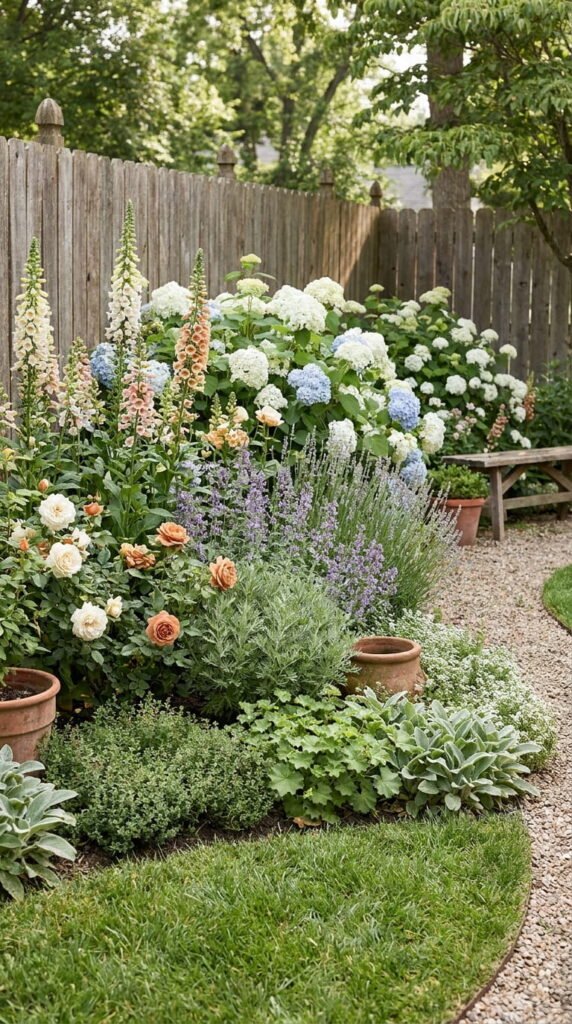
A cottage-style border is one of the easiest ways to make a plain backyard feel established and full of character. Instead of placing plants in straight rows, combine different heights, flower shapes, and foliage textures.
Place taller plants, such as hydrangeas, ornamental grasses, foxgloves, or hollyhocks, toward the back. Medium-height flowers can fill the center, while low-growing herbs and ground covers soften the front edge.
Repeat two or three plant varieties throughout the bed. Repetition prevents the garden from looking random, even when the overall arrangement feels relaxed.
I like this approach because it allows the garden to change naturally through the seasons without requiring every plant to stay perfectly shaped. It works especially well beside wooden fences, traditional homes, and farmhouse-style backyards.
2. Build a Raised-Bed Kitchen Garden
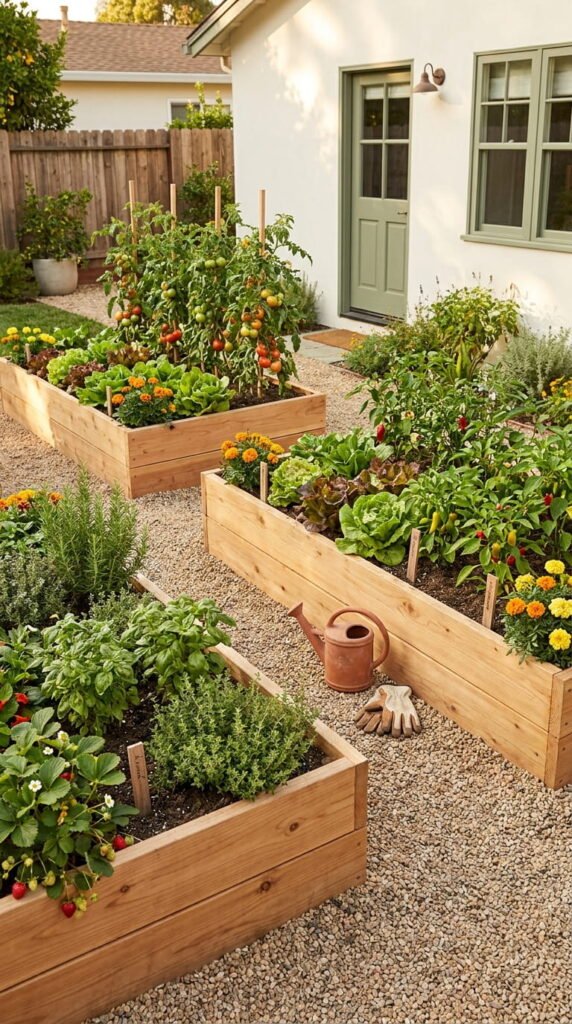
Raised garden beds give vegetables, herbs, and edible flowers a clean, organized place to grow. They can also make gardening more comfortable because the soil sits higher and the paths remain easier to manage.
Arrange two to four rectangular beds with enough room to walk between them. Gravel, wood chips, or stepping stones can define the pathways and reduce muddy areas after watering.
Plant foods your household regularly uses. Tomatoes, lettuce, basil, peppers, green onions, strawberries, and parsley are practical starting points for many beginner gardeners.
Add marigolds, nasturtiums, or calendula around the edges for color. These flowers help the vegetable garden feel like an intentional part of the landscape rather than a separate work zone.
3. Design a Modern Geometric Garden
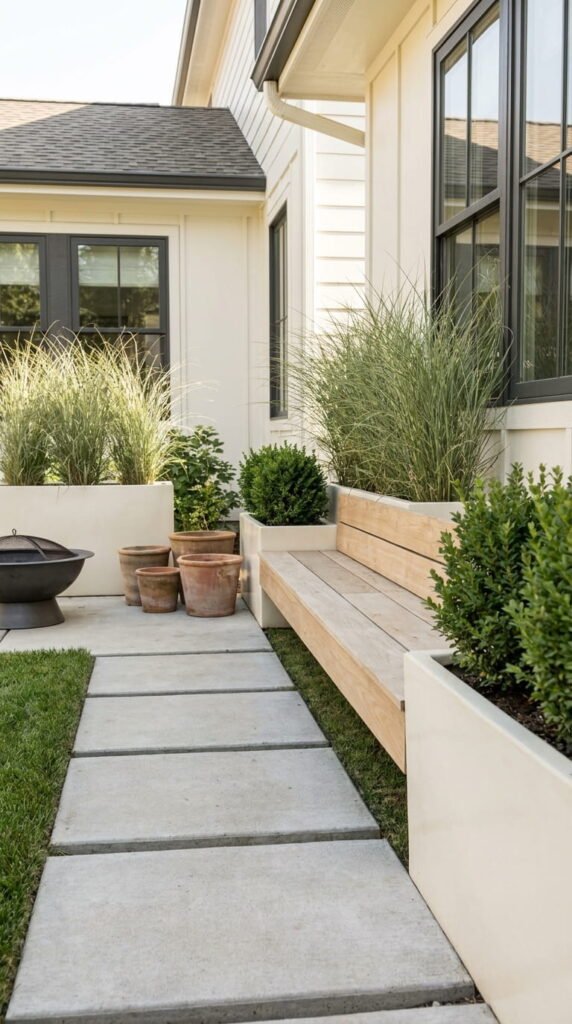
Modern backyard garden designs often rely on clean lines, repeated shapes, and a limited selection of materials. Rectangular planting beds, square pavers, neatly clipped shrubs, and ornamental grasses create a structured appearance.
Begin with a basic grid. One section might contain a paved seating area, while another holds a narrow lawn panel, gravel bed, or raised planter.
Use repeated plants rather than filling every bed with a different variety. Groups of three or five grasses, matching shrubs, or identical planters make the design feel calm and connected.
A palette of deep green, warm white, natural wood, pale concrete, and small terracotta accents works well. This style is especially effective beside contemporary homes and in small yards where visual order makes the space feel larger.
4. Use a Vertical Garden in a Small Backyard
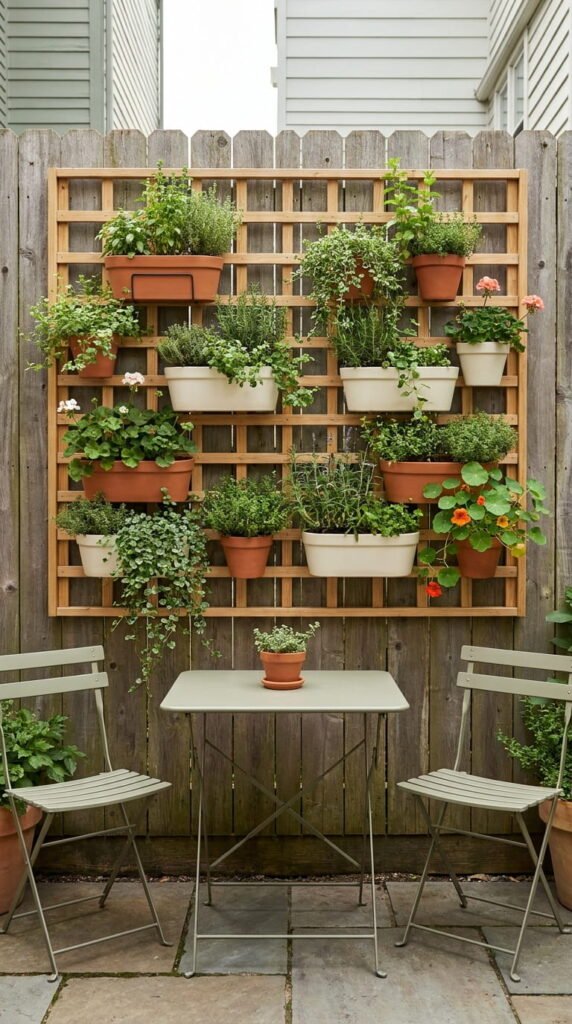
When ground space is limited, walls and fences become valuable growing surfaces. A vertical garden can hold herbs, trailing greenery, compact flowers, or even small vegetables without taking over the patio.
Use a wooden trellis, wall-mounted planters, hanging pockets, or a freestanding plant tower. Make sure the structure is secure and positioned where the plants receive suitable light.
Keep watering access in mind. A tall arrangement may look attractive, but it can become frustrating when the upper containers are difficult to reach.
This idea is particularly helpful for renters because many vertical systems can be removed or relocated. For more ways to make limited outdoor areas useful, explore these 20 Small Patio and Balcony DIY Projects.
Budget Tip
A basic wooden trellis and several matching pots can create the look of a custom vertical garden without the cost of built-in planters.
Paint or stain the trellis to coordinate with the fence, then add plants gradually. New homeowners looking for other manageable upgrades may also find these 11 Easy DIY Projects for First-Time Homeowners helpful.
5. Add a Curved Garden Path
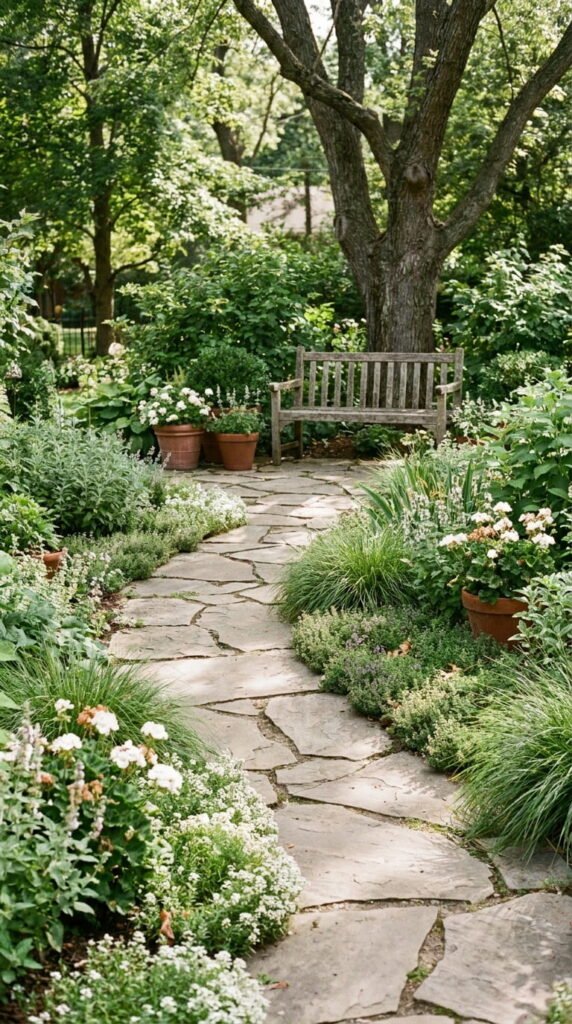
A curved garden path creates movement and encourages visitors to explore the backyard. It can also make a short yard appear deeper because the full route is not visible from one viewpoint.
Choose gravel, brick, natural stone, or stepping stones based on your budget and the style of your home. Allow the path to curve around a flower bed, small tree, bench, birdbath, or container arrangement.
Plant low-growing varieties along the edges so they soften the hard surface without blocking the walkway. Creeping thyme, alyssum, dwarf mondo grass, and compact ornamental grasses can work well.
Try not to make the path too narrow. A path approximately three feet wide usually feels more comfortable for regular use and provides enough space for carrying tools or watering cans.
6. Turn the Patio Into a Container Garden
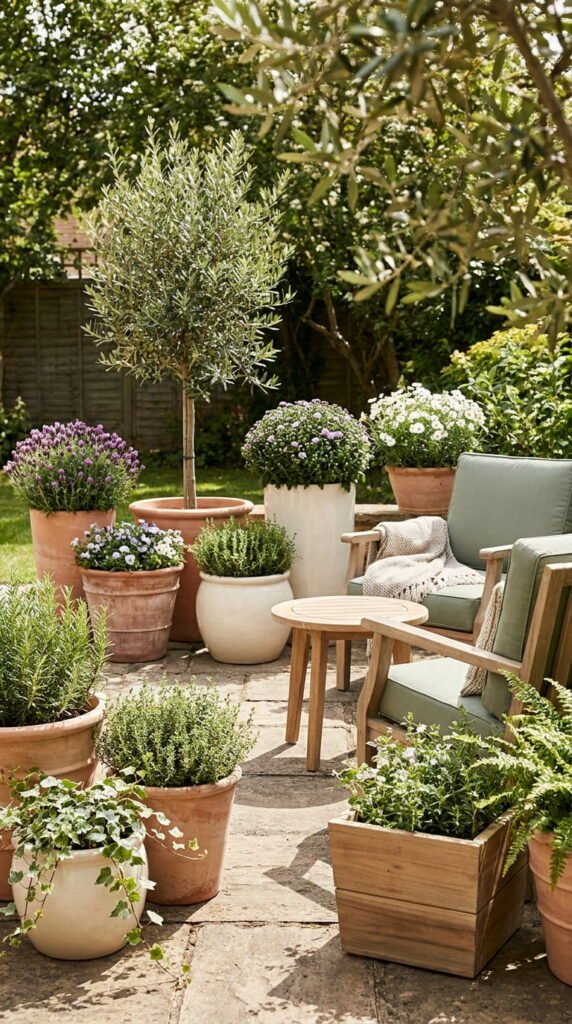
A patio container garden is a flexible option for renters, beginners, and homeowners who do not want to dig permanent planting beds.
Use planters in two or three coordinated finishes rather than collecting too many unrelated styles. Terracotta, warm white ceramic, weathered stone, and natural wood combine easily without making the patio look busy.
Vary the heights by keeping larger containers on the floor and placing smaller pots on stands or low stools. A balanced container group usually includes one upright plant, one full plant, and one trailing variety.
Leave enough space for chairs, doors, and walking paths. A patio can feel lush without being crowded.
For approachable upgrades that work well with container planting, see these 11 Easy DIY Patio Projects for Beginners.
7. Plant a Pollinator-Friendly Garden
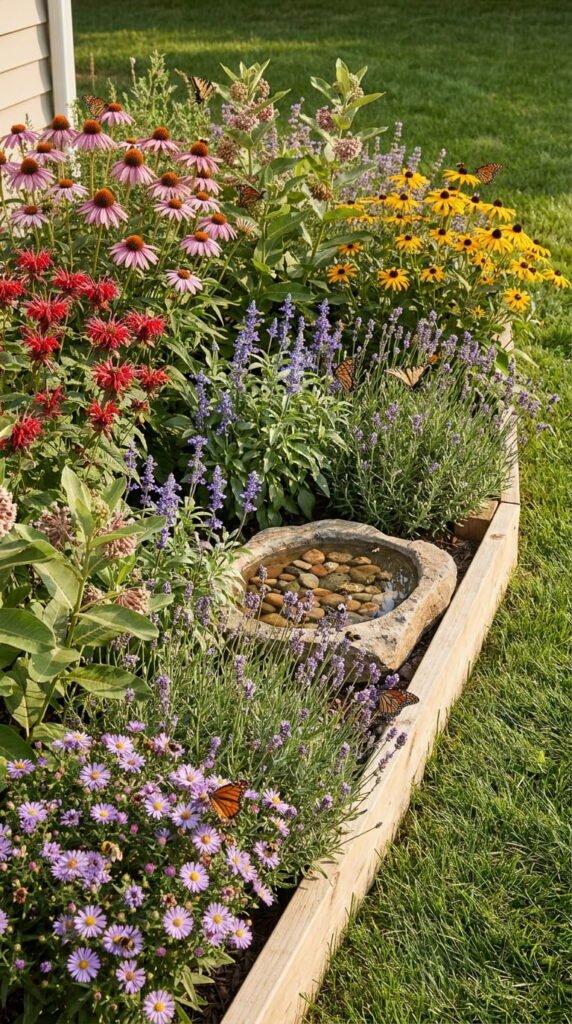
A pollinator garden supports bees, butterflies, and other helpful insects while bringing seasonal color and movement to the backyard.
Choose plants that bloom at different times from spring through fall. Coneflower, salvia, bee balm, black-eyed Susan, milkweed, lavender, and aster are popular options, but the best choices will depend on your region.
Plant flowers in generous clusters instead of scattering individual plants across the yard. Larger groups create a stronger visual effect and make blooms easier for pollinators to find.
Include a shallow water source and avoid using broad-spectrum pesticides around the planting area. I especially like this garden style because it feels active and changing, even when the layout itself is simple.
8. Combine an Open Lawn With Planted Borders
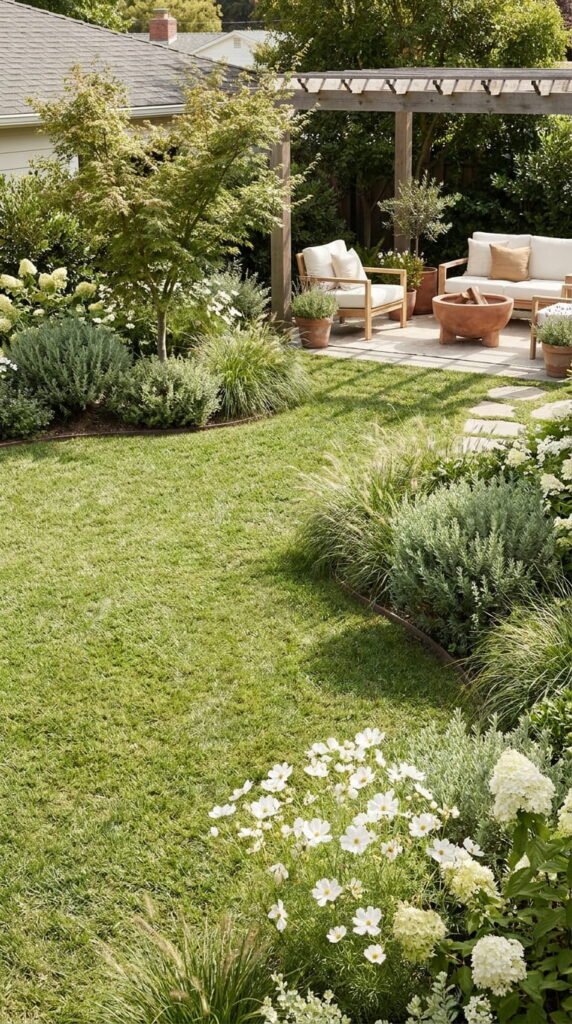
Families often need a backyard that provides both visual interest and open space. Keeping a central lawn while planting around the perimeter creates room for children, pets, games, and gatherings.
Use gently curved borders to soften the outline of the lawn. Combine shrubs, small trees, perennials, and ornamental grasses to create depth without reducing the usable center too much.
Choose durable plants near high-traffic areas. Fragile flowers may struggle beside a play zone, while sturdy shrubs and grasses can handle occasional contact more easily.
This is one of the most practical backyard layouts for busy families because the open center can change as household needs evolve.
Common Mistake to Avoid
Avoid creating borders that are too narrow. Shallow beds often look sparse and push every plant against the fence.
Where space allows, make the bed deep enough for two or three layers of planting. This creates a fuller view and gives plants room to reach their mature size.
9. Create a Mediterranean Gravel Garden
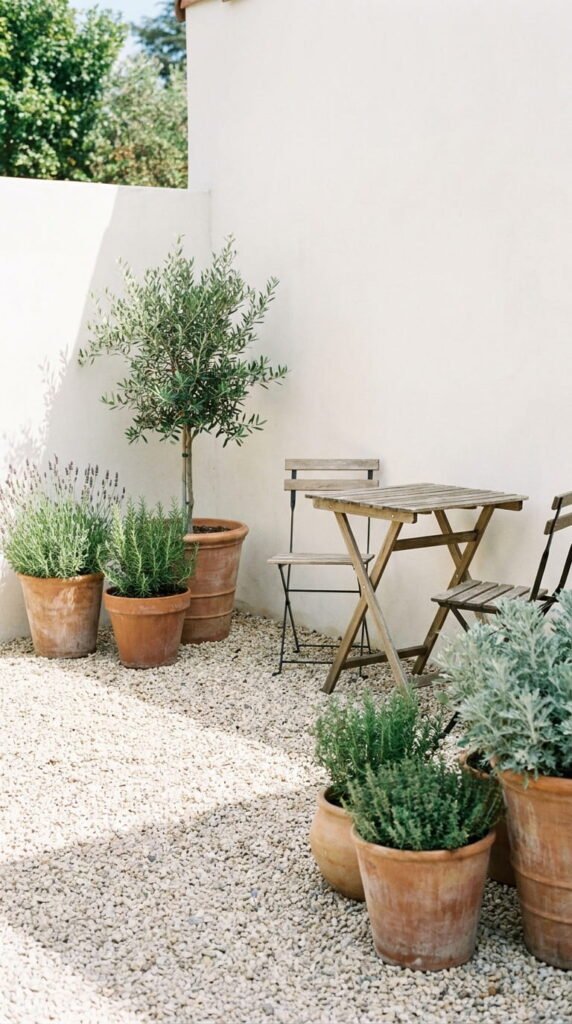
A Mediterranean-inspired garden uses gravel, sun-loving plants, terracotta, and weathered materials to create a relaxed outdoor setting.
Cover the main surface with pale gravel, then add large terracotta pots filled with lavender, rosemary, thyme, olive trees, or ornamental grasses. A simple wooden bench or bistro set can become the main focal point.
Keep the planting palette controlled. Silvery foliage, soft green herbs, creamy flowers, and warm clay tones create a natural, sun-washed combination.
Gravel can reduce lawn maintenance, but the area still needs proper ground preparation. Install an appropriate base and edging so the gravel stays contained and does not sink quickly into the soil.
10. Develop a Woodland Shade Garden
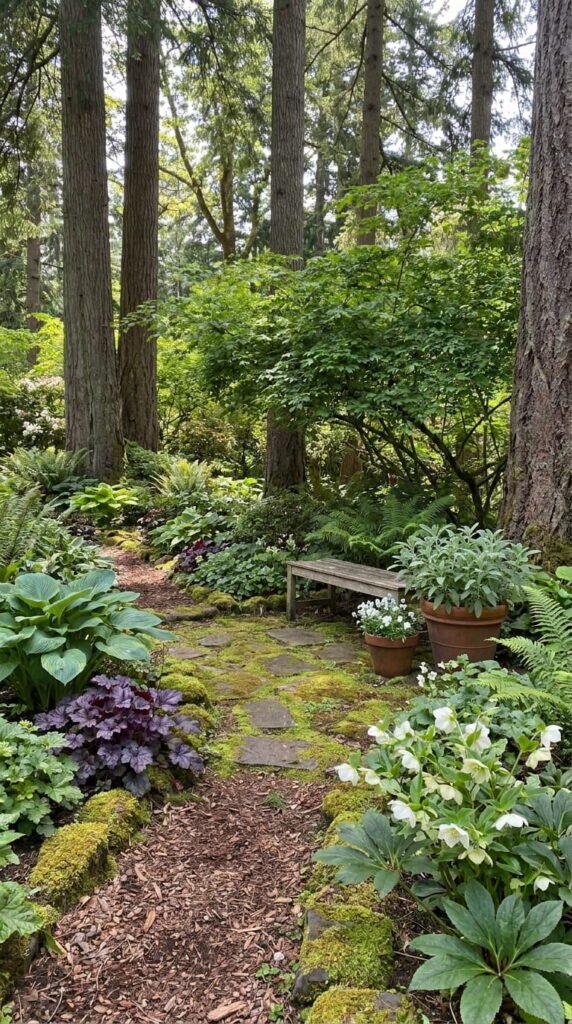
A shady backyard is not a failed garden. It simply needs plants and materials suited to lower light.
Build the design around ferns, hostas, heuchera, astilbe, hellebores, and shade-tolerant ground covers. Focus on differences in leaf shape, size, and green tones instead of relying only on flowers.
Natural stone, bark mulch, weathered wood, and a simple bench support the woodland atmosphere. A narrow winding path can make the area feel peaceful and secluded.
Observe the light before buying plants. Bright shade, filtered sunlight, and deep shade are different conditions, and a plant that tolerates one may struggle in another.
11. Grow a Living Privacy Screen
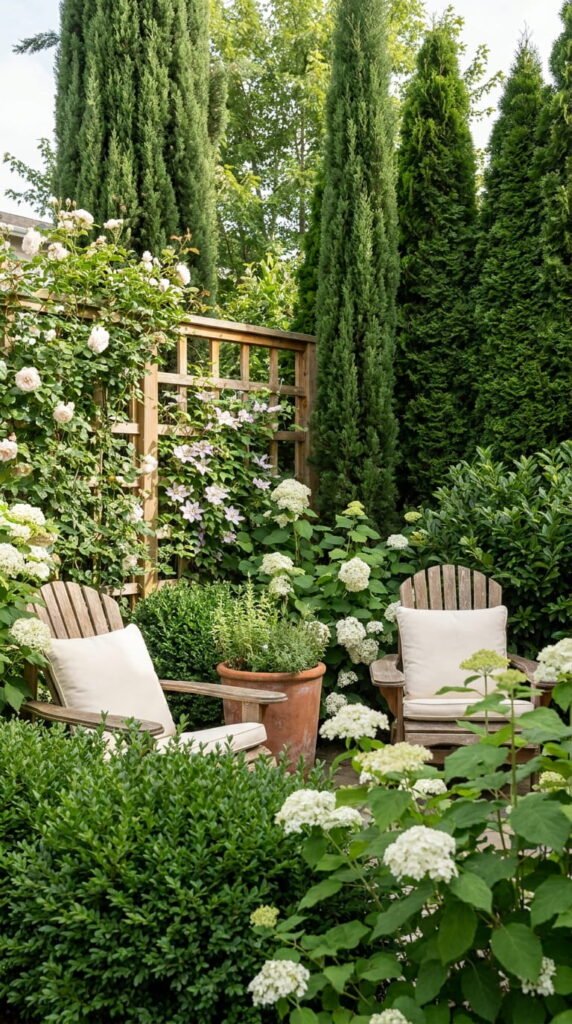
A living privacy screen can make a backyard feel more secluded without relying entirely on a tall solid fence. It can also provide greenery, shade, and shelter for birds.
Evergreen shrubs are useful for year-round coverage, while flowering shrubs and small trees add seasonal interest. Always consider the mature height and width before planting.
For narrow backyards, use columnar trees, upright junipers, trellises with climbing vines, or tall plants in rectangular containers. These options provide height without occupying too much floor space.
Do not plant directly against a property line without checking local rules and allowing access for future trimming.
Renters and homeowners working with compact outdoor spaces can find additional privacy and planting inspiration in these 11 Balcony Makeover Ideas for Apartments.
12. Design a Fire Pit Garden Room
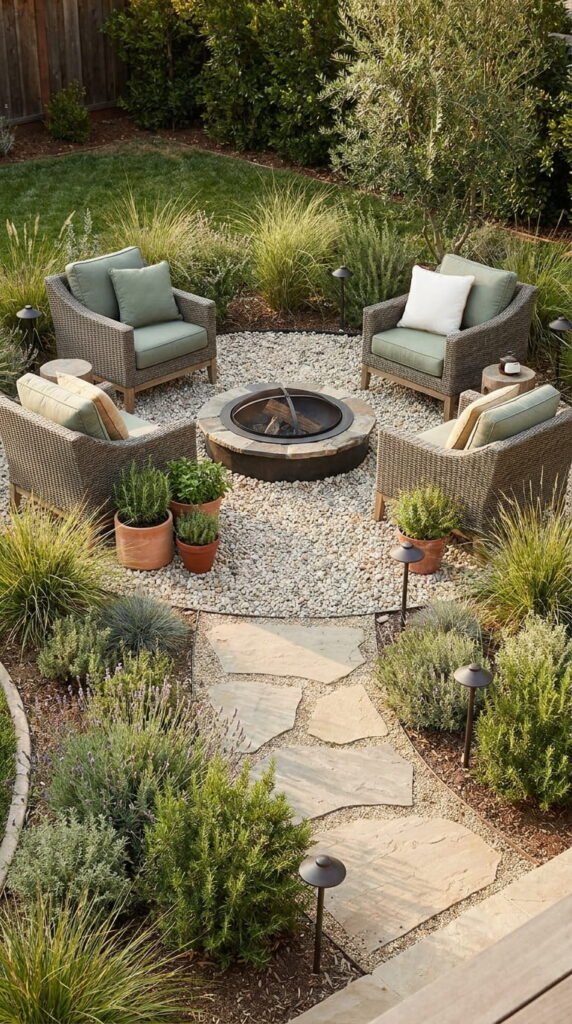
A fire pit feels more inviting when it is treated as a complete outdoor room rather than an isolated feature placed in the middle of the lawn.
Define the area with gravel, paving, stone edging, or a low planting border. Arrange chairs in a comfortable circle and provide enough clearance for people to move safely around the seating.
Use nonflammable materials close to the fire feature and keep trees, branches, fabric, and dense plants at a safe distance. Check local requirements before installing or using any outdoor fire feature.
Low grasses, herbs, and compact shrubs can soften the outer edge. Add subtle pathway lighting so the space remains easy to reach after sunset.
Designer Tip
Repeat one material from the patio or house exterior in the fire pit area. Matching stone, wood tones, or metal finishes will help the new garden room feel connected to the rest of the property.
13. Choose a Water-Wise Garden Design
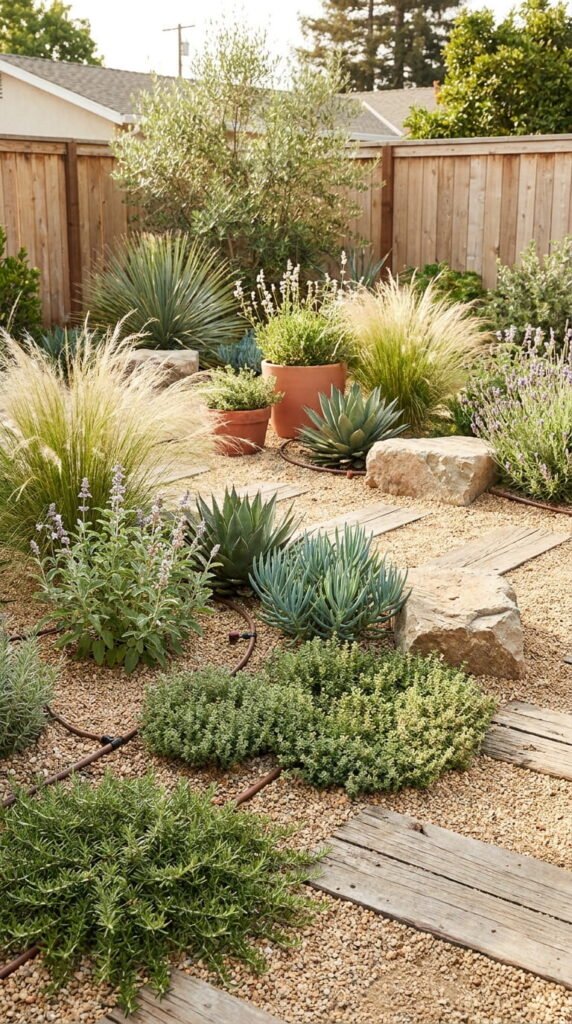
A water-wise garden can still feel colorful, soft, and inviting. The goal is to choose plants that suit the local climate and group them according to their watering needs.
Place drought-tolerant plants together rather than mixing them with varieties that require consistently moist soil. This makes watering easier and prevents plants from receiving too much or too little moisture.
Use mulch, gravel, or ground cover to protect the soil and reduce evaporation. Drip irrigation can direct water closer to the roots instead of spraying the entire bed.
Native plants are often a practical starting point because they are adapted to regional conditions. Remember that even drought-tolerant plants need regular watering while their roots become established.
14. Create a Formal Symmetrical Garden
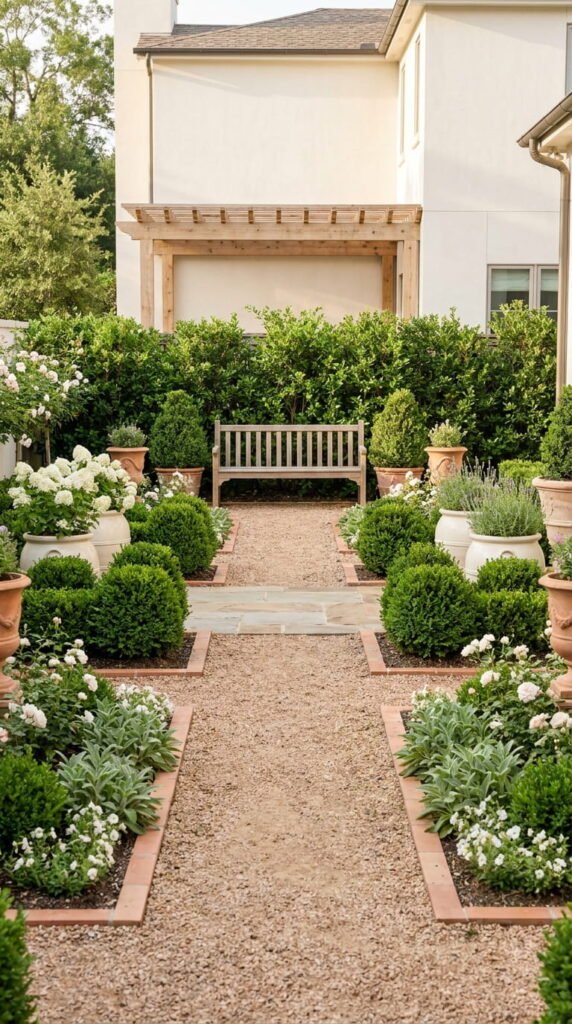
Symmetry gives a backyard a calm and polished appearance. This layout works especially well around a central patio, fountain, doorway, pathway, or dining area.
Place matching shrubs, planting beds, or containers on both sides of the main feature. Repeated evergreen shapes create year-round structure, while seasonal flowers introduce color.
The garden does not need to be large. Two matching planters beside a bench and a straight path bordered with clipped greenery can create a strong formal effect in a modest yard.
Formal gardens usually require regular trimming and edging. Consider how much maintenance you want before filling the area with tightly shaped hedges.
15. Mix Edible Plants Into the Landscape
An edible landscape combines decorative planting with food-producing varieties. Instead of separating vegetables and herbs into a hidden corner, include them within the main garden beds.
Blueberry shrubs, rosemary, sage, chives, strawberries, dwarf fruit trees, colorful lettuce, and edible flowers can all contribute to an attractive design.
Repeat plants and use clear edging so the garden looks organized. Place frequently harvested herbs near the patio or kitchen door, where they are easier to reach while cooking.
I like this approach because every part of the backyard has a purpose. Even a few herbs and berry plants can make the garden feel more personal and useful.
Conclusion
Successful backyard garden designs begin with one simple question: How do you want to use the space?
A garden that supports your everyday routine will be easier to maintain and more enjoyable than one designed only for appearance. Your ideal backyard might include vegetables, a flower border, a play lawn, a shaded bench, or a quiet patio surrounded by containers.
Start with one manageable update. Define a planting bed, group a few pots, create a short path, or add one layer of privacy. Once that area feels established, you can gradually build the rest of the garden around it.
For more manageable ways to improve an outdoor area one project at a time, visit 11 Easy DIY Patio Projects for Beginners.
FAQ
What is the easiest backyard garden design for beginners?
A simple border or container garden is usually the easiest place to start. Choose a small number of reliable plants, repeat them throughout the space, and leave enough room for their mature size.
How can I design a backyard garden on a budget?
Work in stages and reuse existing features whenever possible. Divide established plants, grow easy flowers from seed, use mulch for pathways, and focus your main spending on healthy soil and durable materials.
How can I make a small backyard look bigger?
Use curved paths, vertical plants, layered borders, and a limited color palette. Keep some open ground visible and avoid placing many small objects around the perimeter.
What should I include in a family-friendly backyard?
Include an open area for play, comfortable seating, secure boundaries, shade, and durable plants. Avoid sharp edging, toxic plants, and delicate decorations beside high-traffic zones.
How do I choose plants for my backyard?
Consider your local climate, USDA hardiness zone, sunlight, soil drainage, rainfall, and the mature size of each plant. Plants that match the site usually perform better and require less intervention.
How can I add backyard privacy without building a fence?
Use layered shrubs, narrow evergreen trees, trellises, climbing vines, tall planters, or outdoor screens. Combining several of these options often looks softer than one solid barrier.
What is the best low-maintenance backyard garden design?
A garden with repeated native or climate-appropriate plants, mulched beds, defined edging, drip irrigation, and limited lawn is generally easier to maintain. Using fewer plant varieties also simplifies seasonal care.