
There is something special about walking into a living room where the floor already feels warm. Maybe it is a soft jute rug underfoot, a vintage pattern peeking out near the coffee table, or a small wool rug placed just slightly off-center so the room feels relaxed instead of staged. That quiet mix of texture and comfort is why layered rug living room ideas work so well in real homes. They help a room feel finished without adding more furniture, more clutter, or a full redesign. With the right base rug, top rug, colors, and placement, you can make a living room feel cozy, personal, and visually balanced.
Why These Ideas Matter
Layering rugs is useful because it solves several common living room problems at once. A single rug may feel too small, too plain, too thin, or too disconnected from the seating area. A second rug can add warmth, soften hard flooring, define a cozy conversation zone, and bring personality to neutral furniture. It also lets you use smaller vintage rugs or special pieces that may not be large enough on their own. Design editors at Architectural Digest often show layered rugs as a smart way to add color and pattern without committing to one huge statement carpet. The key is balance. Choose rugs that support the furniture, leave enough walking space, and connect with the room’s palette instead of competing with it.
1. Start With a Natural Jute Rug Base
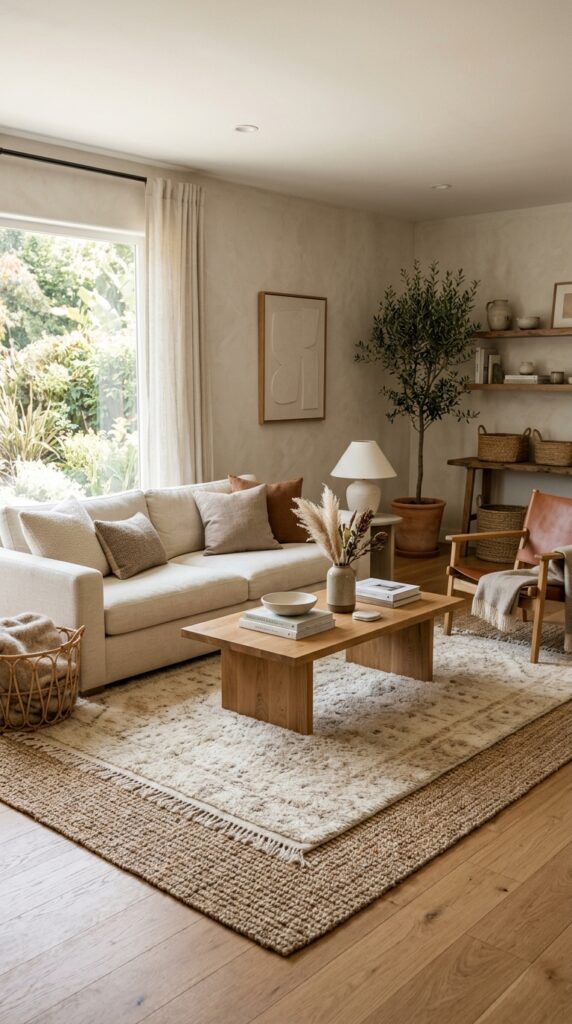
A jute rug is one of the easiest base layers for a living room because it adds quiet texture without taking over the room. It works well under sofas, linen chairs, wood coffee tables, and warm neutral palettes. Place a large jute rug under the main seating area, then layer a smaller wool, vintage, or patterned rug over it. The jute gives structure, while the top rug brings color and softness. This idea works best in organic modern, coastal, farmhouse, and earthy living rooms. Avoid choosing a jute rug that is too rough for bare feet. If your family uses the room daily, pick a softer woven option and use a rug pad underneath.
2. Layer a Vintage Rug Over a Neutral Base
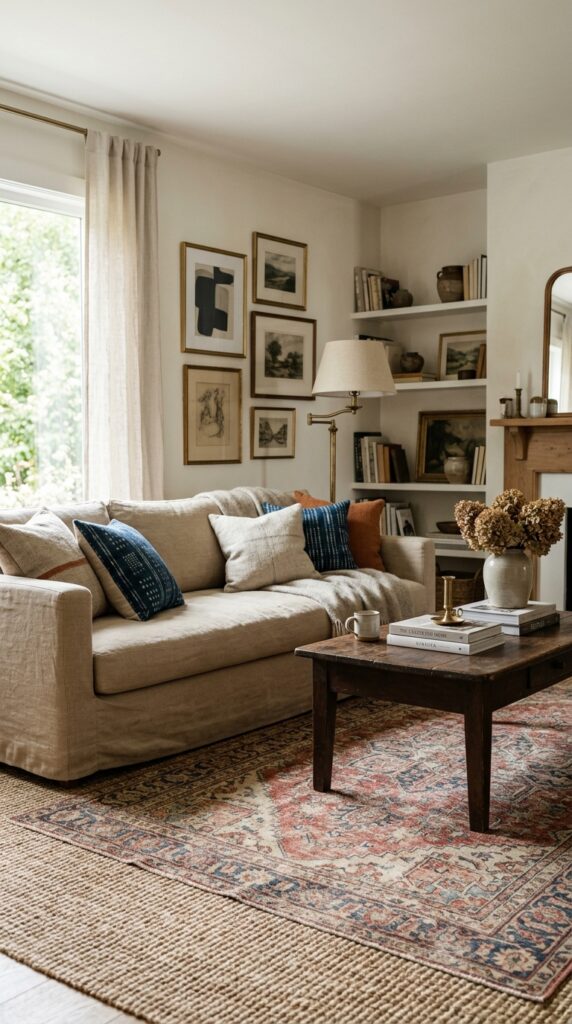
A vintage rug can make a living room feel collected instead of store-bought. Since many vintage rugs are smaller, layering them over a larger neutral rug helps them feel intentional. Try a faded Persian-style rug, Turkish rug, or muted floral rug over sisal, jute, or a flat-weave wool base. This works beautifully near a coffee table, in front of a sofa, or beneath two accent chairs. The design impact comes from age, color variation, and artisan craftsmanship. Keep nearby pillows and throws simple so the rug can be the focal point. Avoid mixing a very busy vintage rug with loud curtains or heavy patterned upholstery.
3. Use a Cowhide Rug for Organic Shape
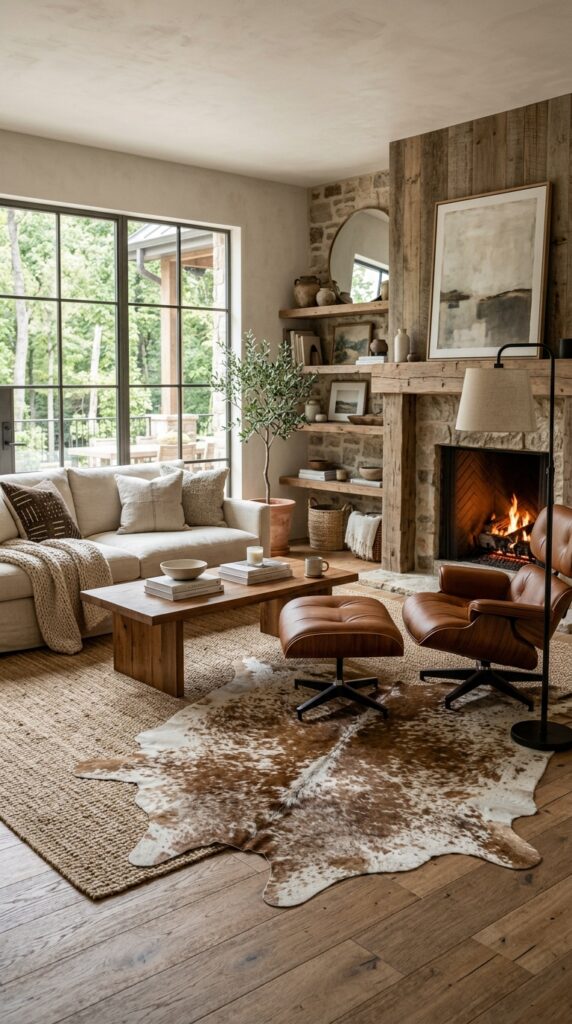
A cowhide rug adds movement because it breaks away from the usual rectangle shape. Layer it over a large woven rug to soften straight furniture lines and add a relaxed, organic feel. This look works best in rustic modern, western-inspired, industrial, and warm minimalist living rooms. Place the hide at an angle under the coffee table or beside a leather chair for a casual layout. The natural shape adds interest without needing bold color. Avoid placing it where the edges curl into a walking path. If you have pets or small children, choose a durable, easy-clean option and make sure both rugs stay flat.
4. Pair a Solid Base With a Patterned Top Rug
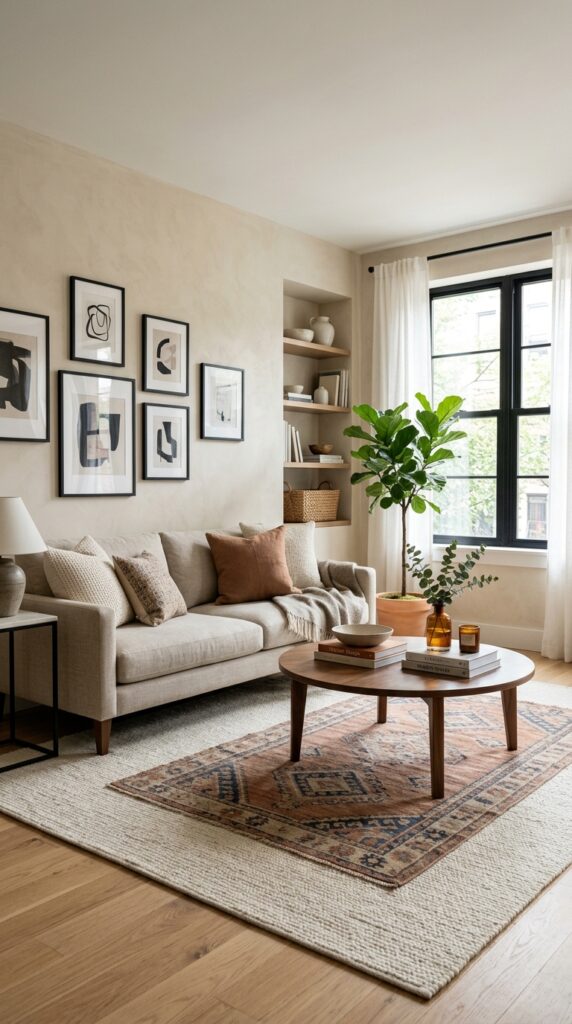
This is a safe formula when you want pattern but still need visual harmony. Start with a solid rug in cream, oatmeal, gray, taupe, or warm beige. Then add a smaller patterned rug in muted tones. The base rug calms the room, while the top rug adds personality. This idea works well in apartments, family rooms, and open living spaces where too much pattern can feel loud. Use the top rug to repeat colors already found in your pillows, art, or curtains. Avoid using two strong patterns at the same size. The eye needs one quiet layer and one interesting layer.
5. Try Tone-on-Tone Rug Layering
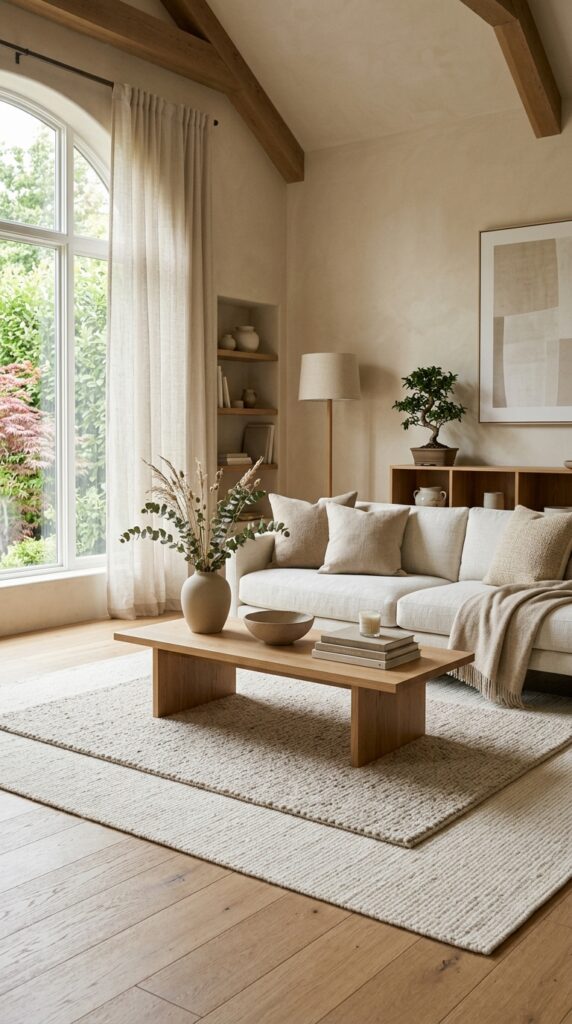
Tone-on-tone layering creates a calm, high-end look without strong contrast. Use two rugs from the same color family, such as ivory over beige, taupe over oatmeal, or charcoal over soft gray. The interest comes from texture, not bold color. Try a flat woven base with a plush wool top rug, or a natural fiber base with a ribbed cotton rug. This works best in minimalist, Japandi, organic modern, and warm neutral living rooms. It is also helpful in small spaces because the low contrast keeps the room feeling open. Avoid choosing two rugs that are almost identical in both color and texture, or the layers may disappear.
6. Add a Small Patterned Rug Under the Coffee Table
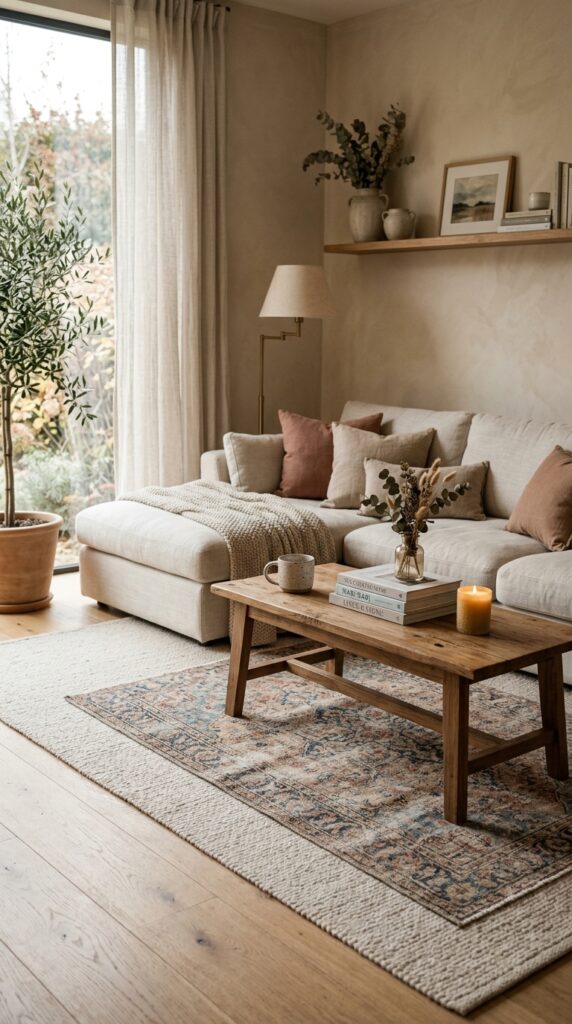
A small patterned rug can work like artwork for the floor. Place it over a larger plain rug and center it under the coffee table. This draws attention to the seating area and gives the room a stronger focal point. It works especially well when your sofa and chairs are simple. Choose a rug that is wide enough to extend beyond the coffee table on all sides. A faded red, muted blue, olive, or soft clay pattern can warm up a neutral living room. Avoid using a top rug that is nearly the same size as the coffee table. It should frame the table, not hide under it.
7. Angle the Top Rug for a Relaxed Look
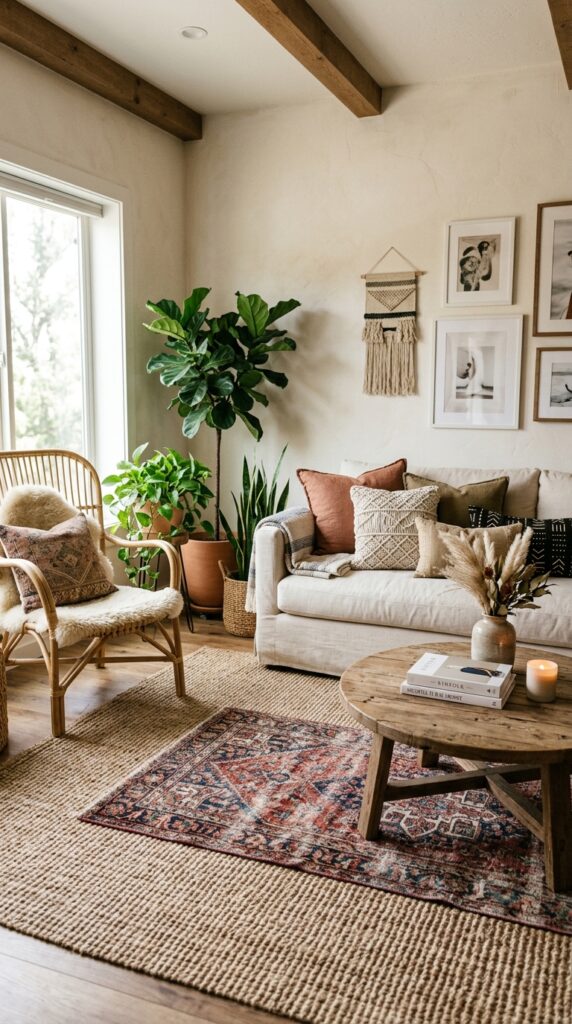
Not every rug has to sit perfectly straight. Angling the top rug can make the living room feel more natural and less rigid. This works well with vintage rugs, cowhides, small wool rugs, or irregular artisan pieces. Place the larger base rug straight with the sofa, then turn the smaller rug slightly. The angle adds movement and makes the room feel styled by hand. This idea works best in casual homes, boho living rooms, and spaces with collected decor. Avoid extreme angles that interrupt traffic flow or make the furniture look accidentally misaligned. A small shift is usually enough.
8. Layer Rugs to Define an Open-Plan Living Area
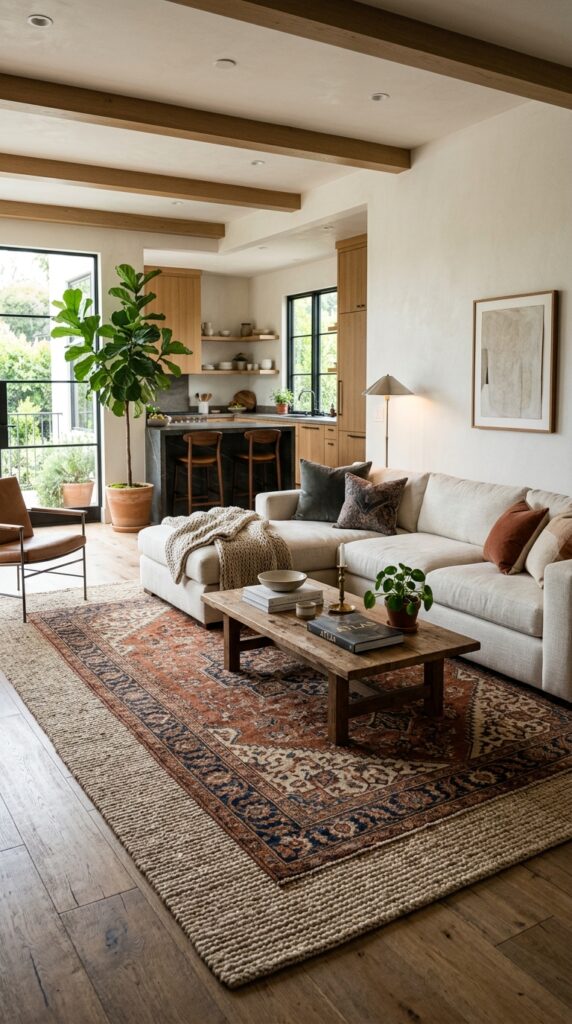
In an open-plan home, rugs can help separate the living area from the dining space, kitchen, or entry. Use one large base rug to mark the living room zone, then add a top rug near the sofa and coffee table for warmth. This makes the seating area feel grounded without needing walls or dividers. Keep both rugs connected to the room’s color palette so the open space feels calm. This idea works well in apartments, lofts, and homes with large shared rooms. Avoid letting the rug layer stop halfway under major furniture. At least the front legs of the sofa and chairs should connect to the rug.
9. Mix Flat-Weave and Plush Textures
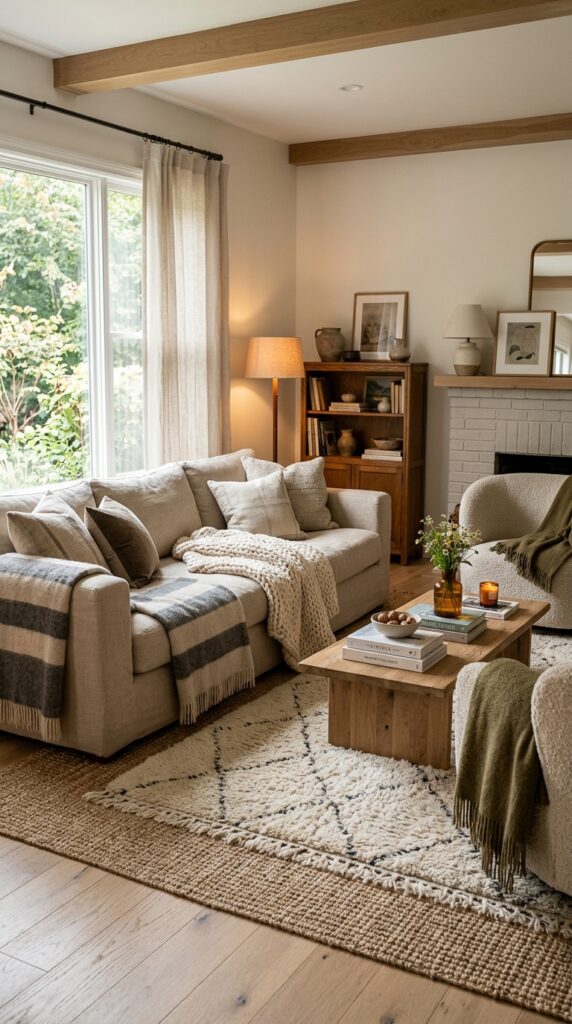
Texture is what makes rug layering feel rich. Try a flat-weave cotton or wool rug as the base, then add a plush shag, tufted, or high-pile rug on top. The contrast feels cozy and tactile without relying on bright color. This idea works best in living rooms where people sit on the floor, watch movies, or gather around a low coffee table. Keep the plush layer smaller so it feels like a comfort zone, not a wall-to-wall carpet. Avoid layering two thick rugs together. The edges may become bulky, and furniture can wobble.
10. Use Layered Rugs to Warm Up Wood Floors
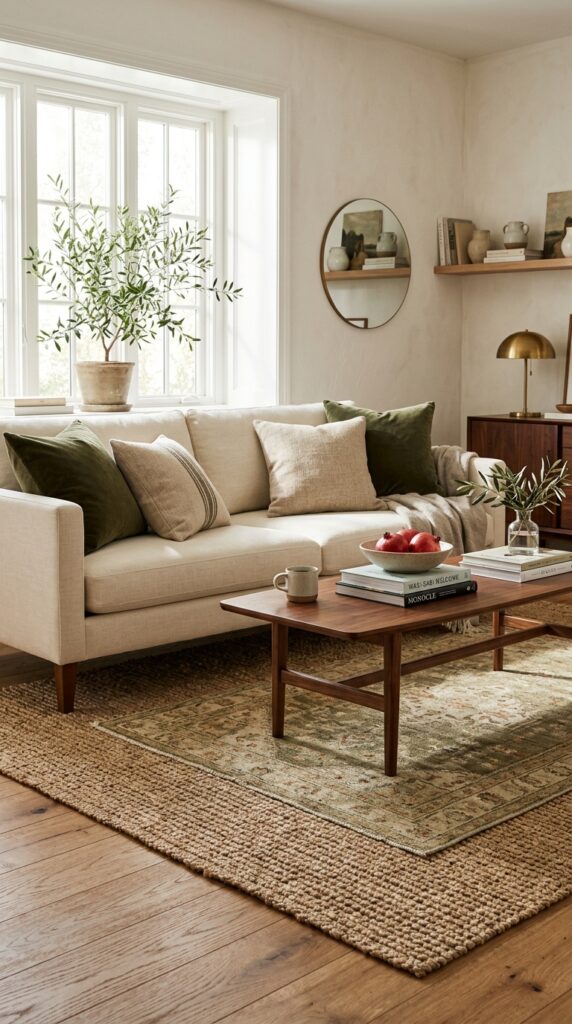
Wood floors are beautiful, but they can make a living room feel echoey or bare when the furniture is minimal. Layered rugs add softness, reduce the visual emptiness, and bring warmth to rich grains and raw finishes. Use a large natural rug first, then add a softer patterned or wool rug over the seating area. This works with oak, walnut, pine, and dark stained floors. Choose colors that connect with the wood undertone. Warm wood pairs well with cream, rust, olive, tan, and muted blue. Avoid covering every inch of flooring. Leave a border of visible wood so the room can breathe.
11. Layer a Round Rug Over a Rectangle Rug
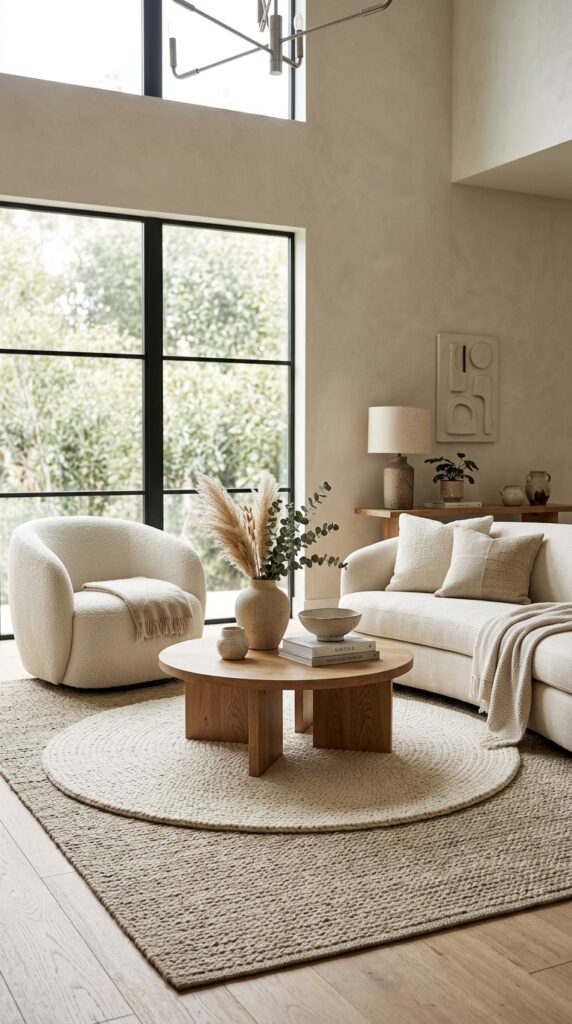
A round rug can soften a room filled with square furniture, rectangular sofas, and straight shelves. Place a round top rug over a larger rectangular base to create a gentle focal point. This works especially well under a round coffee table, near a reading chair, or in a small conversation corner. The shape contrast adds charm without needing a busy pattern. Choose a round rug that is large enough to feel purposeful. A tiny circle rug can look like a bath mat in the wrong setting. Avoid placing the round rug too close to the edge of the base rug. Give it room to sit comfortably within the larger layer.
12. Create a Cozy Reading Corner With Two Rugs
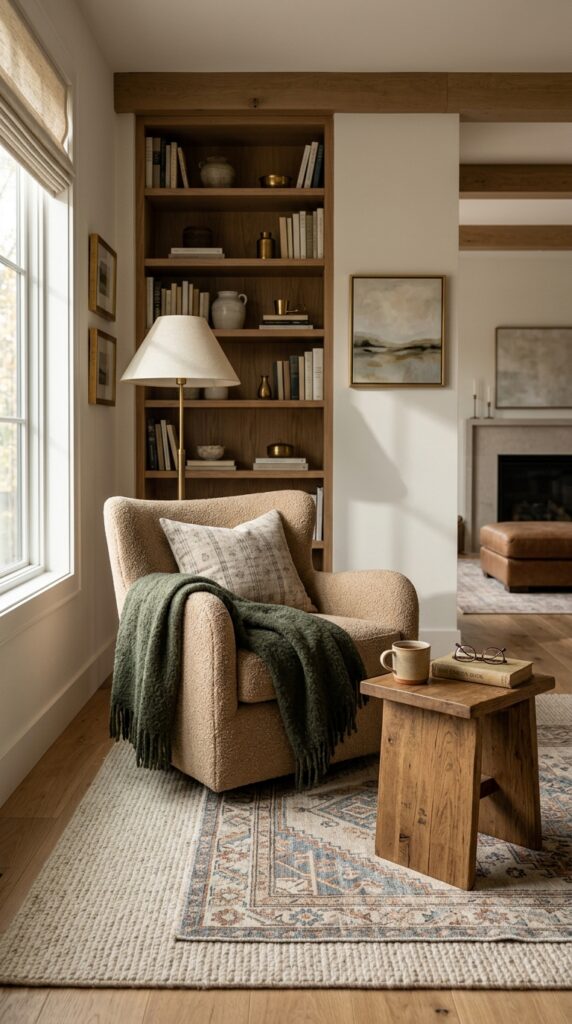
Layered rugs are not only for the main sofa area. A reading corner can feel softer with a small layered setup. Start with a slim neutral rug beneath the chair and side table, then add a small patterned or sheepskin-style rug where your feet land. This creates a cozy living space inside the larger room. It works well beside a window, bookshelf, fireplace, or floor lamp. Add a throw blanket and one pillow that repeats a rug color. Avoid adding too many small accessories around the chair. The rugs should make the corner feel calm, not crowded.
13. Use Black and White Layers for Modern Contrast
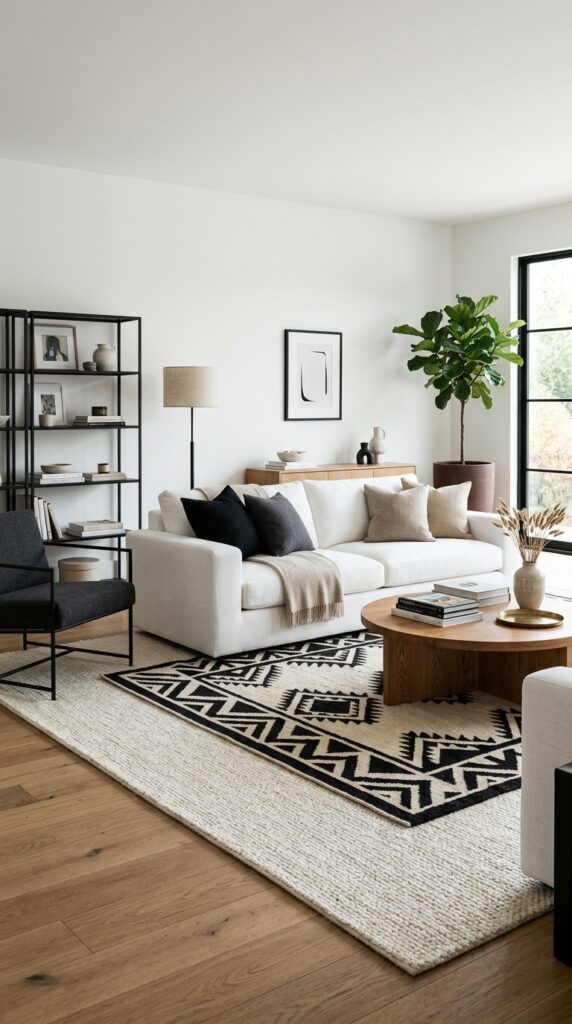
Black and white rug layering can look clean, sharp, and modern when done with restraint. Try a large ivory or light gray base rug with a smaller black-and-cream geometric rug on top. This works well with black metal accents, white walls, sculptural lighting, and simple furniture. The contrast gives the living room structure and helps define the seating area. Keep the rest of the palette warm with wood, linen, or woven decor so the room does not feel cold. Avoid pairing strong black-and-white rugs with too many bold colors. The look works best when the contrast is the main feature.
14. Layer Rugs Near the Fireplace
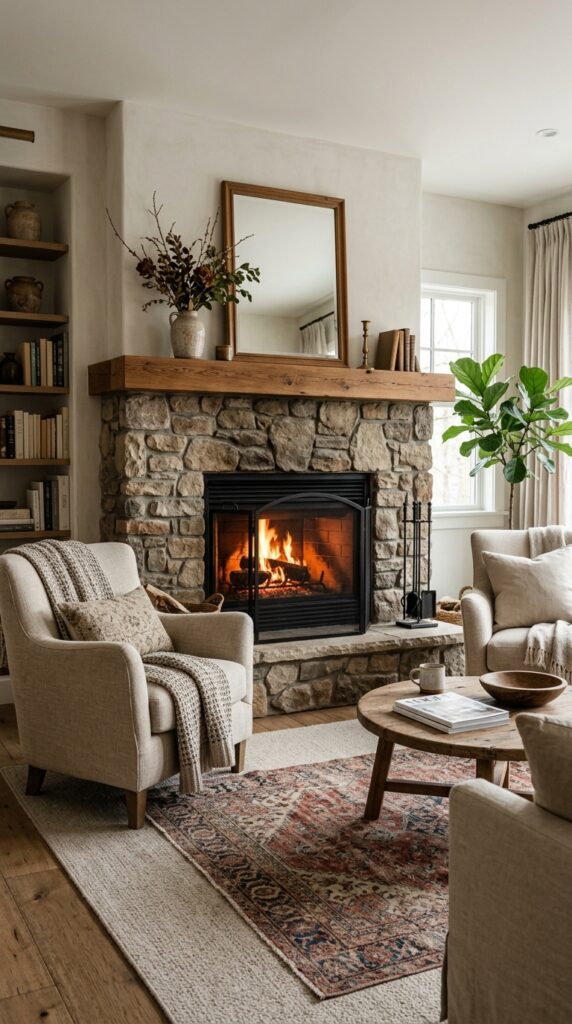
A fireplace already creates a natural focal point, and layered rugs can make that area feel even more inviting. Use a large rug to connect the seating group, then place a smaller soft rug closer to the hearth area if the layout allows. This works best in living rooms where chairs face the fireplace or where the coffee table sits between the sofa and mantel. Choose low-pile rugs near the fireplace area and follow fire-safety rules for your home. Better Homes & Gardens often highlights natural materials and low-pile vintage-style rugs in relaxed interiors, which fits this look well. Avoid placing loose, thick, or curled rug edges too close to heat.
15. Combine Stripes With Soft Neutrals
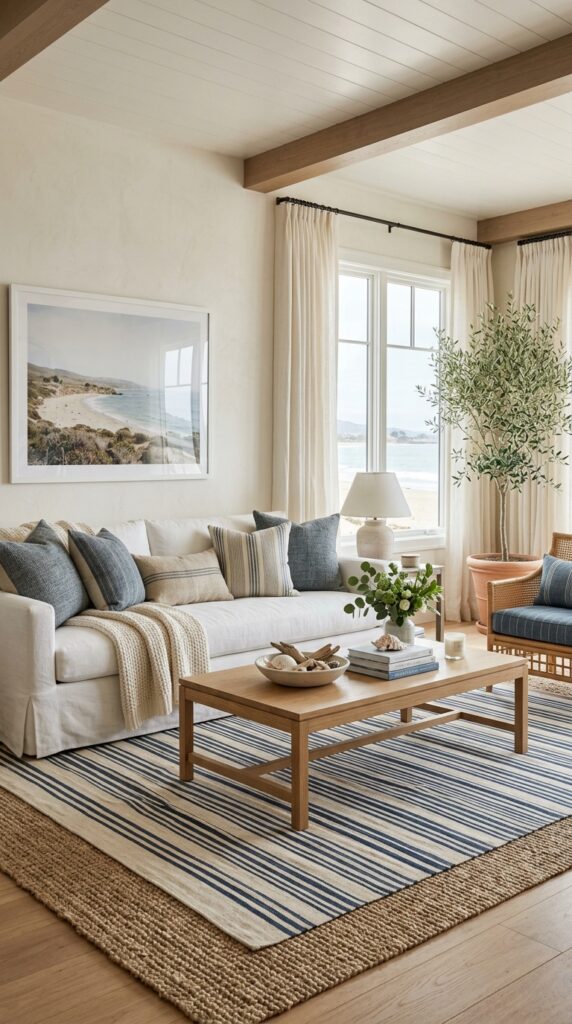
A striped rug can add direction and energy without looking too busy. Layer a striped top rug over a neutral base to make a narrow living room feel longer or a small seating area feel more structured. Thin stripes feel classic, while wider stripes feel bolder and more casual. This works well in coastal, cottage, transitional, and relaxed family rooms. Repeat one stripe color in a pillow or throw to tie the look together. Avoid using stripes that fight with strong flooring patterns or heavy wallpaper. If the room already has many lines, keep the rug pattern soft and muted.
16. Layer Rugs Over Carpet Carefully
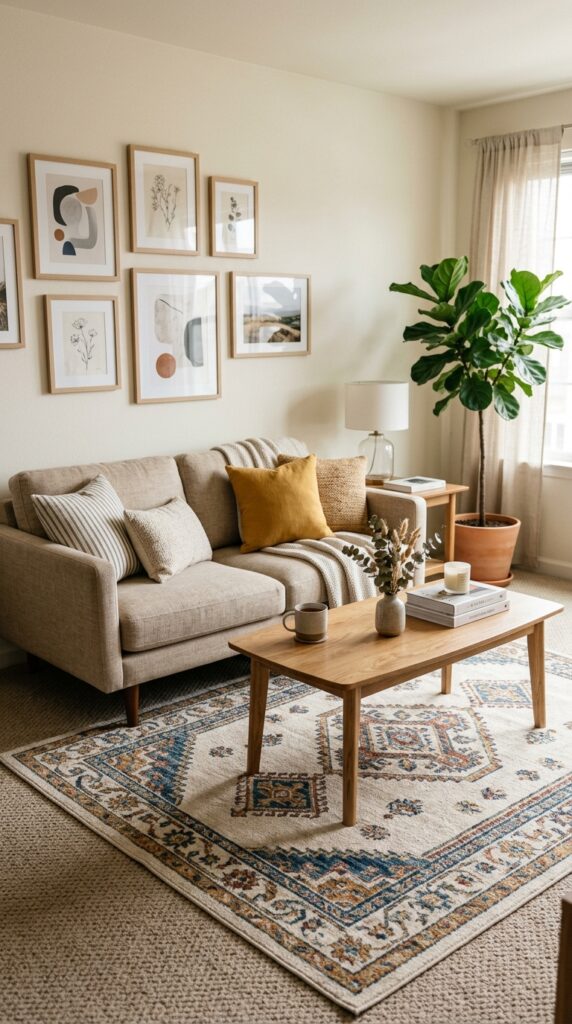
Layering rugs over carpet can work when the textures are different. Place a low-pile patterned rug over a plain carpet, or a nubby woven rug over short carpet. This helps define the living area and adds personality to rental spaces where the flooring cannot be changed. Use a rug pad made for carpet-to-rug layering to reduce slipping and bunching. This idea works best when the carpet is neutral and clean. Keep the top rug thin enough so furniture sits level. Avoid placing a thick shag rug over plush carpet. It can look bulky, trap dust, and create an uneven walking surface.
17. Use Layered Rugs to Refresh Seasonal Decor
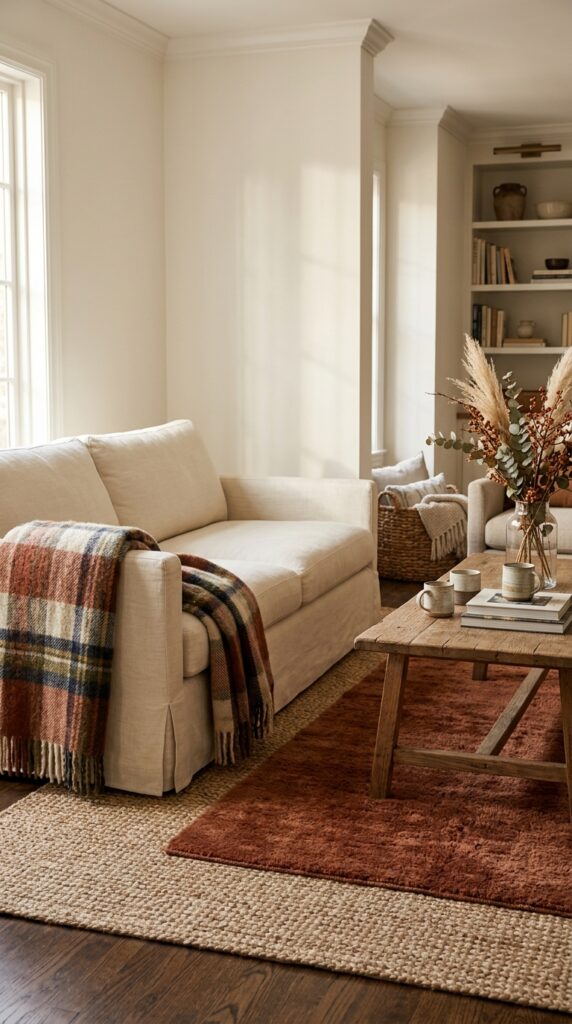
Layered rugs make seasonal styling easier because you can keep the base rug year-round and change only the top rug. In spring, try a faded floral or soft sage rug. In summer, use light cotton or blue stripes. In fall, bring in rust, clay, brown, or muted gold. In winter, add wool, plaid, or deeper tones. This idea works well if you enjoy changing pillows, throws, and mantel decor through the year. Elle Decor’s 2026 living room trend notes point toward personal, layered spaces with vintage character and pattern, which fits this flexible approach. Avoid buying seasonal rugs that only match one holiday. Choose colors you can reuse in more than one month.
Google People Also Ask FAQs
Can you layer rugs in a living room?
Yes, you can layer rugs in a living room when the sizes, textures, and colors work together. Start with a larger neutral base rug, then add a smaller patterned or softer rug on top. Keep furniture connected to the rug zone so the layout feels grounded.
What size rug should go on top when layering?
The top rug should be smaller than the base rug and leave a clear border around the edges. In most living rooms, the top rug works well under the coffee table or centered within the seating area. Avoid using two rugs that are almost the same size.
What rugs look best layered together?
Natural fiber rugs, flat-weave wool rugs, vintage rugs, cowhide rugs, and low-pile patterned rugs often layer well together. A good pairing usually has contrast in texture or pattern. For example, jute with vintage wool feels warm, balanced, and easy to style.
How do you stop layered rugs from moving?
Use the right rug pad for the floor type and the rug material. You can also use rug tape made for your flooring surface. Make sure both rugs lie flat before placing furniture. Heavy coffee tables and sofa legs can help hold the layout in place.
Are layered rugs good for small living rooms?
Layered rugs can work in small living rooms if the colors are calm and the base rug is properly scaled. Use tone-on-tone colors, low-pile materials, and a smaller top rug near the coffee table. Avoid bulky edges or high-contrast layers that make the room feel crowded.
Final Thoughts
Layered rugs bring a soft, lived-in feeling that many living rooms need. They help a space feel warmer, more personal, and more connected without needing new furniture or a full makeover. Start with the room you already have. Notice the sofa size, floor color, natural light, and how your family uses the space each day. Then choose a base rug that grounds the seating area and a top rug that adds comfort, pattern, or memory. The best layered rug living room ideas are not about following one perfect formula. They are about building a room that feels comfortable, balanced, and true to your home.