
Laundry rooms rarely ask for attention until the room stops working well. A bottle of detergent lands on top of the dryer. Clean towels wait in a basket because there is nowhere to fold them. A drying rack blocks the walkway. The floor looks tired, and the single ceiling bulb makes the whole space feel forgotten.
The most practical small laundry room improvement ideas do not require a large remodel. They give everyday tasks a clearer rhythm. A slim shelf can hold supplies without crowding the machines. A hanging rod can give delicate clothes room to dry. A warm wall color can make a narrow utility area feel more settled.
Start with the part of laundry day that slows you down most. Improve that one detail first, then build a room that supports the way you actually live.
Why Small Laundry Room Improvements Matter
A laundry room may be compact, but it handles several tasks: sorting, washing, drying, folding, stain treatment, and storage. When those tasks compete for the same small surface, clutter builds quickly. A better layout can make the routine feel calmer without adding unnecessary furniture.
The best small laundry room improvement ideas use the available height, narrow gaps, and wall space carefully. Architectural Digest’s small laundry room guide recommends making room for essentials such as shelving, hampers, drying racks, and linens while keeping the area practical. Better Homes & Gardens also highlights vertical storage, rolling carts, countertops, and open shelves for compact laundry spaces.
The goal is simple: create an easier routine and leave enough room to move.
Before You Start: Measure the Machines and Watch Your Routine
Before ordering shelves or painting the walls, measure the washer, dryer, wall width, ceiling height, appliance-door swing, and any gap beside the machines. Keep access to hookups, vents, outlets, controls, and maintenance areas clear. Follow the appliance manuals for ventilation and clearance requirements.
Then notice how laundry moves through the room. Where do dirty clothes wait? Where do you place detergent? Do you need more folding space or a better place for air-drying clothes? Mark possible shelf and cart dimensions with painter’s tape before buying anything.
For approachable updates across the rest of the home, save these easy DIY projects for first-time homeowners and rental-friendly home upgrades that look expensive.
1. Organize the Room Around a Simple Laundry Workflow
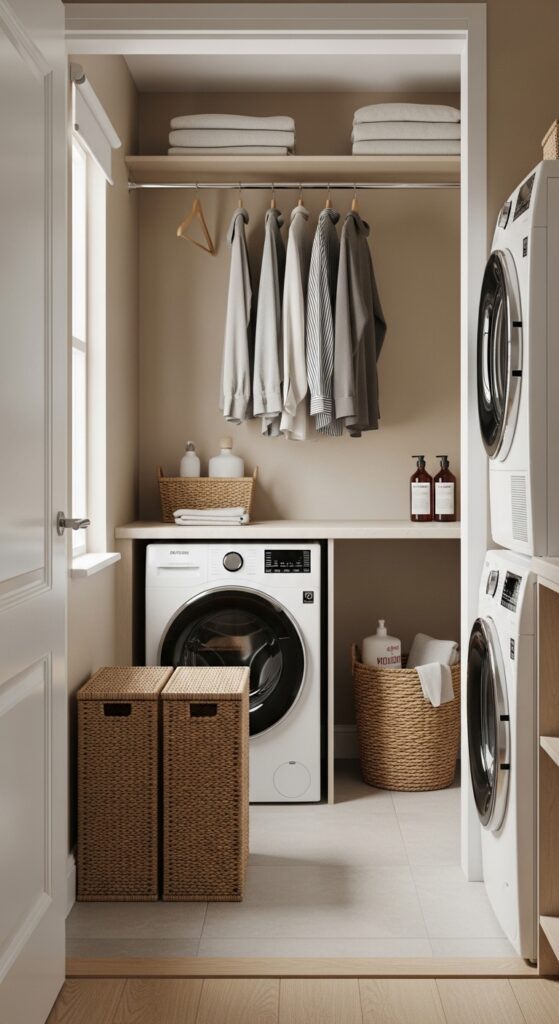
A small laundry room works best when each step has a clear place. Think through the order: sort, wash, dry, hang, fold, and store. Even a narrow closet-style laundry area can support this flow when you keep supplies near the machine and reserve one surface for clean clothes.
Place a hamper near the entrance, detergent within easy reach, and hangers beside the drying area. Keep stain-removal products together in one basket. If the room lacks a folding counter, use a nearby cart or wall-mounted solution.
Avoid scattering supplies across every shelf. A beautiful room still feels frustrating when you need to search for the lint roller, stain spray, or missing hanger during a busy morning.
2. Add a Floating Shelf Above the Washer and Dryer
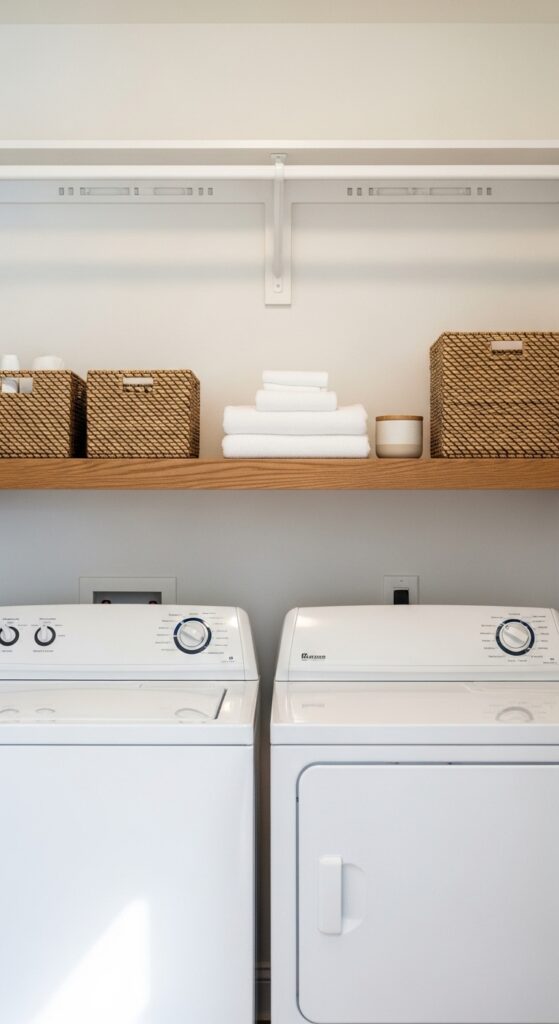
A floating shelf can turn an empty wall into useful storage without taking up floor space. It works especially well above side-by-side machines or along the back wall of a laundry closet. Use it for a basket of clothespins, folded towels, an iron, or lightweight household supplies.
Choose a shelf depth that does not interfere with machine controls, lids, hookups, or ventilation. Install it securely for the intended weight. In a rental, use a freestanding over-appliance shelf unit when drilling does not suit the lease.
Keep the shelf edited. A few matching baskets create visual harmony, while too many loose bottles can make the area feel crowded. Store products safely and follow their label instructions, especially when children or pets share the home.
3. Create a Folding Counter Above Front-Loading Machines
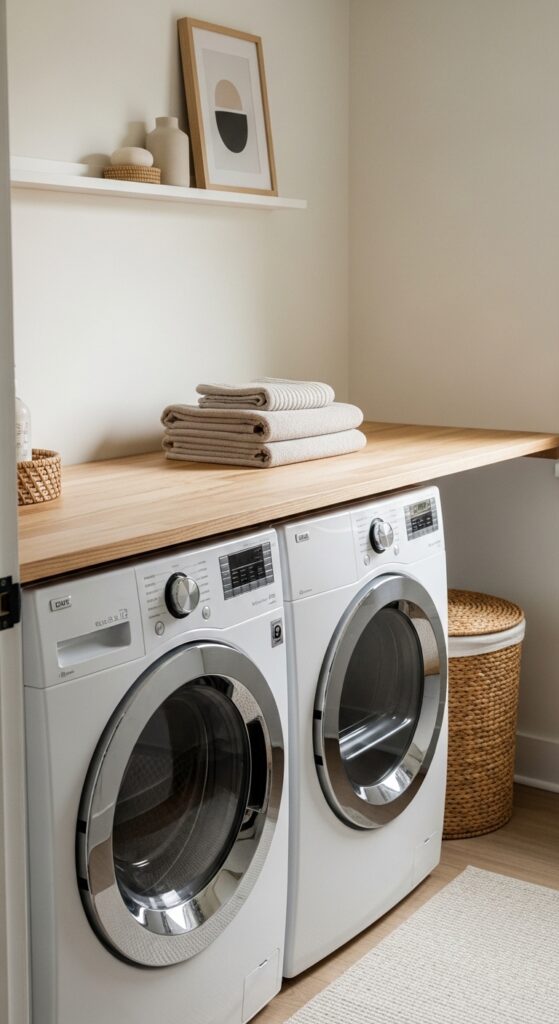
A folding counter can make a small laundry room feel far more useful. It gives clean clothes a stable landing place and prevents baskets from drifting into bedrooms or hallways. This idea works best above side-by-side front-loading machines when the appliance manuals and layout allow it.
Choose a moisture-resistant surface such as sealed wood, laminate, or a suitable countertop material. Leave enough clearance for ventilation, vibration, hookups, and appliance servicing. A removable counter can offer flexibility when you rent or expect to replace the machines later.
Avoid building a tightly fitted surface without checking appliance requirements. The countertop should make laundry easier without trapping heat, blocking access, or making repairs difficult.
4. Slide a Narrow Rolling Cart Into an Unused Gap
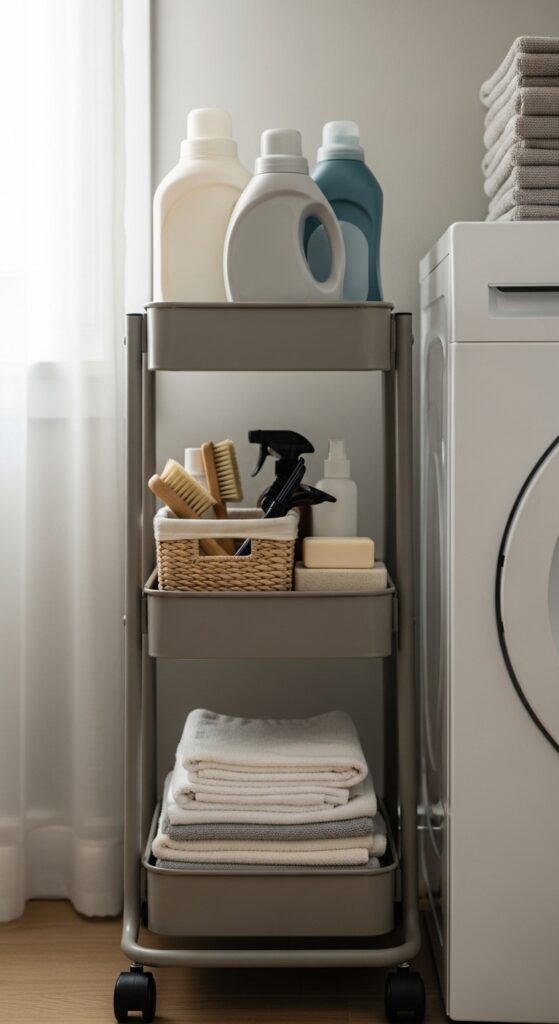
The slim gap beside a washer or dryer can become one of the most useful spots in the room. A narrow rolling cart can hold detergent, stain treatments, dryer supplies, cleaning cloths, and small baskets while staying easy to pull forward when needed.
Better Homes & Gardens’ hidden laundry storage guide recommends slim rolling carts for narrow spaces beside appliances. Measure the gap carefully and choose a stable design that clears hoses, doors, and vents.
Keep the heaviest products on the lower shelf. Use small bins to prevent bottles from tipping. Avoid forcing a cart into a gap that feels too tight. You should still be able to move it smoothly and access the surrounding appliance area.
5. Refresh Existing Laundry Cabinets Instead of Replacing Them
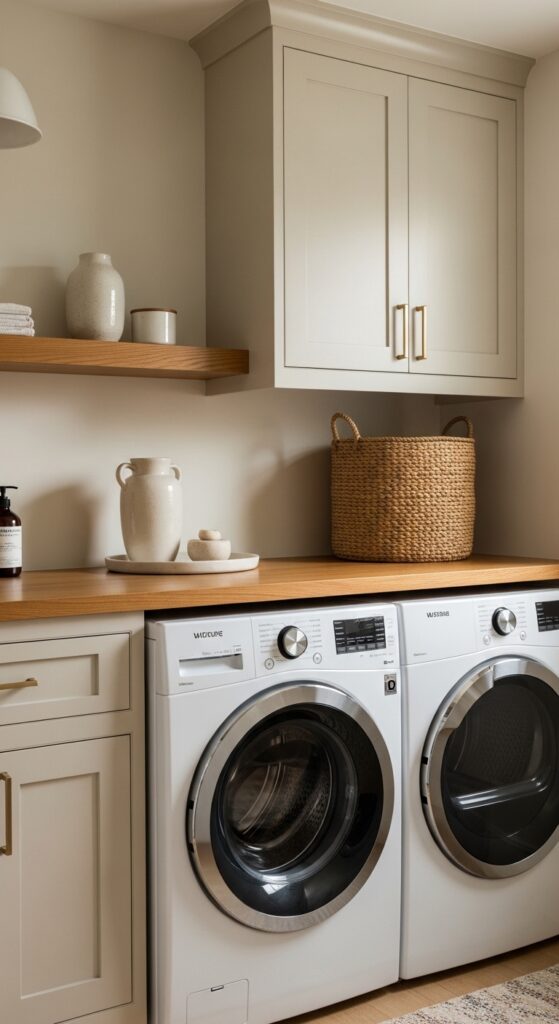
Laundry-room cabinets often need a simple refresh rather than full replacement. A warm white, muted sage, soft mushroom, or dusty blue paint color can make basic storage feel more intentional. New knobs or pulls in brushed brass, warm nickel, or matte black can sharpen the finish.
Inspect the cabinet material before painting. Clean the doors carefully, prepare the surface, and choose products suited to the existing finish. Label hinges and doors before removing them. If the cabinets already work well, organize the interior with small bins for cleaning cloths, stain treatments, and extra supplies.
Avoid painting damaged cabinets without fixing the cause first. For more detailed guidance, read these cabinet makeover ideas without replacing cabinets.
6. Install a Hanging Rod for Freshly Washed Clothes
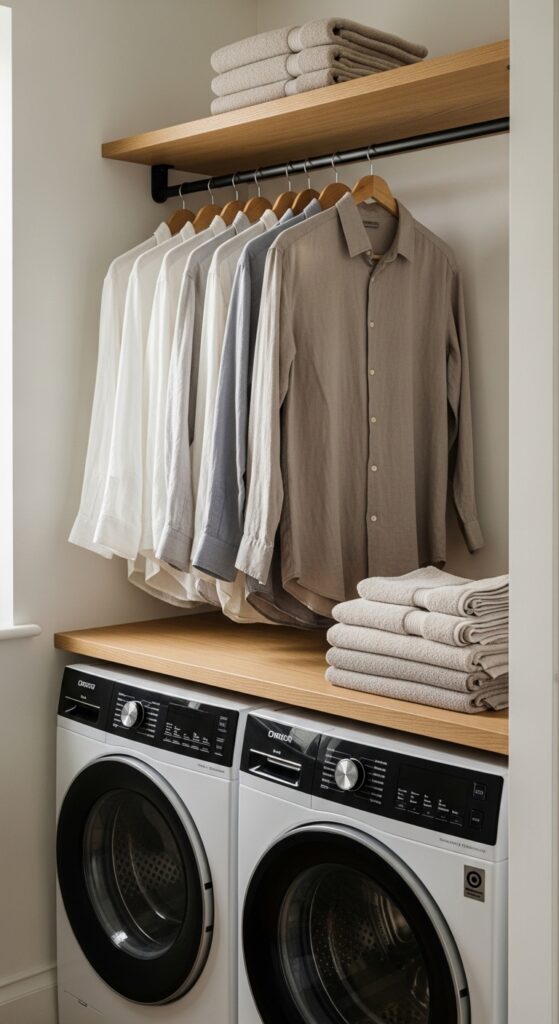
A hanging rod gives shirts, dresses, and delicate items a proper place to air-dry or wait for the closet. It works well beneath an upper shelf, between cabinets, or across a narrow recessed area. The rod uses wall space efficiently while keeping garments off doors and chair backs.
Better Homes & Gardens’ laundry drying-rack guide recommends suspended rods above machines and double hanging rods in recessed spaces when floor area stays limited. Keep a small set of hangers nearby in one basket or on the rod itself.
Avoid hanging clothes where they block machine doors or limit airflow. Leave enough room between garments so they can dry more comfortably.
7. Use a Fold-Down or Over-the-Door Drying Rack
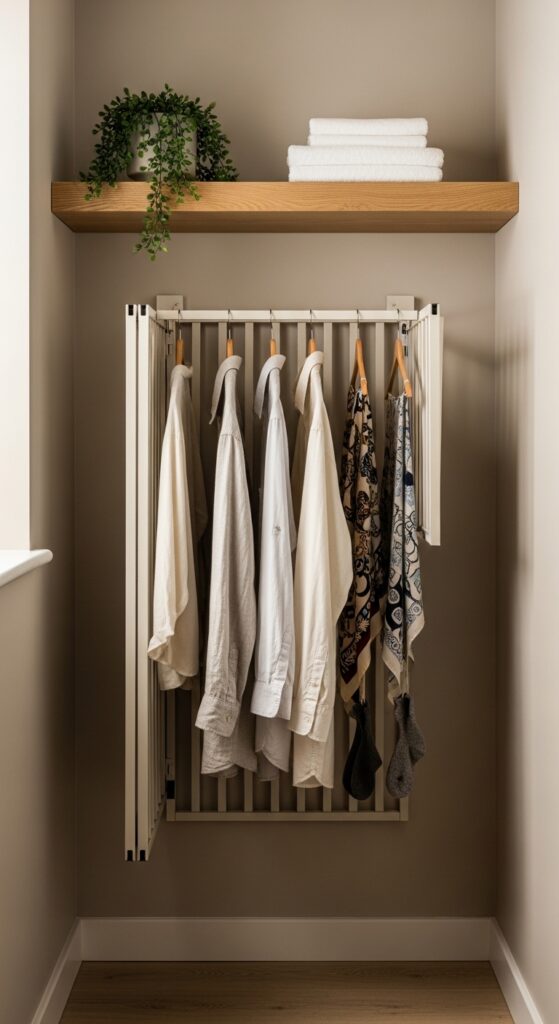
A drying rack should help the room, not take over the walkway. A fold-down wall rack, over-the-door rack, or compact freestanding option gives delicate clothing a place to dry and disappears more easily when laundry day ends.
Choose the design based on your available wall space and lease rules. An over-the-door version can work well in a rental, while a fold-down rack suits a more permanent utility room. Keep airflow in mind and avoid crowding garments together.
Better Homes & Gardens also suggests accordion racks, over-the-door racks, swivel-arm designs, and flat mesh racks for sweaters. Avoid placing a drying rack where damp clothes touch painted walls, cabinets, or surfaces that may react poorly to moisture.
8. Sort Laundry With a Divided Hamper System
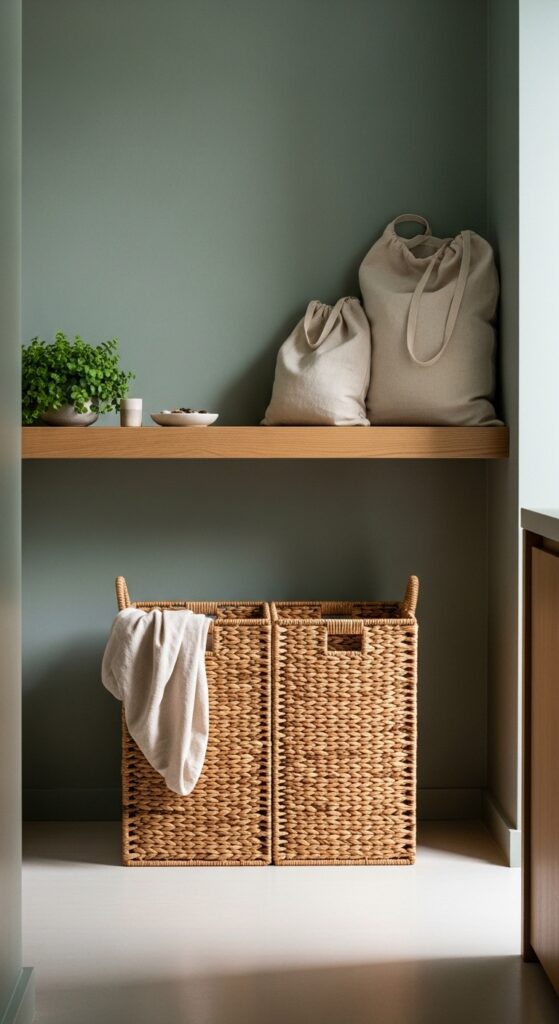
A divided hamper can reduce the visual clutter of several loose baskets while making wash day easier to manage. Choose a two- or three-section design for lights, darks, towels, or delicates. Place it near the laundry entrance or beneath a counter when the layout allows.
Woven hampers, canvas bags, and simple lidded designs can add texture while keeping the room calm. Architectural Digest’s hamper guide includes options that combine storage with a more considered decorative look.
Avoid buying a hamper that blocks the walkway or makes appliance doors difficult to open. The right size depends on the room and your household routine. A compact system that gets used consistently works better than a large sorter that becomes another obstacle.
9. Add a Peel-and-Stick Backsplash Behind the Machines
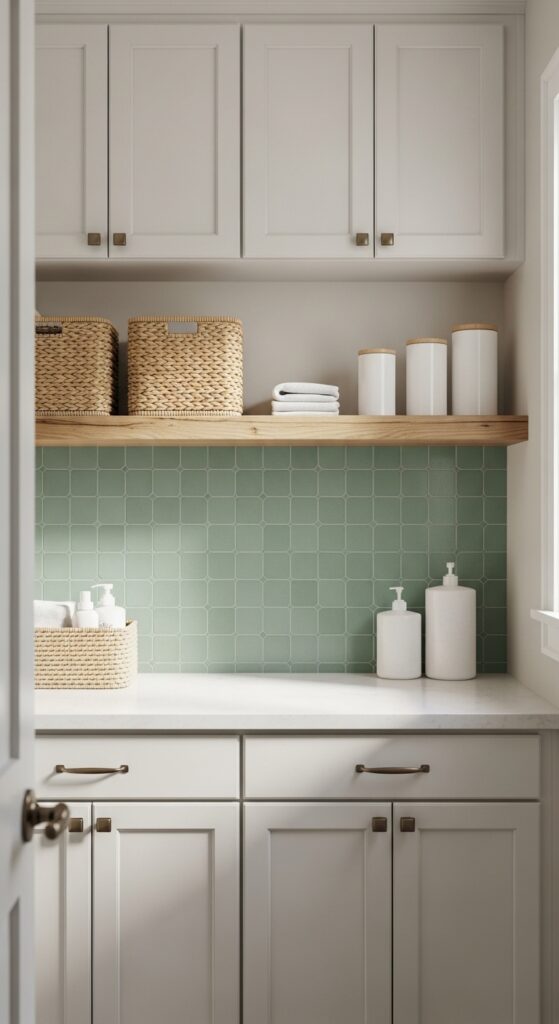
A backsplash can give a laundry room more personality without using valuable floor space. Try a soft zellige-inspired tile, a quiet subway pattern, muted sage squares, or a warm stone effect. The wall behind a sink or counter often offers the most practical location.
Clean the surface carefully and order a sample before applying anything. Follow the product instructions, especially around moisture, heat, outlets, and textured walls. In a rental, patch-test the adhesive in a discreet spot.
Keep the nearby surfaces simple so the pattern has room to show. A backsplash works best as one clear focal point, not part of a room filled with several competing prints. For related ideas, browse these apartment kitchen upgrades without renovation.
10. Refresh the Floor With Peel-and-Stick Tiles or a Runner
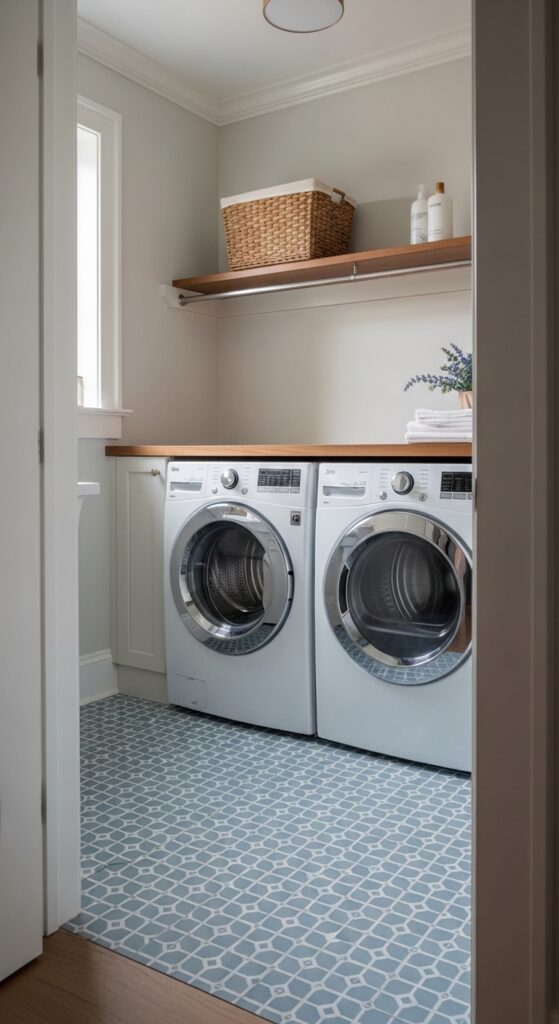
Laundry-room flooring works hard. It needs to handle foot traffic, baskets, moisture risk, and the visual weight of appliances. Floor-rated peel-and-stick tiles can offer a budget-friendly refresh when the existing surface remains smooth, dry, and suitable for adhesive products.
Try a muted checkerboard, charcoal slate look, warm limestone print, or soft blue-and-white geometric pattern. A washable runner offers an easier alternative when a full-floor update does not suit the room.
Plan the pattern before removing the backing and keep drainage or maintenance access clear. Avoid installing over damaged flooring or deep grout lines without proper preparation. For more pattern ideas and surface guidance, save these peel-and-stick floor tile ideas.
11. Add Better Task Lighting Above the Work Area
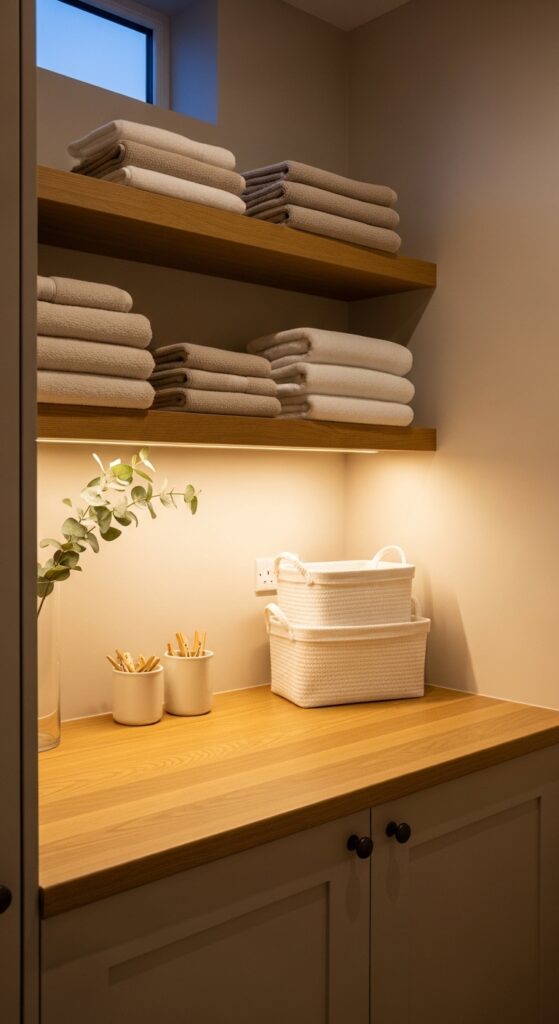
A small laundry room often relies on one harsh ceiling bulb. Better lighting can make stain treatment, sorting, and folding easier while creating a warmer atmosphere. Add a brighter ceiling fixture, rechargeable under-cabinet lights, or a slim wall light where the layout allows.
Use a consistent bulb temperature so the room feels connected. Place task lighting where you actually work: above the folding counter, sink, or open shelving. Rechargeable lights can offer an approachable update when hardwiring does not suit the budget.
Avoid blocking appliance access with cords or installing electrical products in unsuitable locations. Hire a qualified electrician for hardwired work. A laundry room still needs practical safety more than decorative drama.
12. Create a Peg Rail or Hook Zone for Small Essentials
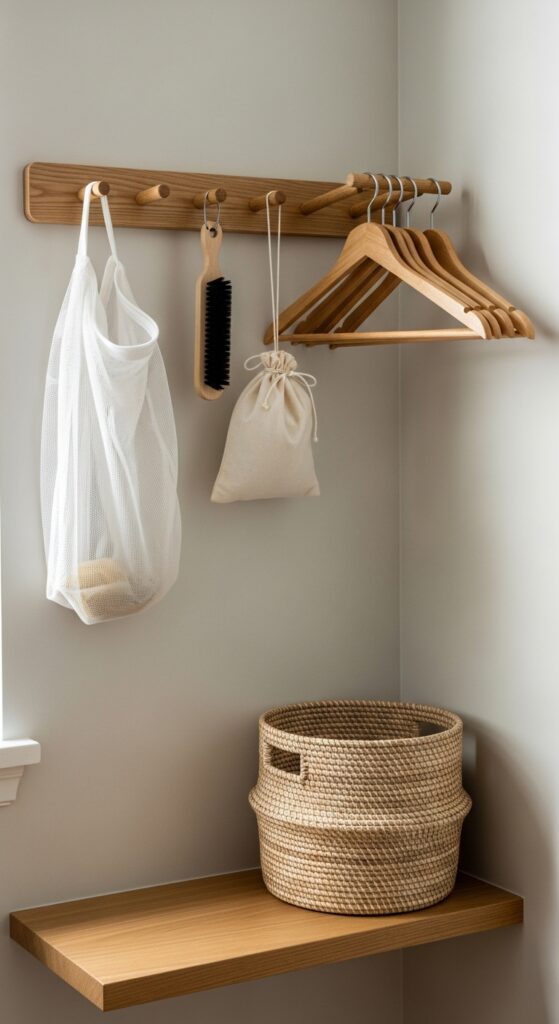
A simple peg rail or short row of wall hooks can keep reusable bags, mesh laundry bags, a lint brush, a small cleaning cloth, and spare hangers within easy reach. It works well beside the machines, above a utility sink, or near the doorway.
Choose warm wood for a softer organic modern look or use matte metal hooks for a cleaner finish. Keep the arrangement edited so a few pegs remain empty. That breathing room helps the wall feel organized rather than overloaded.
Install hooks securely for their intended weight. In a rental, use suitable removable solutions only after checking the surface and product instructions. Avoid turning the rail into a place for heavy bags or damp clothing that belongs on the drying rack.
13. Hide a Laundry Closet With a Curtain or Door
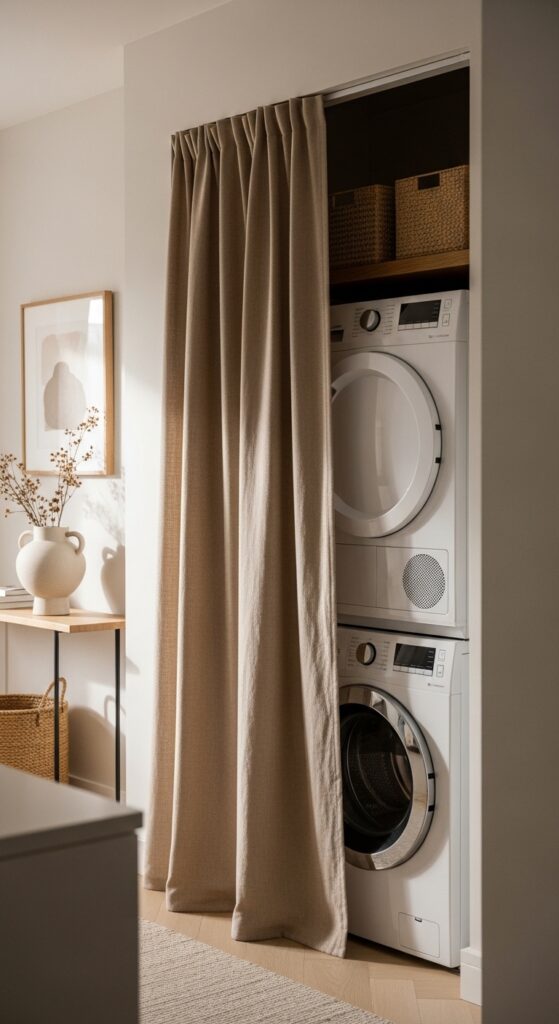
When the laundry area sits inside a hallway, kitchen, or bathroom, visual clutter can spill into the surrounding room. A simple curtain, sliding door, or existing closet door can create a calmer boundary when the appliances are not in use.
Better Homes & Gardens’ hidden storage guide includes curtains and doors among its suggestions for concealing laundry areas in compact spaces. Choose a washable fabric in a warm neutral, soft stripe, or muted tone that relates to the nearby room.
Keep ventilation, access, and appliance requirements in mind. Avoid enclosing machines tightly or using a heavy treatment that interferes with doors, controls, or airflow. The goal is visual calm without compromising function.
14. Corral Supplies in Baskets While Keeping Products Safely Stored
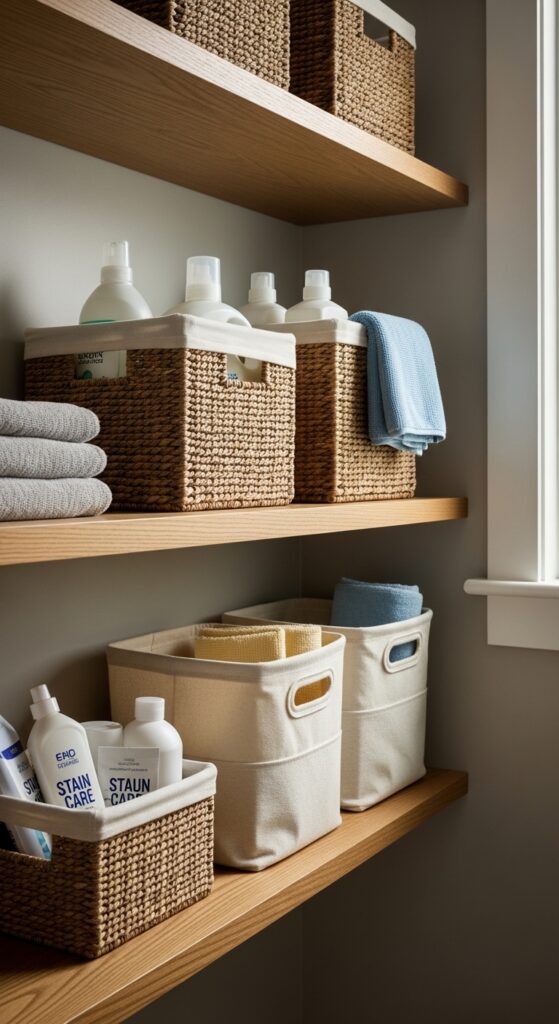
Matching baskets can make open shelving feel calmer while keeping supplies easy to reach. Use one basket for stain-removal items, one for cleaning cloths, and another for spare dryer supplies. Labeling can help family members return items to the right place.
Choose woven baskets for warmth, washable bins for practicality, or simple lidded containers when the shelves stay visible. Keep detergents, pods, and other laundry products in safe locations and follow the storage directions on the original packaging. Avoid decanting products into decorative jars when that could create confusion or make them easier for children or pets to access.
Do not buy baskets before sorting the room. Storage works best when every container has one clear purpose and enough empty space to stay manageable.
15. Add a Fold-Away Ironing Station
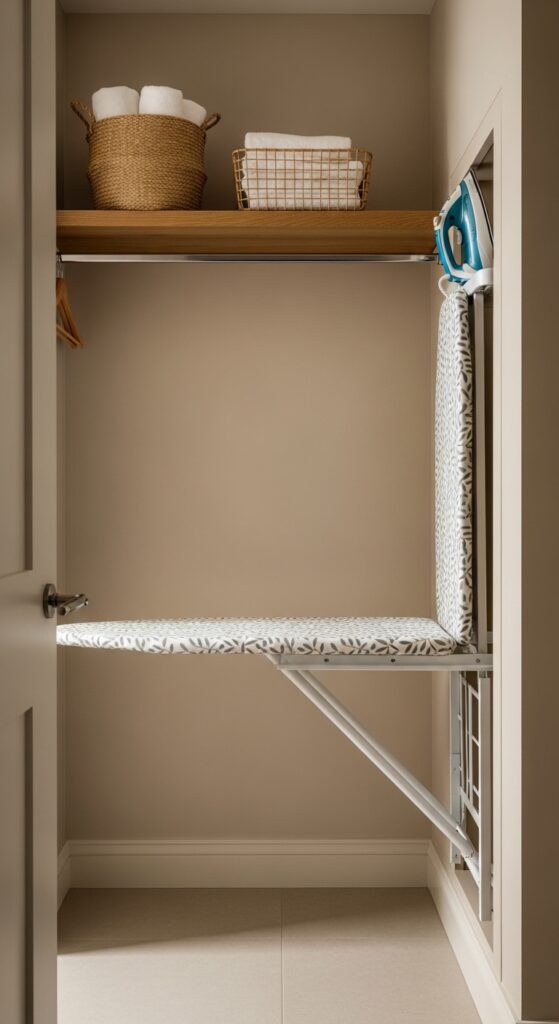
A full-size ironing board can take over a small laundry room. A fold-away wall-mounted board, over-the-door design, or compact tabletop board offers a more practical option when you iron occasionally.
Better Homes & Gardens recommends collapsible ironing boards as a way to save space and reduce visual clutter. Store the iron nearby in a suitable cabinet or basket after it cools completely. Keep cords organized and easy to access.
Avoid placing an ironing station where it blocks appliance doors, a hallway, or the main walking path. Choose a solution that matches your actual routine. A compact board that you use regularly offers more value than a larger setup that stays folded away because it feels inconvenient.
16. Bring Character to the Walls With Paint or Removable Wallpaper
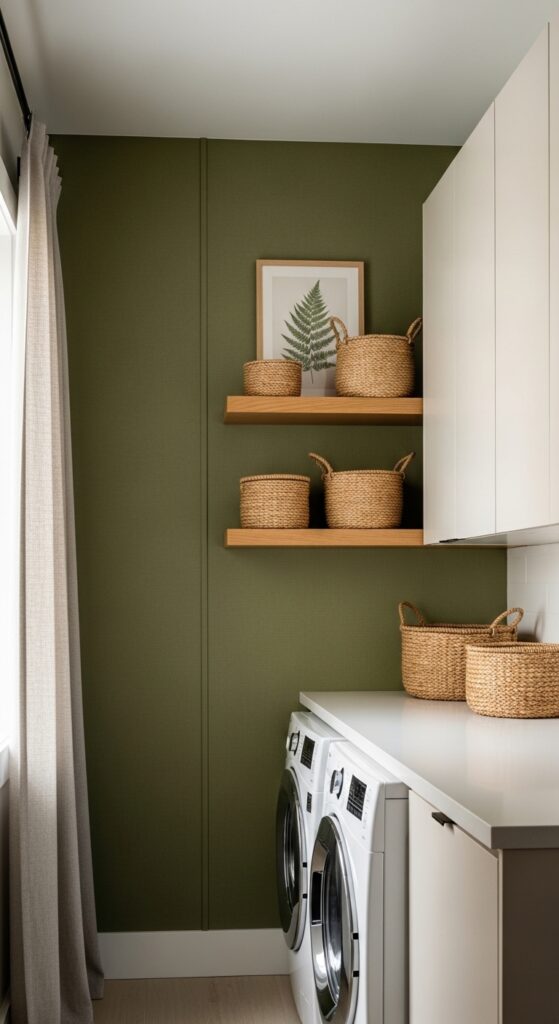
A laundry room can handle a little more personality than a quiet bedroom. Try muted olive, clay beige, soft blue-gray, warm white, or a small-scale wallpaper print. Vertical stripes can make a narrow room feel taller, while a botanical pattern can soften a laundry closet.
Keep the palette connected to nearby rooms, especially when the laundry area opens into a hallway, bathroom, or kitchen. One accent wall often creates enough interest. Patch-test removable wallpaper before applying it widely and choose moisture-appropriate materials for the room conditions.
Avoid layering busy wallpaper, patterned floors, colorful baskets, and several decorative signs at once. For more controlled pattern ideas, browse these removable wallpaper ideas for small rooms.
17. Build a Simple Dryer-Maintenance Corner
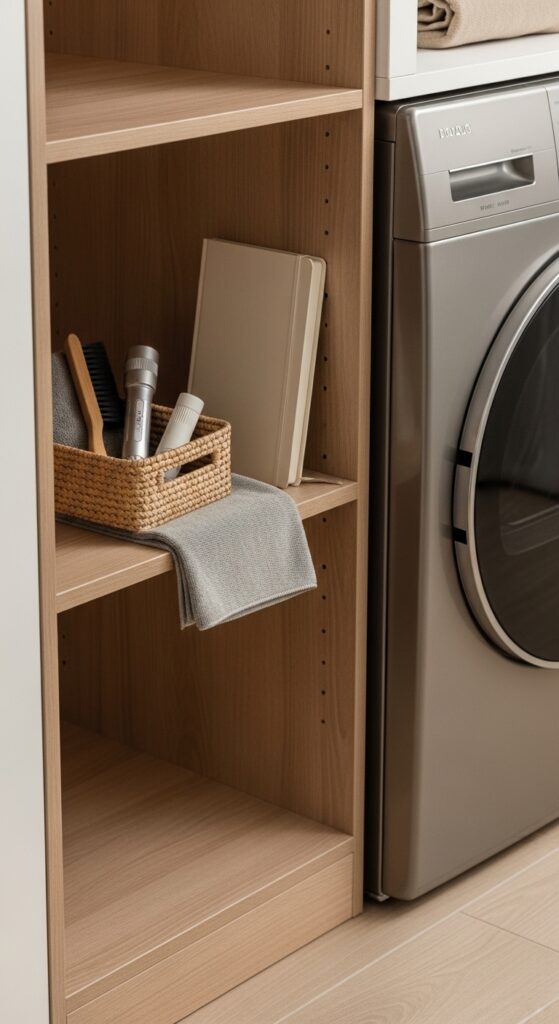
A polished laundry room still needs a practical maintenance routine. Store a small lint brush, flashlight, and maintenance note inside a nearby cabinet or basket. Keep the area around the appliances easy to inspect and avoid storing clutter behind the dryer.
ENERGY STAR’s dryer guidance recommends cleaning the lint filter after every load to improve airflow and dryer efficiency. NFPA’s dryer-safety guidance also advises cleaning the lint filter before or after each load, removing lint around the drum, and checking the exhaust vent.
Avoid blocking the dryer vent or ignoring longer-than-usual drying times. Follow the appliance manual and contact a qualified professional when the vent, installation, or servicing needs attention.
A Final Styling Rule: Leave Room for the Routine
Once the room feels more organized, pause before adding more decor. A laundry room needs empty space for baskets, folded towels, and the ordinary mess of a busy week. Keep the folding counter clear. Leave the walkway open. Store the products you use and move unnecessary backups elsewhere.
Repeat two or three materials instead of introducing a new finish in every corner. Warm wood shelves can relate to a woven hamper. Sage cabinets can connect with a subtle floor pattern. A simple linen curtain can soften a laundry closet without demanding attention.
When the room works well, it naturally feels better. The best improvements support the routine first and styling second.
Frequently Asked Questions
What are the best small laundry room improvement ideas for beginners?
Start with a floating shelf, divided hamper, slim rolling cart, brighter task lighting, and a hook rail for lightweight essentials. These updates improve storage and daily use without changing the plumbing, electrical work, or appliance layout.
How can I add storage to a laundry room without using much floor space?
Use the wall height. Add floating shelves, upper cabinets, a hanging rod, over-the-door storage, or a fold-down drying rack. A narrow rolling cart can also fit beside the machines when the gap allows safe appliance access.
Can I place a countertop over my washer and dryer?
A counter may work above side-by-side front-loading machines when the appliance manuals, ventilation requirements, clearances, and layout allow it. Leave access for hookups and servicing. Avoid tightly fitting a surface around appliances without checking the manufacturer guidance first.
How can I make a small laundry room look more polished on a budget?
Choose one visual update, such as painted cabinets, a peel-and-stick backsplash, a washable runner, or a muted wallpaper accent. Then organize supplies inside matching baskets and improve the lighting. Keep the palette limited so the room feels calm.
How often should I clean the dryer lint filter?
Clean the lint filter after every load. ENERGY STAR states that this improves airflow and dryer efficiency, and NFPA includes regular lint-filter cleaning among its dryer-safety recommendations. Follow the dryer manual for additional vent and maintenance guidance.
Let the Laundry Room Make Daily Life Easier
A small laundry room will never need dozens of decorative layers. It needs a clear place for detergent, room to fold a towel, enough light to treat a stain, and a drying solution that does not take over the walkway.
The most useful small laundry room improvement ideas make ordinary tasks feel less scattered. They turn an unused gap into storage, a blank wall into a shelf, and a crowded counter into a surface that can finally do its job.
Start with the frustration you notice every week. Fix it simply. Then let the room become a quiet, practical part of the home that supports your routine without asking for extra effort.